Norwegian Buhund
Norsk Buhund, Norwegian Sheepdog, Nordiske Sitz-hunde
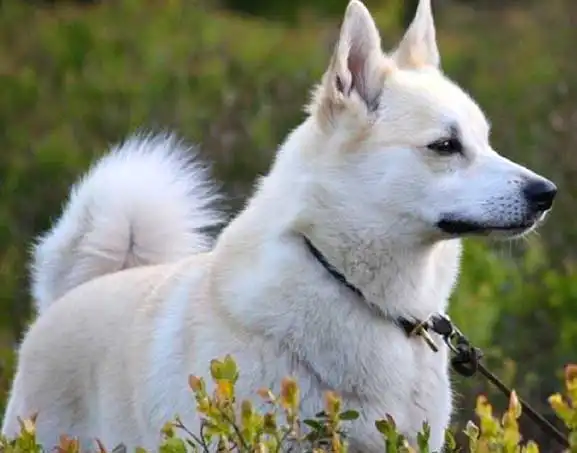
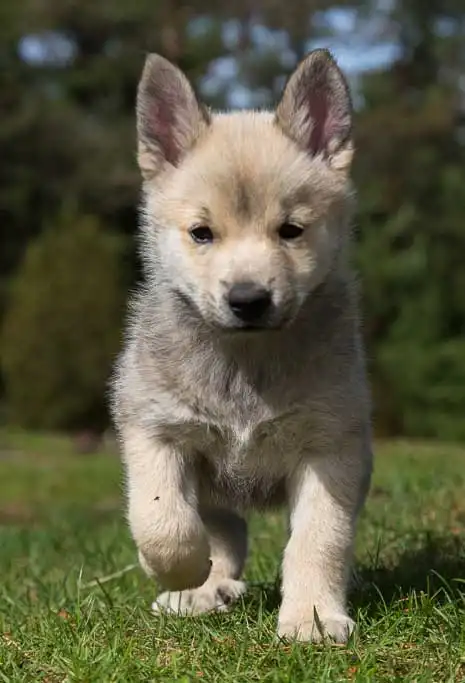
The Norwegian Buhund, pronounced nor-WEE-juhn BOO-hund, is a historic spitz breed with roots dating back to the Viking age. This adaptable herding dog was mainly responsible for safeguarding young livestock from birds of prey. Renowned for its keen alertness, the Buhund enjoys being the center of attention. These dogs are typically quite vocal, communicating not only through barking but also with a range of sounds including yips, chortles, yodels, and trills. As a breed full of energy, the Buhund needs plenty of exercise to remain happy. To prevent boredom, it’s essential to introduce a variety of activities during play and training sessions to keep them engaged.
Breed Origin
The Gokstad excavation in Norway revealed a significant Viking burial site from around 900 A.D., where researchers unearthed dog skeletons remarkably similar to the modern Norwegian Buhund. Among the discoveries were six dog skeletons of different sizes, classified as Spitz-type and closely associated with the Norwegian Buhund. This suggests that the Vikings held these versatile dogs in high esteem, often interring them with their most treasured belongings. The Norwegian Buhund was a companion to the Vikings during their sea voyages and traversing difficult terrains. However, the contemporary Buhund has become more refined and is less suited for rugged landscapes. Primarily originating from Norway's western coastal areas, these dogs were not merely travel companions; they primarily functioned as guardians and herders on farms. Although the Norwegian Buhund is not widely used for herding in its native land, its protective instincts have made it valuable in law enforcement roles. Additionally, it has excelled as a hearing dog for individuals with hearing loss. Despite its abilities, the breed has not achieved significant popularity, and it wasn't until the 1920s that the first Norwegian Buhund was presented at conformation shows. In 1939, Norway saw the establishment of the Norsk Buhundklubb, an official breed club. The first Norwegian Buhunds were brought to the United States in the 1980s, and the United Kennel Club recognized the breed in 1996, classifying it as a Northern breed. The American Kennel Club followed suit in 2009, designating it as a Herding breed.
Breed Appearance
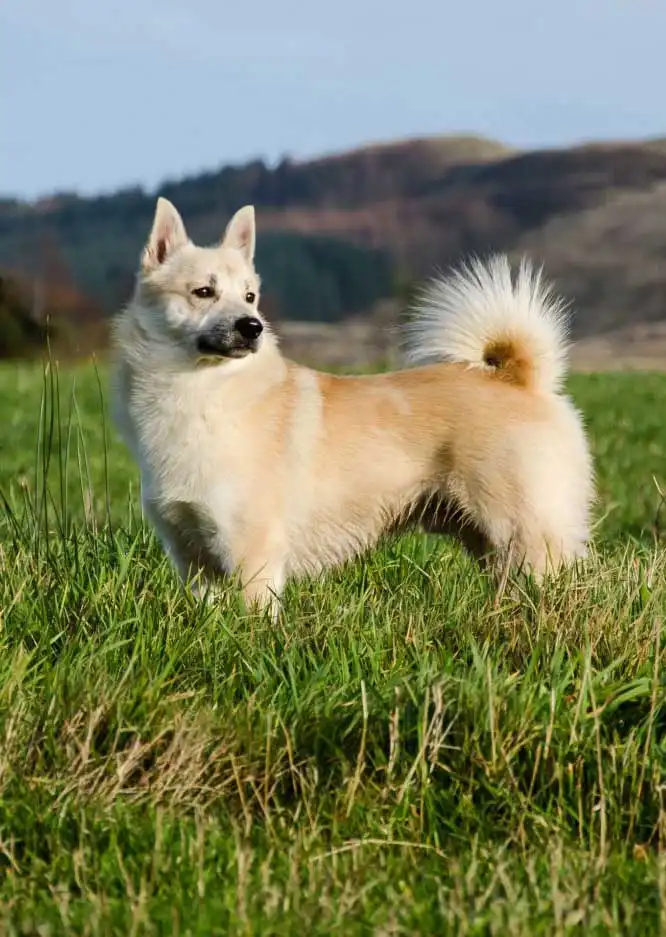
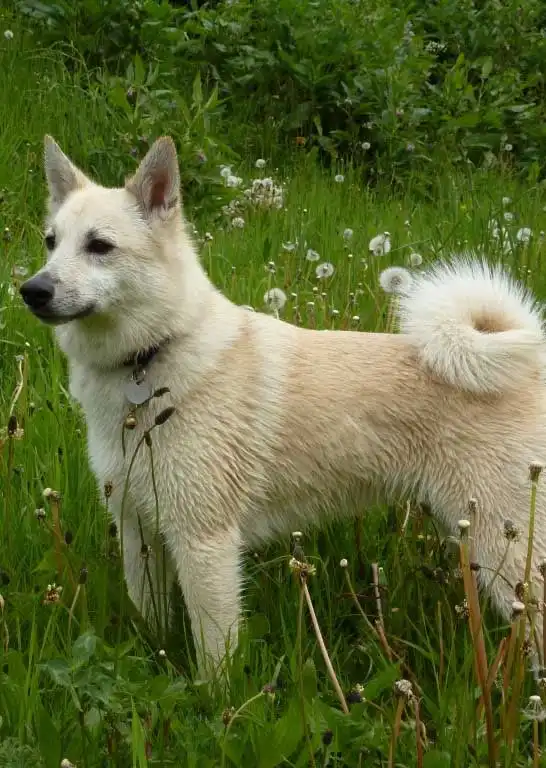
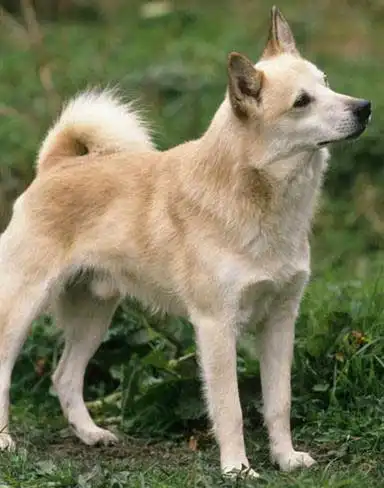
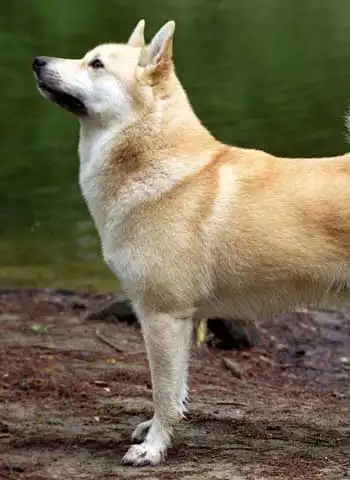
The Norwegian Buhund is a classic medium-sized breed hailing from the North. This sturdy dog is distinguished by its signature Spitz tail, which curls over its back. It has a wedge-shaped head adorned with upright triangular ears. The breed's eyes are oval and a rich brown, with lighter shades being deemed undesirable. Both the eye rims and lips are black, and the nose must also be black; any self-colored or brown noses are not acceptable in conformation events. The coat features a dense, coarse outer layer that lies snugly against the body, while the undercoat is thick yet softer. The fur on the head and front legs is short, while longer hair is found on the neck, chest, tail, and back of the thighs. The body fur is of medium length. Norwegian Buhunds come in wheaten or black, often with small white markings on the chest, feet, and tail tip.
Care Routine
The Norwegian Buhund boasts a thick, dense coat that is fairly easy to care for, needing brushing several times a week. During periods of heavy shedding, daily grooming with a slicker brush or a natural bristle brush, along with a comb, becomes crucial. Utilizing a deshedder can also be beneficial during these times. This breed tends to shed consistently throughout the year, so if regular brushing is overlooked, you may find hair on your furniture and clothing. Fortunately, they don’t typically have a strong dog odor, so frequent baths are not required. Nail trimming should occur every two to three weeks to keep them at a manageable length. It’s also essential to check their ears weekly and clean them as necessary. Additionally, trimming the hair between their paw pads is recommended to prevent dirt and debris from being brought into your home, as well as to avoid the accumulation of snow or mud that could cause discomfort.
Behavior & Temperament
The Norwegian Buhund serves as an excellent guard dog, characterized by a natural wariness of strangers rather than overt aggression. He will notify you if an unfamiliar individual approaches. This breed is highly trainable and flourishes under the guidance of a consistent and assertive trainer; without such leadership, he may attempt to dominate the household. Known for his vocalizations, the Buhund communicates through a range of sounds, including barking, trills, yips, yodels, and chortles. Prospective owners should be aware of his vocal tendencies before deciding to welcome one into their home. The Buhund thrives on family engagement and should not be left isolated in a kennel or confined to a yard with little social interaction. Generally, he gets along well with children and other small pets, but his herding instincts may lead him to herd people, animals, or even vehicles, so it’s crucial to keep him securely fenced.
Play & Exercise
Things to Know
Cups Per Day
2.6 Cups
Daily Activity
90 Minutes
Average Lifespan
14 Years
Origin
10th Century
Type
Pure Breeds
Size
Medium
Origin Country
Norway
Brush Frequency
Weekly
Coat Texture
Straight
Register
Your kids have been begging for a pet forever, and you've recently decided that it's time for your family to get a new addition -- a dog! While everyone is excited for the new arrival, you're wondering if you need to have a dog license. How much does it cost? Is it required? Where do you get one?
Member Clubs

PETINNATE
Northern Breed

AKC
Herding Group

UKC
Northern Breed
Height & Weight
Weight
33 lbs (15 kg)Male: 36 lbs (16 kg) , Female: 31 lbs (14 kg)
Height
18 inches (46 sm)Male: 18 inches (46 sm) , Female: 17 inches (43 sm)
6 Months
15 lbs ( m 15 lbs, f 15 lbs )
13 inches ( m 13 inches, f 13 inches )
12 Months
24 lbs ( m 24 lbs, f 24 lbs )
15 inches ( m 15 inches, f 15 inches )
18 Months
30 lbs ( m 30 lbs, f 30 lbs )
17 inches ( m 17 inches, f 17 inches )
Eye Colors
Brown

Nose Colors
Black
Coat Colors
Black
Cream