Otterhound
In 1360, fishermen started employing Otterhounds to hunt otters, as these creatures were notorious for stealing their fish. The breed was carefully crafted to combine characteristics from various dog breeds: the intelligence of a Collie, the patience of a Beagle, the endurance of a Foxhound, the wisdom of a Retriever, the acute sense of smell of a Pointer, the swimming ability of a Newfoundland, and the courage of a Bulldog. Otterhounds are large dogs, weighing up to 115 pounds and standing approximately two and a half feet tall. They are equipped with long, waterproof fur, prominent noses ideal for scent tracking, and strong legs designed for swimming. This breed comes in seven different colors and showcases six unique markings, with shades that include lemon, white, black, and tan, while the markings may feature silver, grizzle, badger, and various other combinations.
Breed Origin
The Otterhound traces its roots back to the 12th century, originally developed for the purpose of hunting river otters, which threatened fish populations. As other food sources became more sought after, hunting otters transformed into a sport favored by the elite, including notable figures such as King John of Magna Carta. This activity thrived particularly well from April to September, as otters were the only game available during those months. Interestingly, Queen Elizabeth I was the first woman to possess a pack of Otterhounds. In its formative years, the breed was thought to be a hybrid of the Welsh Harrier and the Southern Hound, reflecting its origins in Devonshire and Wales. Some theories suggest that the Otterhound may also have descended from the English Bulldog and the Old Water Spaniel, while others propose contributions from the English Foxhound and Griffon Nivernais. Nevertheless, most experts agree that the Bloodhound significantly influenced the breed's evolution. As otter numbers declined, so did the Otterhound's popularity. Today, it is recognized as the most endangered native dog breed in Britain, with an estimated 600 individuals left worldwide. The first Otterhounds were introduced to the United States in the early 1900s, making their first appearance at a show in Oklahoma. In 1909, the American Kennel Club (AKC) officially recognized Otterhounds as part of the hound group. The Otterhound Club of America was founded in 1960, hosting its first National Specialty in 1981. Despite a dedicated but small group of enthusiasts in the U.S., the breed has not achieved widespread popularity in hunting or dog shows.
Breed Appearance
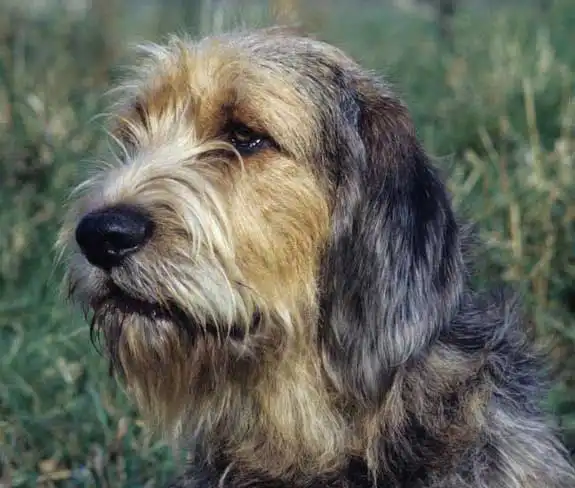
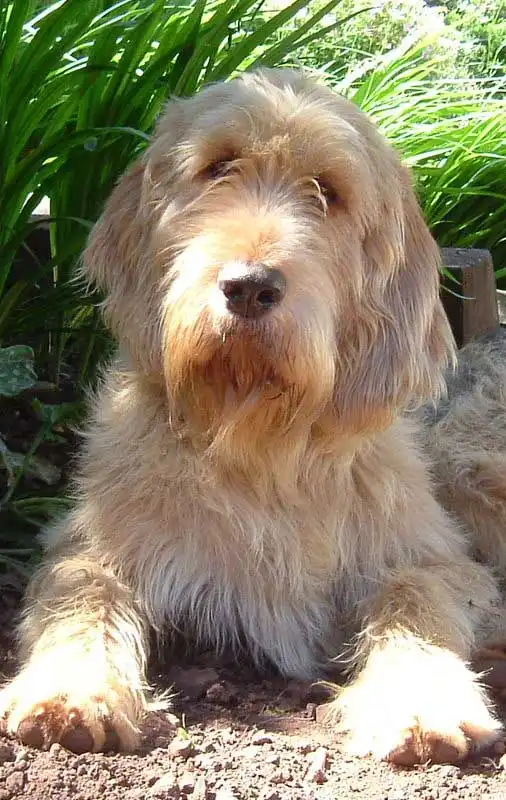
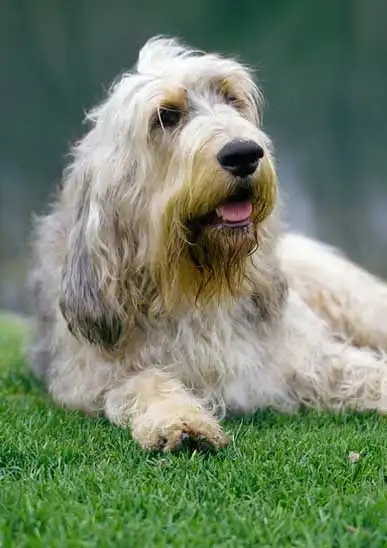
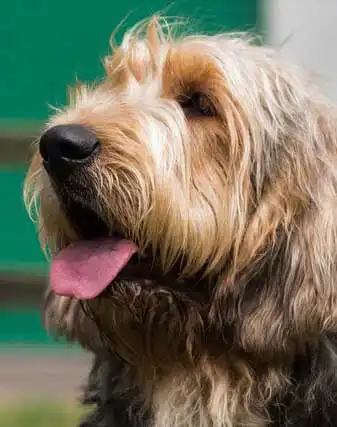
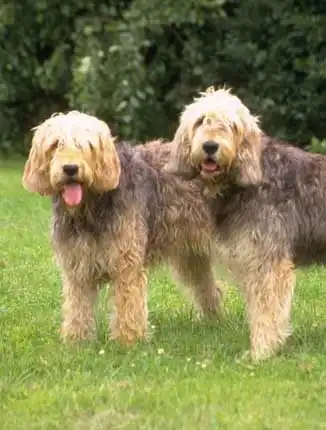
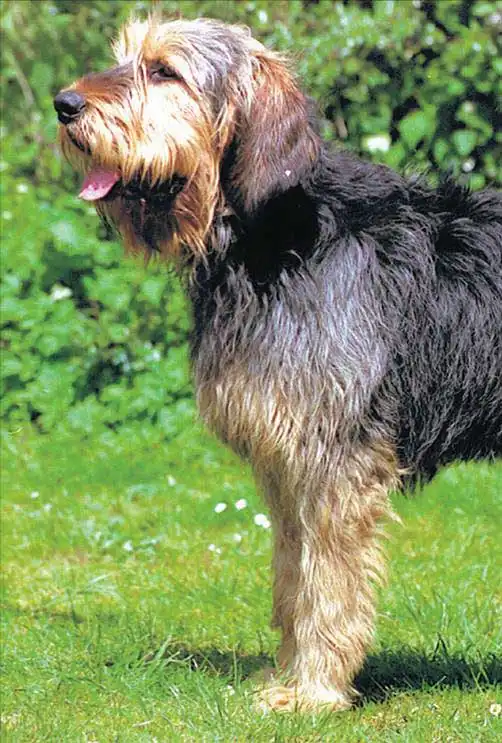
The Otterhound is a large breed, typically reaching a height of about 27 inches and weighing around 115 pounds. This hound is equipped with a dense, water-repellent coat and webbed feet, making it adept at hunting in both water and on land. It has a notably large head that conveys a strong and dignified presence, paired with a sturdy, muscular build and long legs. The breed is characterized by a prominent nose with large nostrils, which enhances its sense of smell. Its ears are long, drooping, and set low beneath the eyes. Otterhounds are slightly longer than they are tall, exhibiting a solid and well-proportioned physique that suggests resilience. Their eyes are dark and deeply set, with pigmentation that complements the color of their coat and nose. Otterhounds come in a range of colors, including white, black, tan, lemon, blue, wheaten, liver and tan, gray, blue and cream, and black and tan. Their markings can include various combinations of white and tan, silver, lemon, liver, grizzle, and badger patterns.
Care Routine
To effectively groom your Otterhound, it’s important to gently brush their coat with a soft bristle brush at least once a week. Although the outer coat is fairly coarse and resistant to matting, the undercoat can easily become tangled without regular care. Pay special attention to areas like the underside, legs, underarms, and head to reduce matting and shedding. While grooming, take the chance to check for any unusual skin lesions, swelling, or signs of ear infections. Otterhounds, with their droopy ears, can create a warm, moist environment that encourages bacterial growth, so it’s wise to clean their ears weekly using a suitable ear cleaning solution. If you’re unsure about the cleaning method, your veterinarian can provide guidance. This is also a good time to examine your dog’s eyes and trim their nails. You can use dog-specific nail clippers or a nail grinder for this task. If you’re not confident in your ability to do this, consider seeking help from a professional groomer or your vet, but it’s advantageous to learn the process yourself.
Behavior & Temperament
Training an Otterhound can be quite challenging due to their considerable size, strength, and often headstrong nature. To succeed, it's essential to show that your determination surpasses theirs. Effective socialization is vital for ensuring they engage positively with other animals and humans; without it, they may see smaller pets, such as cats, as potential prey. These dogs are notably intelligent, and with patience, you might even teach them to pick out their favorite toy from a pet store. However, keep in mind that they are also capable of figuring out how to open gates, crates, doors, and cabinets, which means you may need to take precautions to secure your home. If they become bored, they might start barking at nothing or chewing on various household items. Overall, Otterhounds are laid-back, loyal, and friendly, with a gentle temperament that can make them excellent family companions when provided with proper socialization and obedience training.
Play & Exercise
Things to Know
Cups Per Day
3.0 Cups
Daily Activity
45 Minutes
Average Lifespan
12 Years
Origin
1300s
Type
Pure Breeds
Size
Large
Origin Country
England
Brush Frequency
Weekly
Coat Texture
Wiry
Register
Your kids have been begging for a pet forever, and you've recently decided that it's time for your family to get a new addition -- a dog! While everyone is excited for the new arrival, you're wondering if you need to have a dog license. How much does it cost? Is it required? Where do you get one?
Member Clubs

PETINNATE
Scenthound

AKC
Hound Group

UKC
Scenthound
Height & Weight
Weight
90 lbs (41 kg)Male: 100 lbs (45 kg) , Female: 80 lbs (36 kg)
Height
25 inches (64 sm)Male: 26 inches (66 sm) , Female: 25 inches (64 sm)
6 Months
35 lbs ( m 35 lbs, f 35 lbs )
10 inches ( m 10 inches, f 10 inches )
12 Months
55 lbs ( m 55 lbs, f 55 lbs )
14 inches ( m 14 inches, f 14 inches )
18 Months
72 lbs ( m 72 lbs, f 72 lbs )
21 inches ( m 21 inches, f 21 inches )
Eye Colors
Hazel

Brown
Nose Colors
Black
Brown
Coat Colors
Black
White
Fawn

Blue

Gray

Brown

Cream