
Redbone Coonhound
Redbone Hound, Saddlebacks
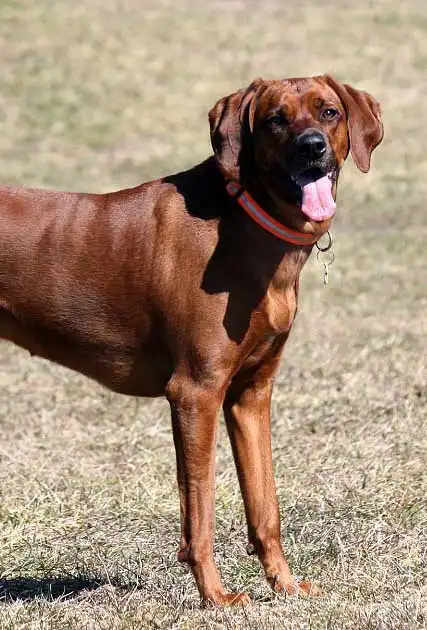
The Redbone Coonhound traces its roots back to 18th century America, emerging from a blend of Foxhounds and Bloodhounds brought over from Ireland and Scotland. These dogs were specifically bred for their speed and tracking abilities, enabling them to pursue raccoons as they climb trees. Known for their agility and energetic nature, Redbone Coonhounds can easily traverse a variety of landscapes. Their striking solid red coat is a defining characteristic of the breed. Valued for their loyalty and affectionate nature, they make wonderful family companions and adapt well to different hunting situations. Breed enthusiasts particularly admire their deep, resonant bark, which can carry for miles, especially when they catch an intriguing scent, often drawing attention from nearby residents.
Breed Origin
The Redbone Coonhound is an American breed with roots tracing back to Foxhounds and Bloodhounds. In the late 1700s, Scottish immigrants introduced Red Foxhounds to the U.S., followed by Irish settlers who brought Red Irish Foxhounds prior to the Civil War. By the end of the 18th century, coon hunters sought a faster, more keenly-nosed dog that could efficiently locate and tree raccoons, leading to the creation of this new breed through the interbreeding of these immigrant dogs. For many years, breeders aimed to develop a predominantly solid red dog known for its speed and agility across diverse terrains. Early versions of the breed often displayed black markings on their backs, resembling a saddle, and were commonly referred to as “Saddlebacks.” However, as preferences shifted towards a solid red appearance, these black markings were gradually eliminated. In 1840, George Birdsong, a prominent fox hunter and dog breeder from Georgia, acquired a pack of these dogs and successfully refined the breed. While many assume the name "Redbone Coonhound" is derived from its striking red coat, it is more likely named after Peter Redbone, a Tennessee supporter of the breed. The United Kennel Club officially recognized the Redbone Coonhound in 1902, and its popularity soared after the release of the book and film adaptation of “Where the Red Fern Grows,” which featured two of these dogs. Today, the Redbone Coonhound is celebrated as a versatile hunting companion, skilled not only in treeing raccoons but also in tracking bears, cougars, and bobcats. The breed gained recognition from the American Kennel Club in 2009.
Breed Appearance
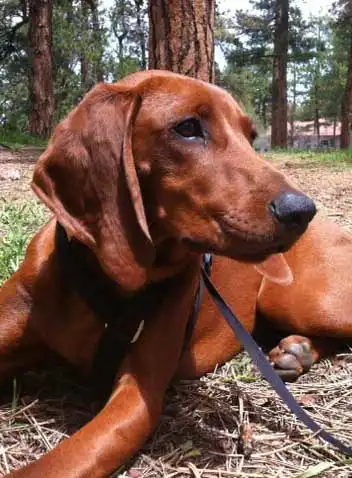
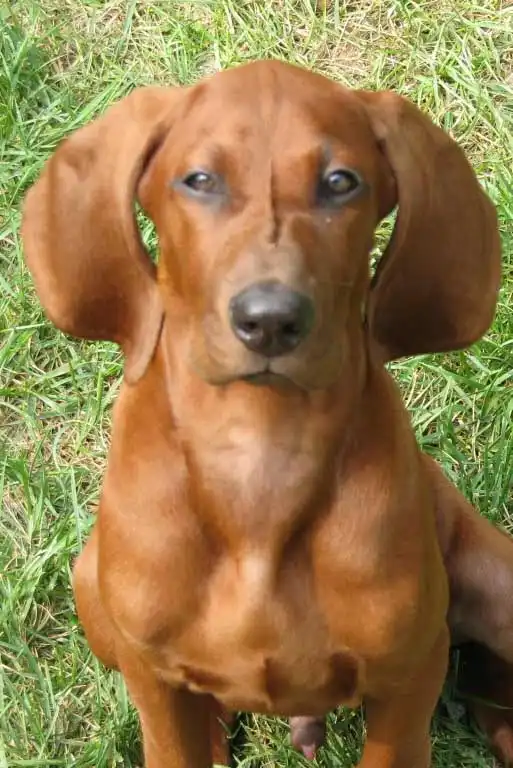
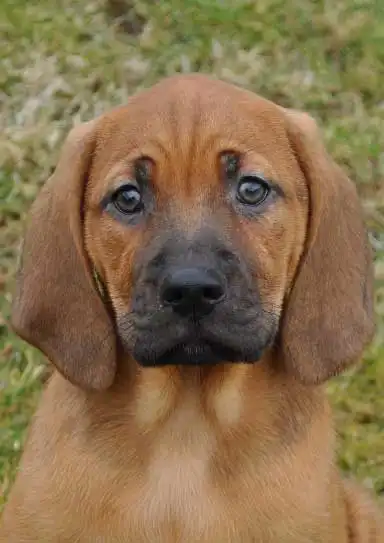
The Redbone Coonhound is a medium-sized, sturdy, and sleek breed, built for agile movement through swamps, rocky landscapes, and wooded areas. Its stride is balanced, with both the head and tail held high. This breed has a square physique, being slightly longer than it is tall. A long, gently curved neck leads to a broad, slightly rounded skull, which features a well-defined muzzle and large, open nostrils on a black nose. The face carries a soulful expression, accentuated by round, dark brown or hazel eyes and large, floppy ears that hang down moderately. A strong, straight back and broad chest are paired with muscular legs. The feet are compact and well-padded, resembling those of a cat, with arched toes. The tail is of moderate length, and the coat is short and glossy, typically a deep mahogany color, though a small amount of white may be present on the chest and feet.
Care Routine
This breed is generally low-maintenance, needing only a weekly brushing due to its moderate shedding and non-hypoallergenic coat. It's important to mention that the Redbone Coonhound can develop a musty smell, which can be alleviated with regular baths. Their long, floppy ears require frequent cleaning and should be kept dry to help prevent the ear infections to which they are prone. Furthermore, their nails grow quickly and should be trimmed regularly to prevent splitting or cracking. The Coonhound requires daily exercise and can easily become bored without enough physical activity. Activities such as long walks, jogging, running in open areas, swimming, and hunting are excellent for this breed. It's crucial to keep the dog on a leash or in a secure environment, as they may be tempted to chase intriguing scents. The adaptable Redbone can live comfortably both indoors and outdoors, but it thrives best in a rural environment where it can hunt and showcase its vocal tendencies. Spending quality time with this hound is vital; if left alone for extended periods, it may feel lonely. Additionally, be mindful of its diet, as the Redbone is susceptible to obesity.
Behavior & Temperament
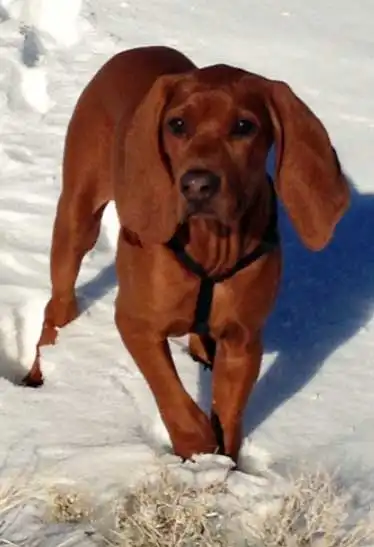
The Redbone Coonhound is a devoted and loyal companion, celebrated for its intelligence and desire to please. These dogs are affectionate and easygoing, relishing playful moments with their families without being overly demanding for attention. While they have a fondness for children, their high energy levels can sometimes be too much for toddlers. Generally, Redbones get along well with other pets, but they may view smaller animals, such as cats, as potential prey and could chase them unless they are raised together from an early age. When interacting with strangers, Redbones can be friendly yet may also take on a protective role. Early socialization is essential to help them become accustomed to different people and animals. One of the standout features of the Redbone is its deep, resonant bark and bay, which can carry over long distances. These dogs exhibit a strong sense of independence and can be somewhat stubborn, which can make training a challenge. It’s advisable to begin training early with short sessions that utilize positive reinforcement and treats. While they are generally more trainable than some breeds, obedience may not come instinctively to them. Full of energy, this breed requires regular daily exercise. Redbones are versatile hunters and swimmers, thriving in a variety of environments. If hunting isn’t on the agenda, these adaptable dogs can also engage in agility and obedience trials, tracking, rally competitions, dog shows, and even participate in search and rescue missions.
Play & Exercise
Things to Know
Cups Per Day
0.0 Cups
Daily Activity
0 Minutes
Average Lifespan
11 Years
Origin
1800s
Type
Pure Breeds
Size
Not Set
Origin Country
Southern United States
Brush Frequency
Daily
Coat Texture
Straight
Register
Your kids have been begging for a pet forever, and you've recently decided that it's time for your family to get a new addition -- a dog! While everyone is excited for the new arrival, you're wondering if you need to have a dog license. How much does it cost? Is it required? Where do you get one?
Member Clubs

PETINNATE
Scenthound

AKC
Hound Group

UKC
Scenthound
Height & Weight
Weight
63 lbs (29 kg)Male: 63 lbs (29 kg) , Female: 63 lbs (29 kg)
Height
24 inches (61 sm)Male: 24 inches (61 sm) , Female: 24 inches (61 sm)
Characteristics
Mixes

Redbone Coonoodle
The Redbone Coonoodle is a medium to large hybrid dog that results from crossing a Redbone Coonhound with a Poodle. Both parent breeds are celebrated for their intelligence and loyalty, indicating that the Redbone Coonoodle is likely to inherit these desirable qualities. This mixed breed is known for its playful nature and a strong desire to please its owners. While Poodles are typically straightforward to train, the Redbone Coonhound may show some stubbornness, which could create training challenges. Nevertheless, the Redbone Coonoodle generally gets along well with other animals, particularly if they have been raised in the same household. Furthermore, given that both parent breeds are recognized as effective watchdogs, you can anticipate that the Redbone Coonoodle will also exhibit protective instincts.
Read more