Stabyhoun
Stabji, Dutch Stabyhoun, Frisian Pointer
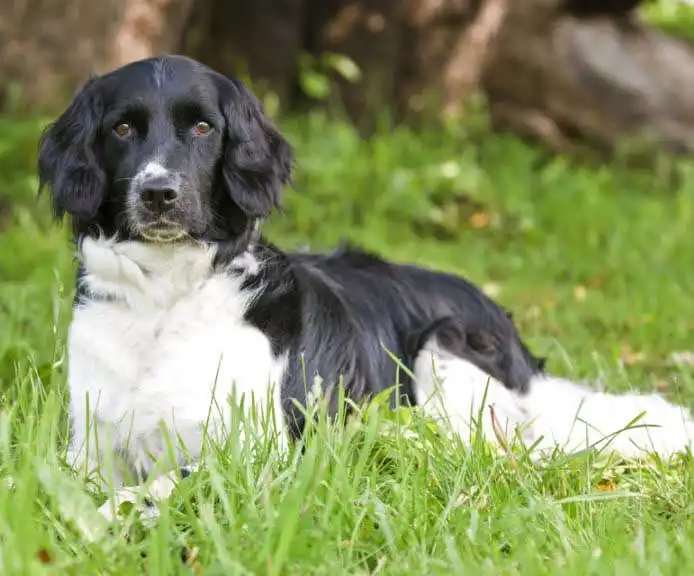
The Stabyhoun, pronounced stay-be-hoon, is a medium-sized dog breed that hails from the Netherlands. In 2013, it was identified as one of the five rarest dog breeds in the world, with a population estimated at just 3,500. The breeding of Stabyhouns is closely regulated by the Dutch Association for Stabyhouns and Wetterhouns, which contributes to their scarcity outside of the Netherlands. Renowned for their loyalty and intelligence, Stabyhouns are excellent companions for families. As a typical pointer breed, they flourish when given specific tasks and require plenty of exercise to keep them happy and energized.
Breed Origin
In the 19th century, literature often depicted dogs that bore a resemblance to the Stabyhoun. Joost Halbertsma, for example, referred to a dog named Bijke, describing him as a “long-haired piebald,” a “talented hunting dog,” and “a companion to children.” The ancestry of the Stabyhoun can be traced back to the Drentsche Patrijshond and the Heidewachtel. This breed emerged in Friesland, particularly from the wooded areas in the southeastern and eastern parts of the province. Its name is derived from the phrase “sta mij bij,” which means “stand by me,” combined with “houn,” the Frisian word for dog. It is thought that some of its forebears arrived in the Netherlands during the Spanish occupation of the northern territories. Many historians note a strong connection between the Stabyhoun and the Small Munsterlander. Originally, the Stabyhoun was used for hunting moles, skunks, and rats, as well as acting as a watchdog and pursuing wild hares. This adaptable breed was commonly found on small farms but has largely evolved into a companion animal. In the early 20th century, the Stabyhoun was often crossbred with the Wetterhoun, a practice that nearly led to the extinction of both breeds. In 1938, Stabyhoun enthusiasts formed the Kynologenclub Friesland to begin efforts to purify the breed. The Stabyhoun gained official recognition from the Kynologenclub Friesland in 1942, and the first breed standard was established in 1944. The Dutch Association for Stabyhouns and Wetterhouns was created in 1947, and today, there are around 6,000 Stabyhouns worldwide.
Breed Appearance
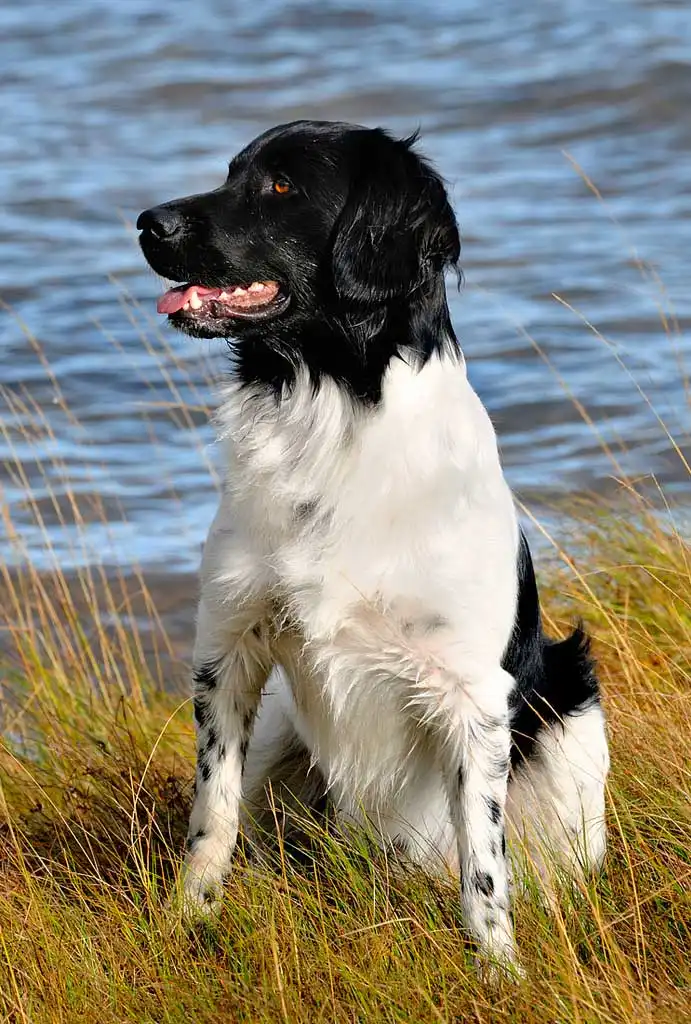
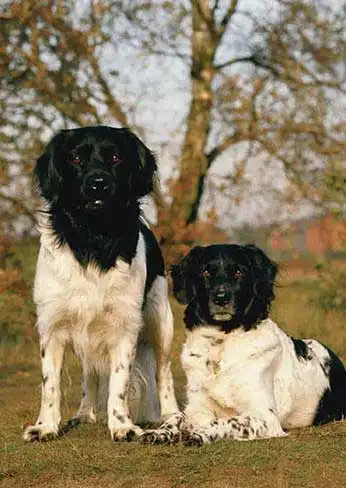
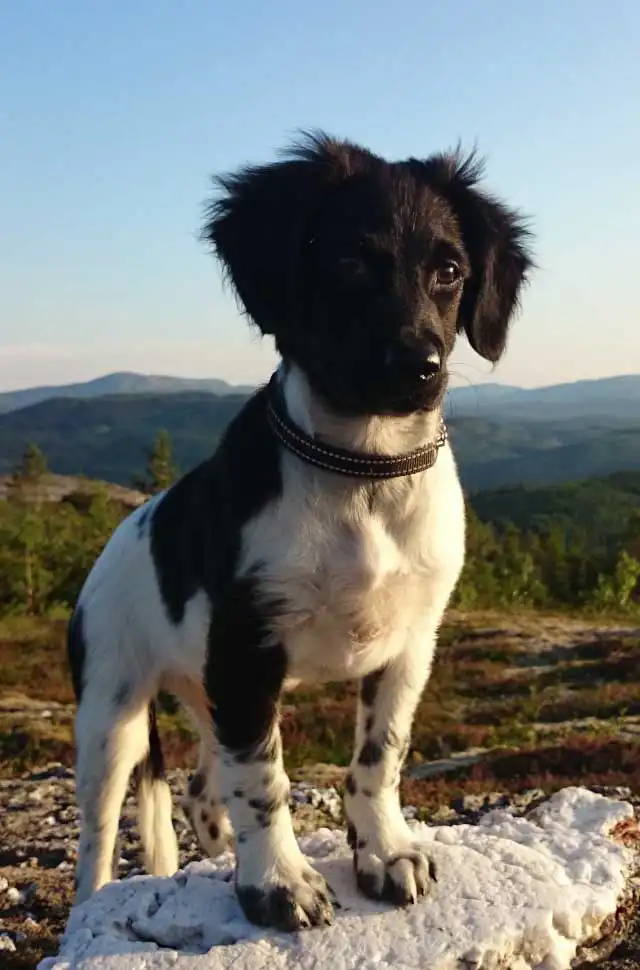
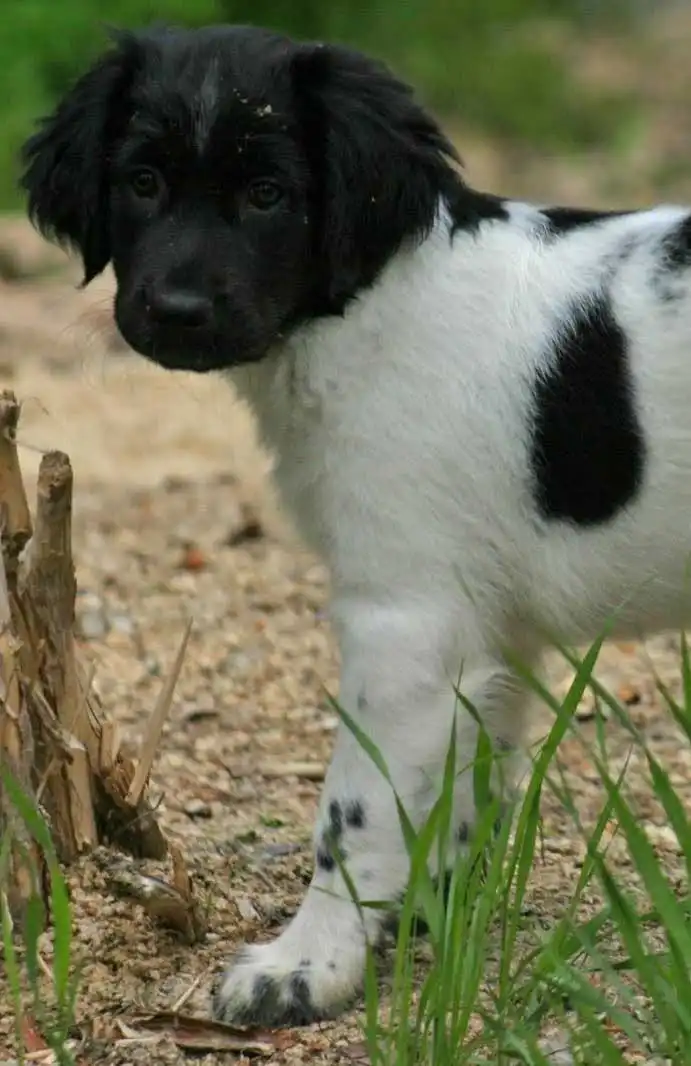
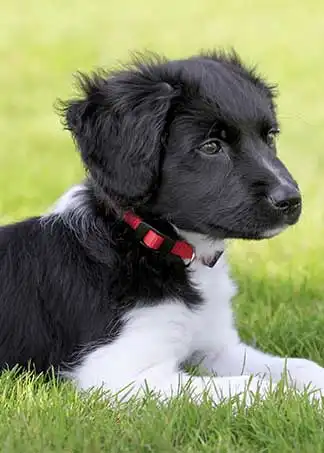
The Stabyhoun is a sturdy pointing dog, distinguished by a body that is slightly longer than its height at the withers. It should not appear overly heavy or excessively delicate. The skin should fit closely to the body without being loose. This breed has a medium-length coat that may show feathering on the chest, neck, legs, and tail. The coat is intended to be weather-resistant and straight, with a slight wave allowed, but it should not have prominent curls. Although the feathering can give the impression of a longhaired dog, too much feathering is not desirable. In terms of color, the Stabyhoun is considered a pied dog if it has black or brown fur with white markings, which may include ticking or freckling. The head can be either black or brown, possibly featuring a blaze on the face. Additionally, the Stabyhoun may also be found in black or brown roan. A black nose and dark eye rims are key characteristics of this breed.
Care Routine
The Stabyhoun has a medium-length coat that is resistant to both weather and dirt. To keep it clean, regular brushing—ideally once a week—is recommended to remove dirt and loose hair. For any tangles in the feathering, start with a pin brush and follow up with a metal comb. Bathing should be limited to about twice a year or as needed, especially if he gets into something particularly unpleasant. This breed does shed seasonally, with two main periods each year when he loses a significant amount of his undercoat, making daily brushing crucial during these times. Nail trimming should be done every two to three weeks as necessary, and his ears should be checked weekly and cleaned when required. It's also important to establish a dental care routine; brush his teeth weekly with dog-specific toothpaste and consider scheduling a professional cleaning annually to maintain optimal oral health.
Behavior & Temperament
The Stabyhoun is a distinctive and rare breed, predominantly found in the Netherlands. This lively dog thrives on family engagement and companionship. Renowned for its protective nature, the Stabyhoun will notify you of any strangers nearby and is adept at keeping your home free from pests such as mice, rats, and moles. While he exhibits a certain level of independence, he is also very affectionate towards his family. However, his strong-willed nature can sometimes be perceived as stubbornness. To ensure a well-mannered and obedient Stabyhoun, consistent training is essential. It’s advantageous for all family members to be involved in his training, helping him understand who is in charge. He typically gets along well with children and cats, but due to his strong prey drive, smaller animals like ferrets and guinea pigs should never be left unsupervised around him. Although he may appear somewhat distant with strangers, early socialization is crucial to prevent him from developing a fear of new people and situations.
Play & Exercise
Things to Know
Cups Per Day
0.0 Cups
Daily Activity
0 Minutes
Average Lifespan
14 Years
Origin
19th century
Type
Pure Breeds
Size
Medium
Origin Country
Netherlands
Brush Frequency
Weekly
Coat Texture
Straight
Register
Your kids have been begging for a pet forever, and you've recently decided that it's time for your family to get a new addition -- a dog! While everyone is excited for the new arrival, you're wondering if you need to have a dog license. How much does it cost? Is it required? Where do you get one?
Member Clubs

PETINNATE
Gun Dog

AKC
Foundation Stock Service

UKC
Gun Dog
Height & Weight
Weight
50 lbs (23 kg)Male: 53 lbs (24 kg) , Female: 46 lbs (21 kg)
Height
20 inches (51 sm)Male: 21 inches (53 sm) , Female: 19 inches (48 sm)
Eye Colors
Brown
Nose Colors
Black
Coat Colors
Black
Brown
White
Pied