Sussex Spaniel
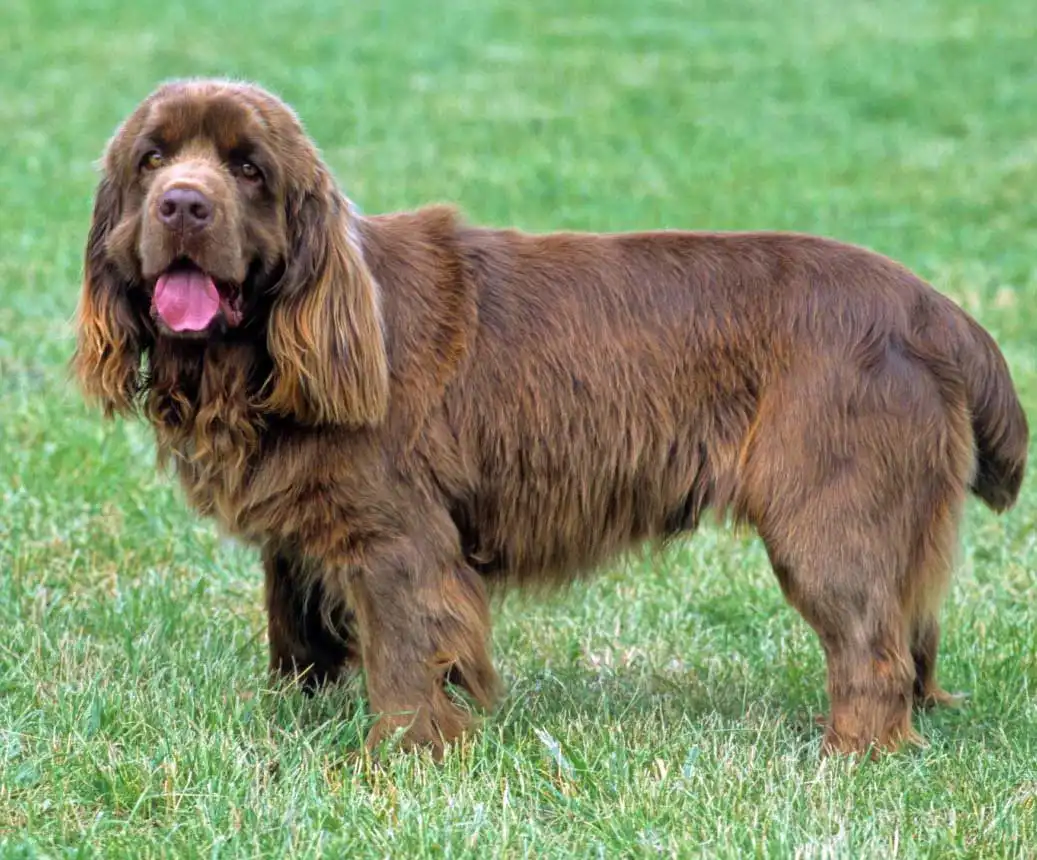
The Sussex Spaniel, celebrated for its intelligence and gentle temperament, takes its name from Sussex, England, where it originated. This breed made its debut in the 1800s and was one of the first to gain official recognition in the AKC Stud Book upon its establishment in 1884. Mr. Fuller played a pivotal role in the breed's development, leaving a lasting mark on its history. Typically, Sussex Spaniels have a lifespan of 13 to 15 years, weigh between 35 to 45 pounds, and stand 13 to 15 inches tall. They are distinguished by their deep chests, robust physiques, wavy ears, and large hazel eyes, which often convey a soulful, youthful expression. Their coat is a striking golden-liver hue. Initially bred for tracking and flushing small game, their abilities have broadened to include bird flushing and retrieving, highlighting their proficiency in the field. This breed is valued not only for its hunting prowess but also for its loving disposition, making it a cherished family pet. While they do bark and serve as dependable watchdogs, they need regular grooming to keep their flowing, wavy coat in good condition. Sussex Spaniels require daily exercise but also relish spending quality time with their families.

Breed Origin
The Sussex Spaniel takes its name from Sussex, England, where it was originally bred. This breed emerged in the 1800s, with Mr. Fuller often credited for its initial recognition, particularly for introducing the unique golden-liver coat that defines the Sussex Spaniel. While comprehensive records of its ancestry are scarce, it is thought that the breed was developed through crossbreeding with the Clumber Spaniel and the Field Spaniel to improve its genetic variety. Phineas Bullock, who was instrumental in the creation of the Field Spaniel, also contributed to the refinement of the Sussex Spaniel's characteristics. Breeders Moses Woolland and Campbell Newington are recognized for their dedication to saving the breed from near extinction. Initially, the Sussex Spaniel was prized for its ability to hunt a considerable amount of game on foot, making it a popular choice among sporting breeds during the 1800s. However, its slower speed and tendency to bark sometimes led hunters to be cautious about using it. Today, the Sussex Spaniel is considered a rare breed that narrowly escaped extinction. It is particularly valued for its exceptional sense of smell and relentless determination in tracking game. The breed was first mentioned in the magazine Sportsmen's Cabinet in 1803 and made its first appearance at the Crystal Palace dog show in 1862. Notably, in 1884, the Sussex Spaniel was one of the first ten breeds recognized by the newly formed American Kennel Club (AKC).
Breed Appearance
The Sussex Spaniel is distinguished by its rectangular, low-profile body, which allows it to maneuver effectively through thick underbrush. This breed exhibits a deliberate yet powerful stride. Its build features loose skin, a feathered tail, and well-developed limbs. The large hazel eyes reflect a gentle demeanor, often giving off a serious or contemplative look. Its ears are thick, wavy, and hang low on the head. The skull has a moderate length with a prominent indentation down the center, while the muzzle appears broad and square from the side. The coat boasts a rich golden-liver hue, enveloping a short, slightly arched neck and a deep, rounded chest adorned with white markings. Typically, the tail is docked to a length of 5 to 7 inches and is set low. The shoulders are strong and positioned back, while the forelegs are short, sturdy, and slightly bowed, ensuring a straight alignment.

Care Routine
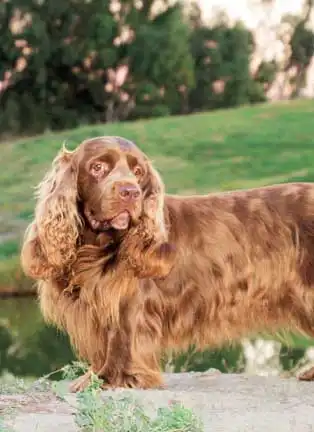
The Sussex Spaniel requires regular grooming to maintain its wavy, feathered coat in optimal condition. Daily brushing is crucial to prevent tangles. This breed is prone to drooling, making coat hygiene particularly important. Bathing should be performed every 6 to 8 weeks, based on necessity. It's important to note that the Sussex Spaniel is not hypoallergenic and has a moderate shedding rate. While they generally do not emit a strong odor, neglecting coat care due to drool can result in unpleasant smells. To avoid nail overgrowth and potential injuries, trimming should occur every 3 to 4 weeks. Additionally, weekly ear cleaning is advisable to eliminate debris, and regular brushing of teeth is essential for maintaining dental health. Although the Sussex Spaniel is not considered a high-energy breed, it still requires daily exercise to remain content and healthy. Suitable activities include leashed walks and playtime in a secure yard. This breed thrives in warm environments and benefits from having a fenced area to explore.
Behavior & Temperament
The Sussex Spaniel is characterized by a more laid-back energy level in comparison to other Spaniel breeds. Renowned for its friendly and easy-going demeanor, this breed is an ideal companion for families, thanks to its serene temperament and joyful personality. Although the Sussex Spaniel is skilled in hunting, its propensity to bark can occasionally pose a challenge. This sociable dog thrives on human interaction, particularly with children, and typically coexists well with other pets, especially when it receives appropriate training during its early development. With a naturally patient nature, the Sussex Spaniel is forgiving and allows others the chance to bond with it. Furthermore, it acts as a reliable watchdog, displaying a strong protective instinct towards its family, though it may initially be wary of newcomers before gradually becoming more welcoming. Training this breed is generally uncomplicated, particularly when utilizing positive reinforcement methods. Key to the training process are patience and encouragement.

Play & Exercise
Things to Know
Cups Per Day
2.0 Cups
Daily Activity
60 Minutes
Average Lifespan
14 Years
Origin
1800s
Type
Pure Breeds
Size
Medium
Origin Country
England
Brush Frequency
Daily
Coat Texture
Wavy
Register
Your kids have been begging for a pet forever, and you've recently decided that it's time for your family to get a new addition -- a dog! While everyone is excited for the new arrival, you're wondering if you need to have a dog license. How much does it cost? Is it required? Where do you get one?
Member Clubs

PETINNATE
Gun Dog

AKC
Sporting Group

UKC
Gun Dog
Height & Weight
Weight
40 lbs (18 kg)Male: 40 lbs (18 kg) , Female: 40 lbs (18 kg)
Height
14 inches (36 sm)Male: 14 inches (36 sm) , Female: 14 inches (36 sm)
6 Months

30 lbs ( m 30 lbs, f 30 lbs )
11 inches ( m 11 inches, f 11 inches )
12 Months
35 lbs ( m 35 lbs, f 35 lbs )
12 inches ( m 12 inches, f 12 inches )
18 Months
40 lbs ( m 40 lbs, f 40 lbs )
14 inches ( m 14 inches, f 14 inches )
Eye Colors
Hazel

Nose Colors
Brown
Coat Colors
Brown