Welsh Terrier
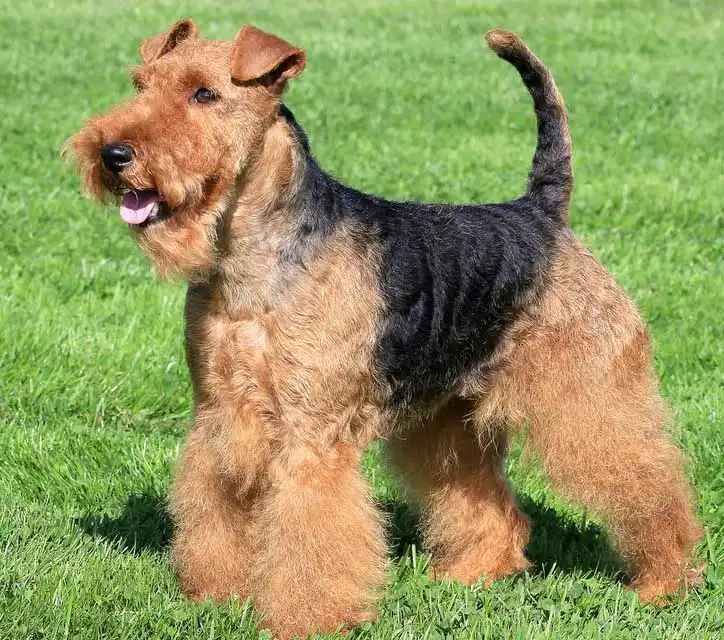
The Welsh Terrier embodies the classic characteristics of a Terrier: courageous, energetic, playful, and spirited. Hailing from Wales in the 1700s, these bearded dogs were initially bred for hunting, adeptly navigating small burrows and caves to flush out game for hunters. While they continue to be employed for hunting and tracking, Welsh Terriers are now more commonly treasured as family pets. They make fantastic companions for children, are excellent running partners, and are always ready to partake in any fun activity you can think of. Historically known as the Black and Tan Wire Haired Terrier due to their striking black and tan coats, these dogs are easily identifiable by their curly beards. The breed was first showcased in England in 1884 and has been a staple in dog shows ever since. When Prescott Lawrence brought them to America that same year, they quickly captured attention at the Westminster Kennel Club, thanks to their distinctive appearance and charming personalities. The American Kennel Club recognized the breed in 1884, which led to the establishment of the Terrier Club of America shortly after. If you’re looking for a dog that will keep you entertained, bring joy to your life, and help manage pesky critters, the Welsh Terrier might be the perfect fit for you. However, it’s crucial to keep in mind that they require ample exercise and can become destructive if they’re not adequately stimulated. By ensuring they remain active and engaged, you can enjoy the delightful companionship of a Terrier that will undoubtedly enhance your life.
Breed Origin
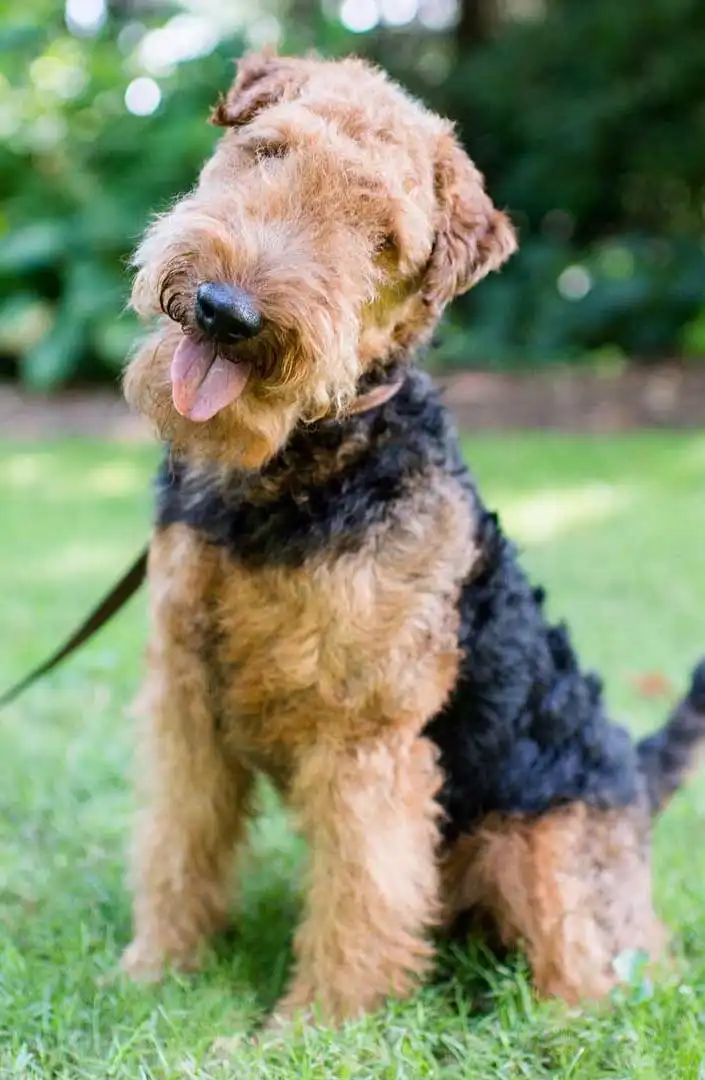
The Welsh Terrier has its origins in the late 18th century, hailing from the scenic landscapes of Wales. Although precise information about its beginnings is limited, it is generally accepted that the breed descends from the Old English Black and Tan Terrier. Typically, this medium-sized dog reaches a height of about 15 inches and weighs around 20 pounds, with females being slightly smaller than males. The breed was developed with a focus on enhancing traits such as hunting ability, agility, and a lively disposition, leading to the beloved Welsh Terrier we know today. In the 19th century, the Welsh Terrier began appearing in dog shows throughout England, where it was initially categorized as an Old English Terrier. Over time, it carved out its own distinct identity and received formal recognition from the Kennel Club of England in 1885. The breed made its debut in the United States in 1901, where it quickly gained popularity. Nowadays, Welsh Terriers are appreciated not only for their hunting and tracking capabilities but also as loving family pets and companions. As an energetic breed, the Welsh Terrier needs plenty of exercise—ideally, at least an hour each day. This physical activity is essential, as Terriers can become restless and destructive if they lack stimulation. Therefore, potential owners should be ready to dedicate time and effort to proper training and to keep their lively dog engaged and well-exercised.
Breed Appearance
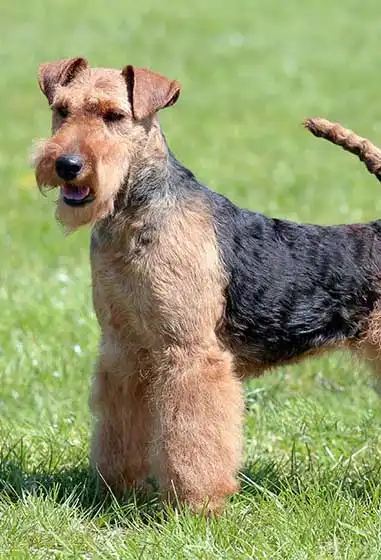
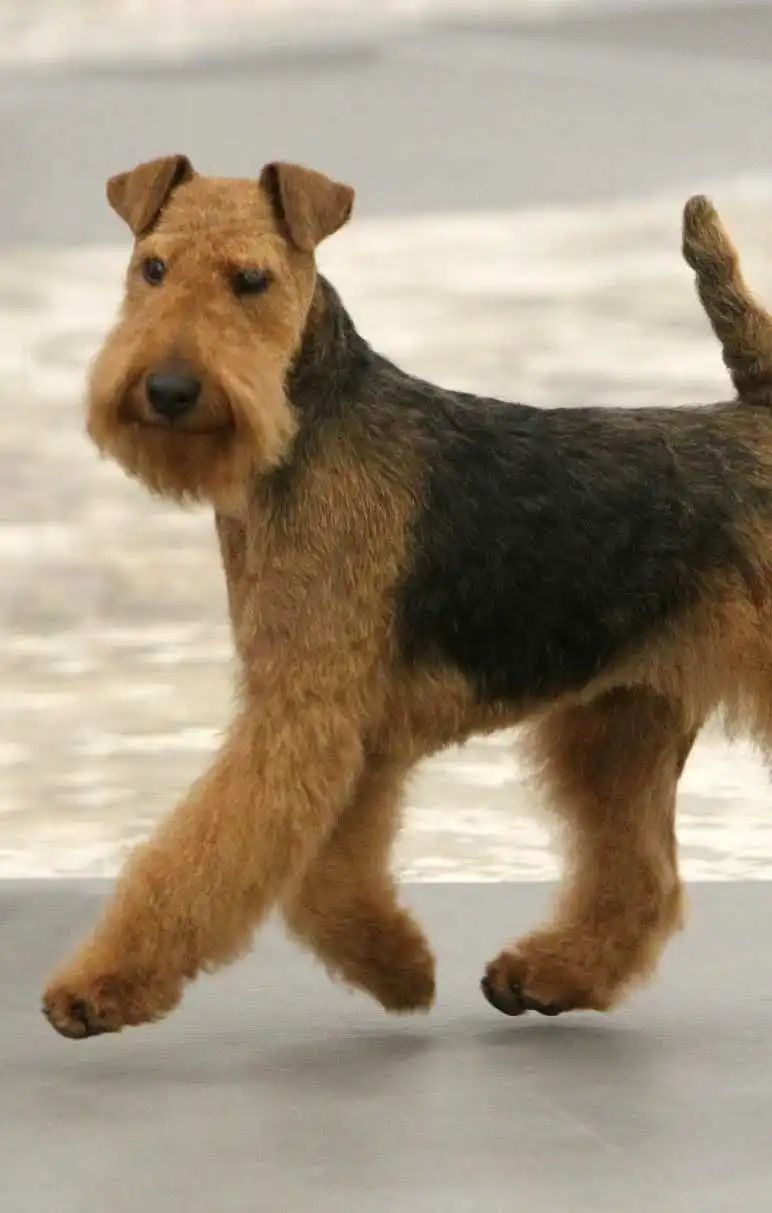
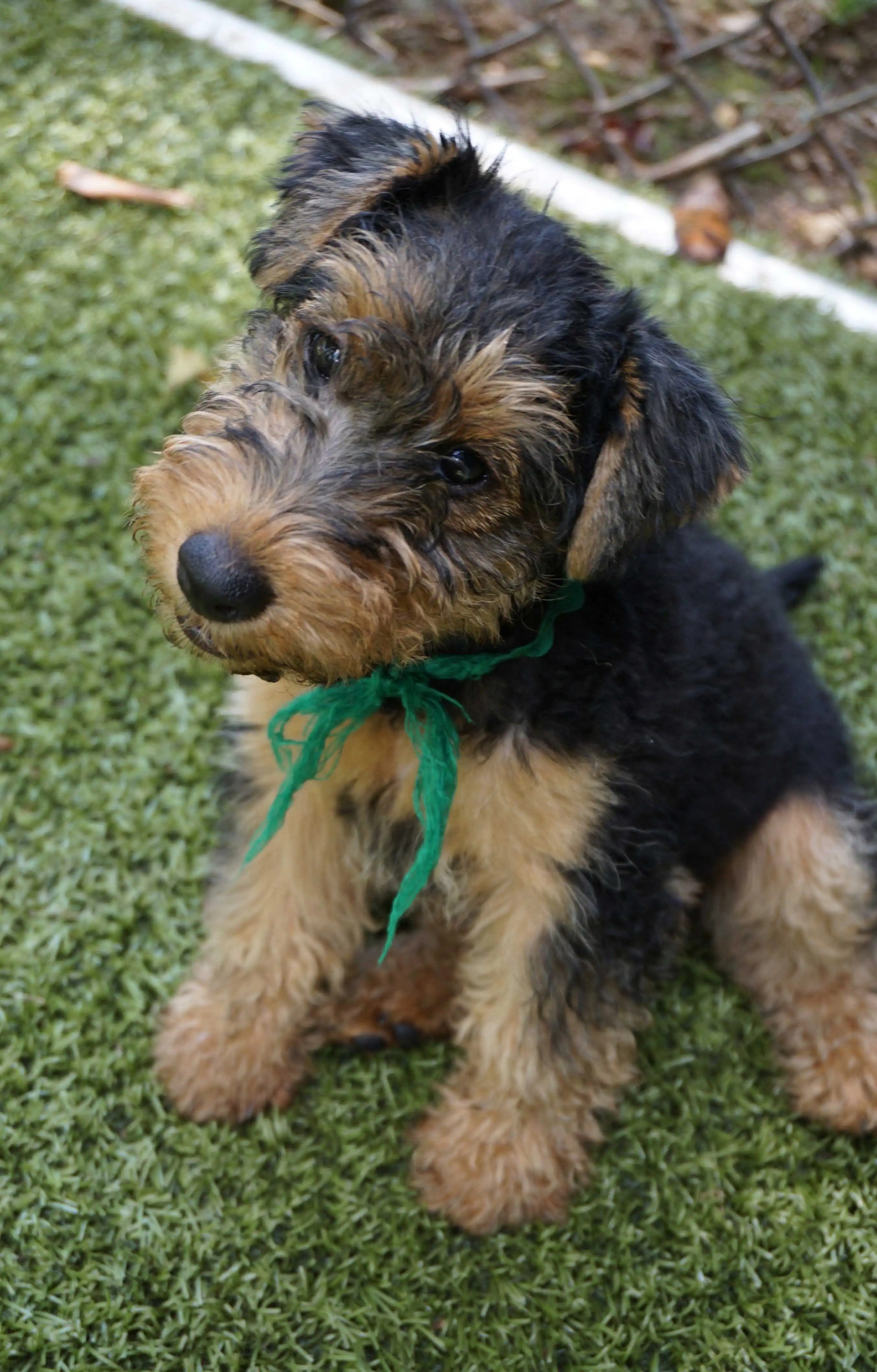
The Welsh Terrier is characterized by a notably square build, a feature accentuated by its docked tail that, when raised, aligns perfectly with the height of its head. This breed's appealing and unique look is further complemented by its bushy, curly beard, mustache, and prominent eyebrows, giving it a playful appearance reminiscent of a jolly elderly gentleman—sure to bring smiles to those who see it. Typically, the Welsh Terrier displays a striking combination of black, tan, and grizzle fur, highlighted by a black "jacket" on its back, which completes its distinctive coat pattern. Its triangular ears and small, almond-shaped eyes enhance the dog's charming personality, which is vividly expressed through its facial features. With a double coat, the Welsh Terrier possesses a soft undercoat paired with a wiry, thick outer layer, offering protection against various weather elements.
Care Routine
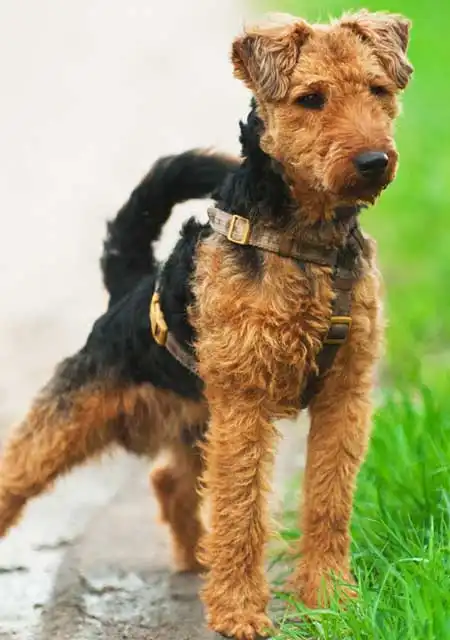
While this breed is naturally appealing, regular brushing and grooming are vital to uphold its aesthetic. You can choose to groom your dog yourself or opt for a professional service for a more refined appearance. If you're preparing your Welsh Terrier for dog shows, keep in mind that the grooming requirements differ from standard pet care. In these instances, hand stripping the coat may be necessary rather than just brushing; hiring a groomer can simplify this process. When grooming at home, aim to brush your dog at least weekly to keep his skin and coat healthy and vibrant. Additionally, using dog-safe toothpaste on a weekly basis can help reduce tartar buildup and prevent dental problems. Since Welsh Terriers have folded ears, it's important to regularly check and clean them. Moisture trapped in the ears can lead to irritations and infections, so frequent cleaning is recommended to prevent these issues. Along with brushing and grooming, remember to keep your dog's nails trimmed and ensure his paws are well cared for.
Behavior & Temperament
While the Welsh Terrier is typically more relaxed than many other Terriers, it still has a significant amount of energy. Originally bred for hunting and capturing game, this breed is known for its intelligence, quick barking, and a strong instinct to chase anything that moves. If you're looking for a calm, low-maintenance pet, the Welsh Terrier may not be the ideal choice. This breed needs plenty of exercise to avoid getting into trouble, and although it generally gets along well with children, it might not be as sociable with other dogs. Early socialization is essential; introducing your Welsh Terrier to a variety of people and animals during its formative years will help it adjust better. However, its spirited nature is likely to persist. The Welsh Terrier is a great companion for those who enjoy regular jogging, hiking, and active walks. If you thrive on physical activity and adventure, this breed could be just what you’re looking for!
Play & Exercise
Things to Know
Cups Per Day
1.8 Cups
Daily Activity
30 Minutes
Average Lifespan
12 Years
Origin
1700s
Type
Pure Breeds
Size
Small
Origin Country
Wales
Brush Frequency
Weekly
Coat Texture
Wiry
Register
Your kids have been begging for a pet forever, and you've recently decided that it's time for your family to get a new addition -- a dog! While everyone is excited for the new arrival, you're wondering if you need to have a dog license. How much does it cost? Is it required? Where do you get one?
Member Clubs

PETINNATE
Terrier

AKC
Terrier Group

UKC
Terrier
Height & Weight
Weight
19 lbs (9 kg)Male: 20 lbs (9 kg) , Female: 18 lbs (8 kg)
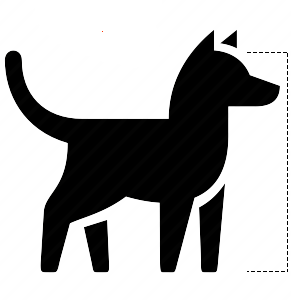
Height
14 inches (36 sm)Male: 14 inches (36 sm) , Female: 14 inches (36 sm)
6 Months
12 lbs ( m 12 lbs, f 12 lbs )
10 inches ( m 10 inches, f 10 inches )
12 Months
15 lbs ( m 15 lbs, f 15 lbs )
13 inches ( m 13 inches, f 13 inches )
18 Months
17 lbs ( m 17 lbs, f 17 lbs )
13 inches ( m 13 inches, f 13 inches )
Eye Colors
Brown

Nose Colors
Black
Coat Colors
Black
Brown
Characteristics
Mixes
Woodle
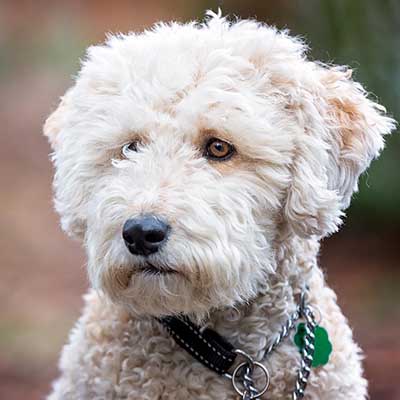
The Woodle is a designer breed created by crossing a Welsh Terrier with a Poodle. Often referred to as the Welshpoo Terrier or Welshdoodle Terrier, this hybrid is celebrated for its affectionate and loving nature, as well as its calm temperament. With a playful spirit, the Woodle enjoys engaging with its owner on a daily basis. Although it is classified as a medium-sized dog, its gentle disposition makes it an excellent companion for seniors, a perfect pet for apartment living, and a great choice for homes with limited outdoor space. When fully grown, a Woodle typically reaches a height of 15 to 20 inches at the shoulder and weighs between 20 to 50 pounds.
Read more