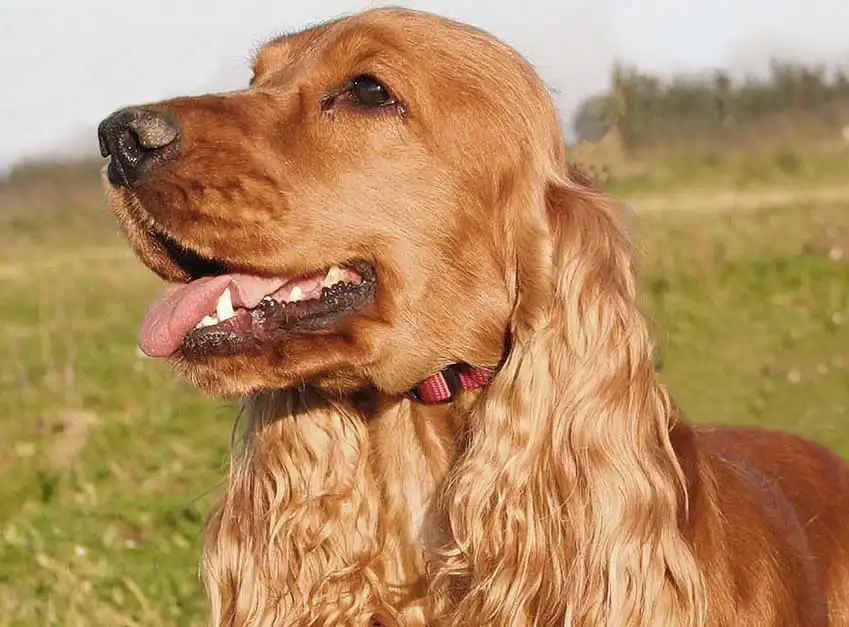
English Cocker Spaniel
Cocker, Merry Cocker, Woodcock Spaniel
English Cocker Spaniels are often described as joyful, a portrayal that truly captures their essence. Initially bred to retrieve game from thick underbrush during hunting expeditions, these dogs are energetic and devoted companions. Their coats, which are soft and silky, are prone to matting and tangling, making regular grooming essential due to their considerable shedding. The English Cocker Spaniel is the ancestor of the American Cocker Spaniel, which has been selectively bred to be somewhat smaller, with a rounder skull and a diminished prey drive. Although English Cocker Spaniels need more exercise than their American counterparts, they tend to be sturdier and less prone to anxiety or nervousness.

Breed Origin
Spaniels are primarily recognized as a category of gun dogs, yet their history predates the invention of firearms. They were initially bred to help hunters by flushing out game from thick underbrush and, in some cases, retrieving birds from water. Originally, Spaniels were classified into two main groups: water Spaniels and land Spaniels. It wasn't until the 17th century that more specific distinctions among land Spaniels began to take shape. During this time, they were categorized as either Springer or Cocker Spaniels, based on their size. The larger Spaniels, which surpassed a certain weight, were trained to "spring" game for hunters, leading to the name Springers. In contrast, the smaller Spaniels were adept at flushing birds like woodcocks, which is how they earned the name Cocker Spaniels. At this point in their development, both types often appeared in the same litters. In 1902, the Cocker Spaniel Club was founded in England. As Cocker Spaniels were bred in America, they underwent notable changes; their backs became longer, their heads rounder, and their instinct to hunt diminished. This transformation was so significant that in 1935, a group was established to maintain the traditional look of the English Cocker Spaniel, aiming to prevent crossbreeding with the newer American version. By 1946, the American Cocker Spaniel was officially recognized as a separate breed.
Breed Appearance
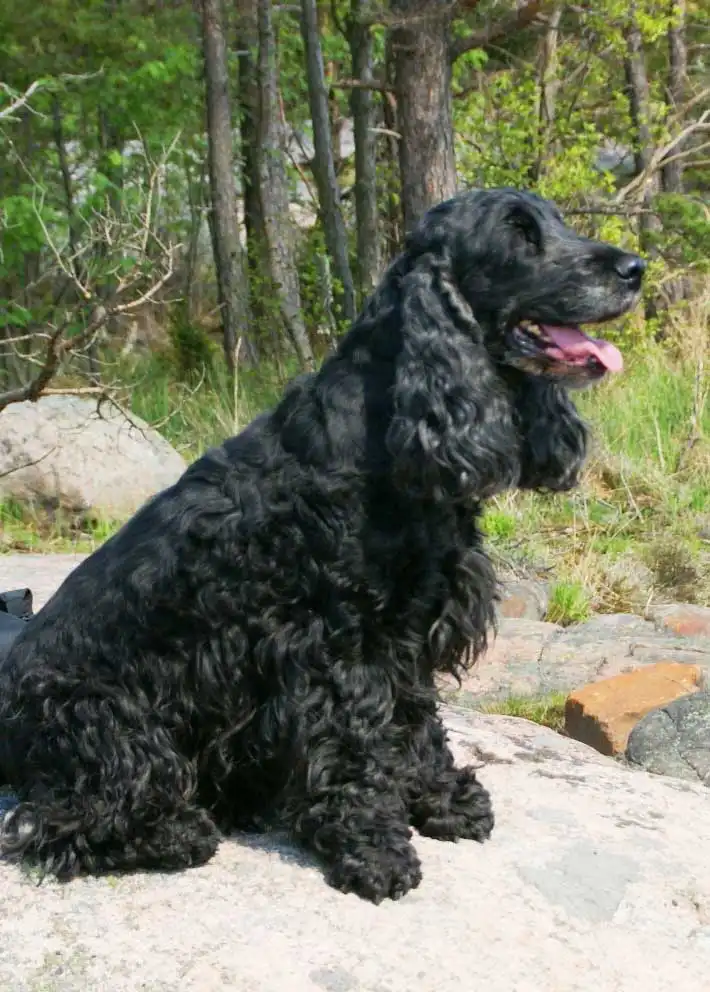
The English Cocker Spaniel is a breed that ranges from small to medium in size, easily recognized by its long ears that hang close to the head, a broad and elongated muzzle, and a soft, expressive look in its eyes. This breed combines muscularity with elegance, crafted for both compactness and strength, which makes them skilled at flushing and retrieving game. One of the most distinctive aspects of the English Cocker Spaniel is its medium-length, silky coat, which is attractively feathered on the belly, legs, ears, and tail. This beautiful coat comes in a variety of colors, which can be grouped into four primary patterns. Solid coats are mainly one color, sometimes featuring small white markings, while open marked coats have large white areas interspersed with patches of solid color. Roan coats exhibit a base color that appears softened or lightened due to a blend of white hairs, and ticking refers to colored spots on otherwise white areas. These patterns can be found in colors such as black, liver, tan, blue, sable, red, orange, golden, and lemon, as well as various combinations of these shades. Dogs with multiple colors and little to no white, like the black and tan Cocker Spaniel, fall under the solid pattern category. Their paws are sturdy and rounded, often compared to those of a cat, featuring thick pads, and they have a long, straight tail that is typically docked at a young age to comply with breed standards or to avoid injury while moving through dense underbrush.

Care Routine
The English Cocker Spaniel is an energetic and vibrant breed that requires significant attention, especially regarding physical exercise. This friendly dog flourishes with social interaction and needs more engagement and activity than many other breeds to ensure its happiness and health. Their beautiful, silky coat is prone to tangling, and the feathering on their ears and legs often collects leaves, twigs, and dirt, making regular grooming essential. Moreover, they tend to shed quite a bit and may carry a subtle yet noticeable doggy odor. To effectively manage tangles and reduce shedding, it’s advisable to brush them several times a week, while bathing them every four to six weeks can help control any unpleasant smells. Additionally, it’s important to routinely check and clean their ears to prevent potential bacterial or fungal infections.
Behavior & Temperament
This breed is celebrated for its keen attentiveness and joyful nature, often described as lively and merry. Initially bred for life in the countryside, they are particularly skilled at tracking scents and uncovering hidden animals, a pursuit they genuinely relish. When you take your English Cocker for a walk or a run, it’s crucial to keep them on a leash, as they can easily revert to their natural instincts upon detecting an intriguing scent, regardless of whether you intended to hunt. Generally, they are friendly with children and other pets, assuming they have been adequately socialized. They tend to be sociable with both people and other dogs, although they may show some wariness around unfamiliar faces. While these small dogs can act as effective watchdogs by alerting you to incoming visitors, they do not possess a strong guarding instinct; after notifying you, they usually leave the rest to your discretion. They flourish in homes with yards where they can burn off their considerable energy, and their propensity to bark frequently makes them less ideal for apartment living.


Play & Exercise
Things to Know
Cups Per Day
2.8 Cups
Daily Activity
60 Minutes
Average Lifespan
14 Years
Origin
1800s
Type
Pure Breeds
Size
Medium
Origin Country
England
Brush Frequency
Weekly
Coat Texture
Wavy
Register
Your kids have been begging for a pet forever, and you've recently decided that it's time for your family to get a new addition -- a dog! While everyone is excited for the new arrival, you're wondering if you need to have a dog license. How much does it cost? Is it required? Where do you get one?
Member Clubs

PETINNATE
Gun Dog

AKC
Sporting Group

UKC
Gun Dog
Height & Weight
Weight
30 lbs (14 kg)Male: 31 lbs (14 kg) , Female: 29 lbs (13 kg)
Height
16 inches (41 sm)Male: 17 inches (43 sm) , Female: 16 inches (41 sm)
6 Months

13 lbs ( m 13 lbs, f 13 lbs )
12 inches ( m 12 inches, f 12 inches )
12 Months
25 lbs ( m 25 lbs, f 25 lbs )
15 inches ( m 15 inches, f 15 inches )
18 Months
29 lbs ( m 29 lbs, f 29 lbs )
15 inches ( m 15 inches, f 15 inches )
Eye Colors
Brown

Nose Colors
Black
Brown
Coat Colors
Black

Sable
Brown
Red

Silver

Gray

Pied

Characteristics
Mixes

Colonial Cocker Spaniel
The Colonial Cocker Spaniel is the result of breeding the American Cocker Spaniel with the English Cocker Spaniel, two breeds that, while distinct, share a close lineage. Renowned for their loving and gentle demeanor, these dogs make wonderful companions for individuals of all ages. However, potential owners should be aware that both breeds may experience social anxiety, which means they should not be left alone for long periods. This consideration is vital for anyone thinking about welcoming one of these delightful dogs into their home. Although they exhibit some similar physical characteristics, there are also significant differences that contribute to the unique appearances of individual dogs.
Read more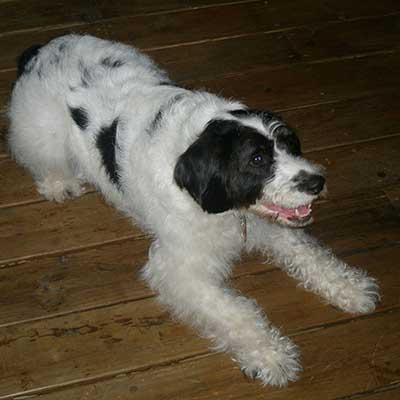
Foxker
The Foxker, a hybrid breed resulting from the combination of the Cocker Spaniel and the Toy Fox Terrier, is celebrated for its loyalty and friendly disposition towards families. This clever dog is typically well-mannered and barks infrequently, mainly to alert you to the presence of unfamiliar individuals. While the details of its origins are somewhat vague, it is generally accepted that the Foxker emerged in the 1990s. Weighing between 10 and 25 pounds and standing 10 to 14 inches tall, this medium-sized breed thrives on family companionship and enjoys exploring its surroundings. With a moderate level of energy, the Foxker needs regular exercise, and its soft, fluffy coat requires consistent grooming to maintain its health and appearance.
Read more