Miniature Pinscher
Reh pinscher, Zwergpinscher, Mini Pin
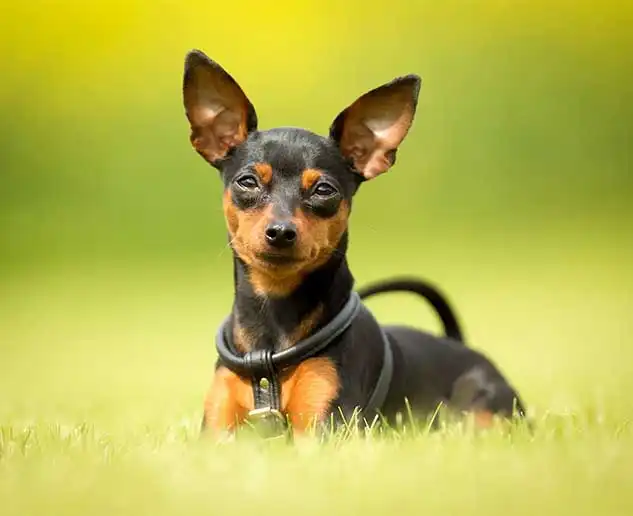
The Miniature Pinscher should not be mistaken for a diminutive version of the Doberman Pinscher; instead, it is more accurately described as a small-scale likeness of its larger relative. Interestingly, the Miniature Pinscher actually predates the Doberman. Often referred to as the Min Pin, this breed originates from the German Pinscher lineage and may also share ancestry with the Italian Greyhound and Dachshund. While the Miniature Pinscher has been officially recognized for over two centuries, the specifics of its ancestral background continue to spark discussion among enthusiasts. Nevertheless, this distinguished breed has been featured in Renaissance art, and artifacts from as far back as 2,000 years ago attest to its enduring existence.
Breed Origin
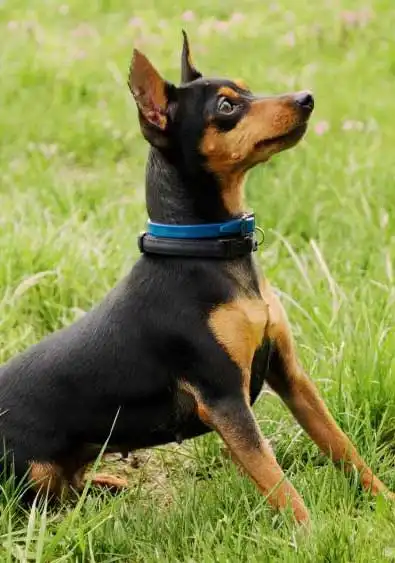
The Miniature Pinscher is often confused with the larger Doberman Pinscher, but it’s important to recognize that the former is simply a smaller counterpart of the latter. The Doberman is a more modern breed, whereas the Miniature Pinscher has a history that some argue dates back approximately 2,000 years, although detailed documentation only began to surface in the 19th century. Most specialists agree that the Miniature Pinscher is part of the German Pinscher lineage, with "Pinscher" translating to a type of biter or terrier in German. There are also suggestions that the breed may have been shaped by the Italian Greyhound and the Dachshund. The red-coated Miniature Pinscher was affectionately known as the Reh Pinscher, named for its resemblance to the small red deer that roamed Germany at the time. By the late 1800s, dedicated efforts to refine the Miniature Pinscher were underway, culminating in the formation of the Pinscher Klub in Germany, which would later be renamed the Pinscher-Schnauzer Klub. The breed made its first appearance at the Stuttgart Dog Show in 1900. Just 19 years later, the Miniature Pinscher arrived in the United States, where it quickly became a favorite. In 1929, the Miniature Pinscher Club of America was established, and the breed gained recognition from the American Kennel Club that same year. Originally, these dogs were employed for rat control, much like the Manchester Terrier, but today, the Miniature Pinscher is treasured as a beloved companion. This small yet noble breed, celebrated for its lively spirit, has rightfully earned the moniker “King of Toys.”
Breed Appearance
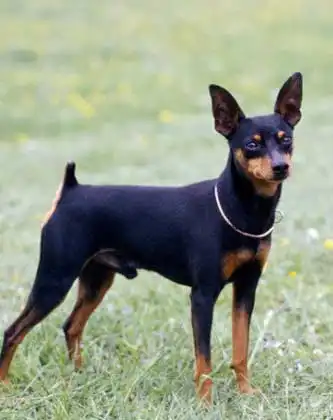
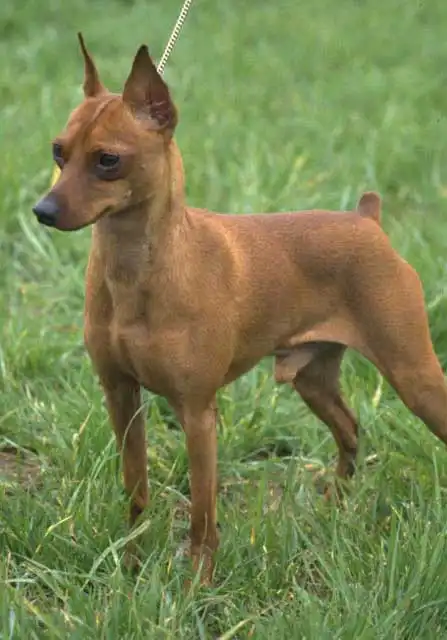
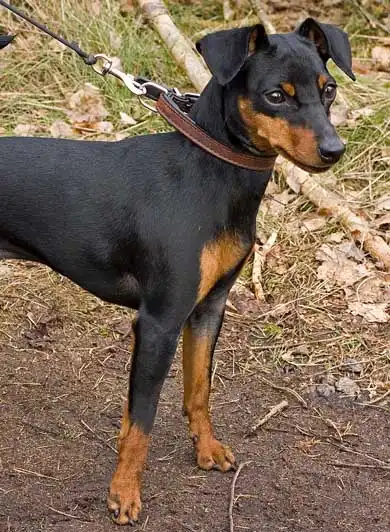
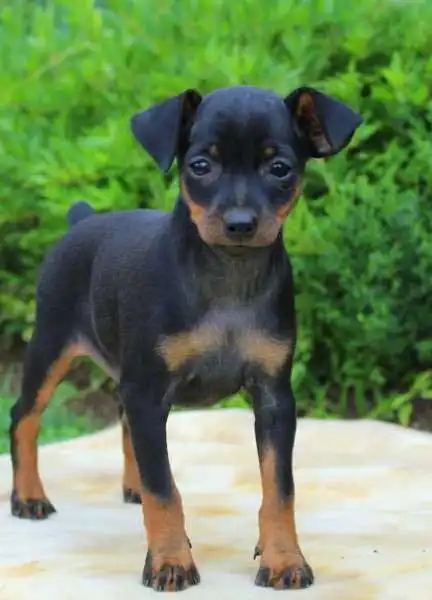
The Miniature Pinscher is a breed that exemplifies grace and poise, radiating both confidence and energy. Its head is elongated and slender, with slightly oval dark eyes that enhance its expressive character. The ears are set high and stand erect, adding to its vigilant look. The muzzle is sturdy rather than fragile, ending in a black nose, though those with chocolate coats sport a nose that matches their fur. The lips are tightly sealed, the cheeks are well-defined, and the bite is of the scissor type. The shoulders of the Miniature Pinscher are cleanly defined and moderately sloped, with elbows that are close to the body. When viewed head-on, its forelegs appear straight and robust, culminating in small, cat-like toes. The hind legs are equally straight and well-angled, showcasing powerful, muscular thighs. Like the front feet, the back feet are small and feature well-arched, cat-like toes. Typically, the tail is cropped to a length that complements the dog’s body and is carried above the level of the back. This breed comes in a variety of colors, but it is most frequently seen in red or black, often highlighted by distinctive rust-colored markings on the face and chest.
Care Routine
The Miniature Pinscher boasts a sleek, short coat that requires minimal maintenance. A simple brushing once a week suffices to keep its coat shiny and healthy. It's best to limit bathing and shampooing, as frequent washing can remove the skin's natural oils, potentially causing skin problems. Many pet owners prefer using a damp washcloth for cleaning, starting at the head to gently remove dirt around the eyes and moving towards the tail. Additionally, regular dental hygiene and nail trimming are essential for ensuring your Min Pin remains healthy and looking its best. This breed is characterized by its playful demeanor and high energy, necessitating plenty of exercise to help them burn off their excess energy. Miniature Pinschers thrive on companionship and do not handle being left alone for long periods well. Their short coat makes them ill-suited for cold climates, and they can also struggle in extreme heat. They do best in moderate climates and adapt well to living in apartments and urban settings. In terms of nutrition, a Miniature Pinscher, classified as a toy breed, generally requires between ½ to 1 cup of dry food daily, divided into two meals. However, the exact amount should be adjusted based on your dog's age, activity level, and metabolism. Monitoring your Min Pin's dietary needs and making necessary adjustments will help ensure their overall health.
Behavior & Temperament
The Miniature Pinscher, affectionately known as the “King of Toys,” earns this moniker not just for its regal look but also for its assertive demeanor. This compact breed exhibits a strong instinct to lead, which can make novice dog owners feel as if they are being ruled by a spirited little monarch. To establish your authority with a Miniature Pinscher, it is crucial to start training and socialization early and maintain consistency. This breed is quite affectionate with its family, particularly enjoying the presence of children. However, due to its petite stature, it’s wise to supervise any interactions with young kids to avoid accidents. Always ensure the safety of both your children and your dog by providing proper oversight. While the Miniature Pinscher is loving towards its family, it tends to be aloof with strangers and may not be very friendly with other pets. If you intend to have additional animals, early socialization is vital to prevent any undesirable behaviors. With its energetic and playful nature, the Miniature Pinscher needs plenty of exercise and playtime. Training can be somewhat challenging, as this breed may only respond moderately to commands. Nevertheless, with commitment, consistency, and patience, the Miniature Pinscher can develop into a devoted and entertaining companion for your household.
Play & Exercise
Things to Know
Cups Per Day
1.0 Cups
Daily Activity
60 Minutes
Average Lifespan
13 Years
Origin
1600s
Type
Pure Breeds
Size
Small
Origin Country
Germany
Brush Frequency
Weekly
Coat Texture
Straight
Register
Your kids have been begging for a pet forever, and you've recently decided that it's time for your family to get a new addition -- a dog! While everyone is excited for the new arrival, you're wondering if you need to have a dog license. How much does it cost? Is it required? Where do you get one?
Member Clubs

PETINNATE
Companion Dog

AKC
Toy Group

UKC
Companion Dog
Height & Weight
Weight
9 lbs (4 kg)Male: 9 lbs (4 kg) , Female: 9 lbs (4 kg)
Height
11 inches (28 sm)Male: 11 inches (28 sm) , Female: 11 inches (28 sm)
6 Months
4 lbs ( m 4 lbs, f 4 lbs )
7 inches ( m 7 inches, f 7 inches )
12 Months
7 lbs ( m 7 lbs, f 7 lbs )
9 inches ( m 9 inches, f 9 inches )
18 Months
9 lbs ( m 9 lbs, f 9 lbs )
11 inches ( m 11 inches, f 11 inches )
Eye Colors
Brown

Nose Colors
Black
Brown
Coat Colors
Black
Brown
Red
Cream
Isabella
Fawn
Blue
Sable
Brindle
Characteristics
Mixes
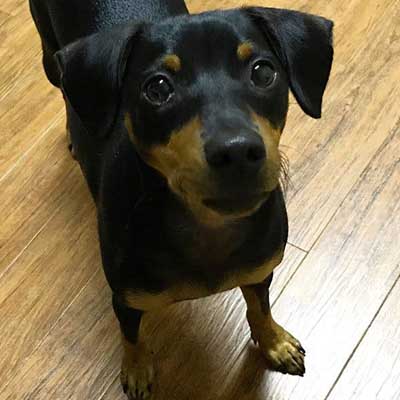
American Rat Pinscher
The American Rat Pinscher is a mixed breed created by crossing the American Rat Terrier with the Miniature Pinscher. Originally, the American Rat Terrier was bred for agricultural tasks and hunting, but it gradually became a cherished pet. On the other hand, the history of the Miniature Pinscher is not as thoroughly documented, though it is recognized that this breed originated in Germany. It is believed that the Mini Pin has connections to Italian Greyhounds and Dachshunds, with the German Pinscher possibly also playing a role in its development. Given that Pinschers were traditionally used for catching rats, it’s likely that the American Rat Pinscher will have a natural instinct to chase small animals and objects. These dogs are small enough to thrive in apartment settings, even without a yard, but they possess a high energy level, making regular exercise crucial for their well-being and happiness.
Read more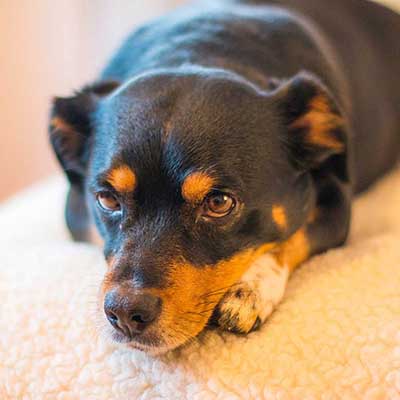
Doxie-Pin
The Doxie-Pin is a hybrid breed that emerges from the union of a Dachshund and a Miniature Pinscher. Generally categorized as a small to medium-sized dog, the Doxie-Pin may take on characteristics from either parent, though it typically stands taller than the Dachshund. Renowned for its loyalty and affection, this mix can also display moments of shyness and timidity. While detailed information about the Doxie-Pin is somewhat scarce, it is officially acknowledged by various organizations, such as the American Canine Hybrid Club, the Designer Breed Registry, the Designer Dogs Kennel Club, the Dog Registry of America, and the International Designer Canine Registry. With its inquisitive nature, this breed is bound to keep you entertained as it explores its surroundings.
Read more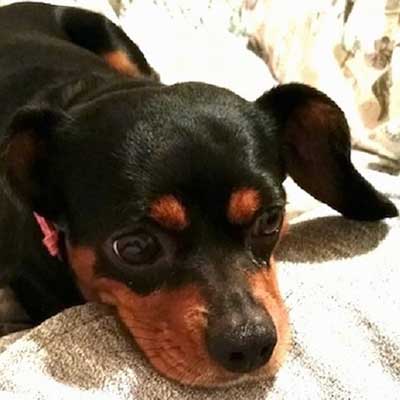
King Pin
The King Pin is a charming crossbreed that combines the Miniature Pinscher and the Cavalier King Charles Spaniel, resulting in a compact toy breed known for its sleek, short coat, elegantly folded triangular ears, and bright, intelligent dark brown eyes. This breed is particularly attractive, embodying many of the best traits from its parent breeds. Full of energy and playfulness, the King Pin also enjoys affectionate moments, readily curling up for cuddles when it's time to unwind. Thanks to its small stature, this breed adapts well to various living environments, whether in a snug apartment or a grand house. However, it's essential to keep in mind that the King Pin can be prone to wandering and distraction, so outdoor activities should ideally take place in a securely fenced area or on a leash to ensure his safety.
Read more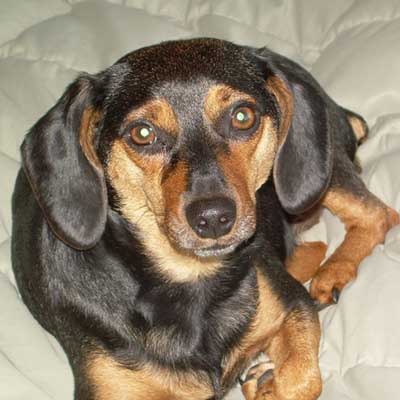
Meagle
The Meagle is a designer dog breed that results from crossing the purebred Miniature Pinscher, commonly known as the Min Pin, with the Beagle, a small hound. This hybrid is celebrated for its playful nature and friendly disposition, thriving on social interaction and showcasing a natural curiosity about the world. With an excellent sense of smell, Meagles love to explore their environment. However, they can be somewhat stubborn, which makes early socialization and consistent training crucial to prevent any unwanted behaviors. The Meagle is recognized by five hybrid and competitive clubs and is also referred to as "Megie" in the Designer Breed Registry.
Read more
Toy Fox Pinscher
The Toy Fox Pinscher gained official recognition from the International Designer Canine Registry in 2009. Renowned for their loving disposition, these dogs are excellent companions for families. They possess a high level of intelligence, making them relatively easy to train, especially when positive reinforcement methods are utilized. This breed is thought to have originated in the United States, resulting from a cross between the Toy Fox Terrier and the Miniature Pinscher. As a small hybrid, Toy Fox Pinschers generally stand up to 12 inches tall. Their energetic and playful nature necessitates regular exercise to maintain their health. Mental stimulation is equally crucial; without it, they may engage in destructive behaviors due to boredom. The parent breeds share several similarities. The Toy Fox Terrier is American, while the Miniature Pinscher has its origins in Germany. Both breeds were initially bred for hunting rodents and are known for their playful and athletic characteristics. Owners and breeders often describe the Toy Fox Pinscher as having a lively personality, which suggests that prospective owners should have some experience, as these dogs can be quite assertive. Despite their strong-willed temperament, Toy Fox Pinschers are very sociable and develop strong bonds with their families. Early socialization is advisable to foster well-rounded temperaments. Both parent breeds are noted for their well-proportioned bodies and sturdy legs. Their short, sparse coats require minimal maintenance, and they adapt well to smaller living spaces, such as apartments, provided they receive adequate daily exercise. These spirited little dogs have a unique gait, often trotting with an elevated step. Although small in stature, they exude confidence, and their high-set ears enhance their bold demeanor.
Read more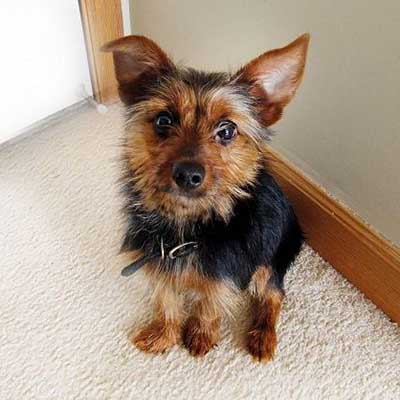
Yorkie Pin
The Yorkie Pin is an energetic hybrid designer dog, whose toy-like appearance belies its roots as a natural hunter and strategist. Renowned for their prowess in dealing with rodents, Yorkie Pins are the result of breeding between two breeds specifically created for rat hunting: the Yorkshire Terrier and the Miniature Pinscher. This diverse lineage gives rise to a variety of physical characteristics, as the parent breeds exhibit notably different looks. Nevertheless, Yorkie Pins consistently display a lively and friendly temperament, coupled with keen intelligence and a sense of adventure. Although they can be somewhat headstrong and their vibrant personalities may present certain challenges, these dogs are deeply affectionate and loving, making them excellent family pets and proficient mouse hunters when properly trained.
Read more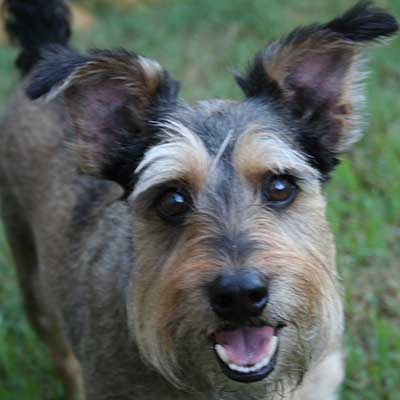
Miniature Schnaupin
The Miniature Schnaupin is a charming small breed celebrated for its intelligence, playful spirit, and joyful personality, making it an excellent choice for families, particularly those with children. These dogs are naturally curious and analytical, often eager to investigate how things work—especially their toys—sometimes even taking them apart. Their affectionate and playful nature is paired with a strong territorial instinct; they will bark enthusiastically to alert you to any strangers and show bravery when facing perceived threats, no matter their size. While they excel as family pets, they thrive on being part of family activities rather than being left outside. As delightful companions, they bring joy and laughter with their playful behavior and love to curl up in your lap, relishing all the affection you can give.
Read more