Norwich Terrier
Jones Terrier, Cantab Terrier, Trumpington Terrier
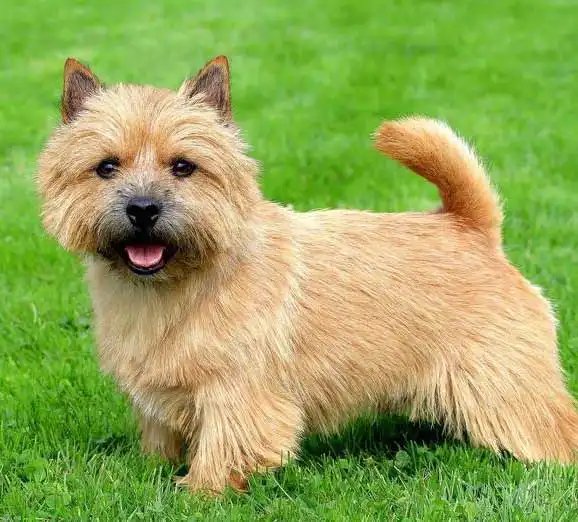
The Norwich Terrier breed originated in England during the 1800s, initially developed as a working dog to control rat populations and other vermin in stables. This breed is the smallest among working terriers, typically standing about 10 inches tall and weighing around 11 pounds. Their coat can come in various colors, including black and tan, grizzle, wheaten, tan, and red. Although these lively dogs were once celebrated for their hunting abilities, they are now mainly cherished as companion animals and show dogs. According to the American Kennel Club, the Norwich Terrier ranks as the 104th most popular breed in the United States, with its registration beginning in 1936. Despite their petite size, they are recognized for their spirited, energetic, and determined personalities, making them endearing and loving pets.
Breed Origin
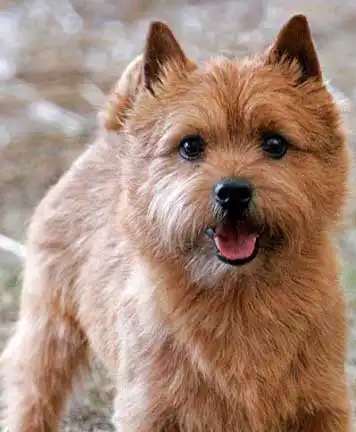
The early Norwich Terriers were a mix of several Terrier breeds, specifically the Jones, Trumpington, and Cantab Terriers. In the 1880s, these dogs became favored by the sporting students at Cambridge University, who used them for hunting rats and flushing out foxes. The first officially recognized Norwich Terrier was a dog named Rags, originating from Norwich in Norfolk County, East Anglia, England. Until 1964, the Norwich and Norfolk Terriers were considered the same breed in England. It was then established that dogs with erect ears would be designated as Norwich Terriers, while those with floppy ears would be classified as Norfolk Terriers. Before this classification, they were known as Norwich Terrier D.E. (drop ears) and Norwich Terrier P.E. (prick ears). It wasn't until 1979 that the Canadian Kennel Club and the United Kennel Club formally recognized them as two distinct breeds. In the United States, both breeds were represented by a single parent club until 2009, when members opted to create two separate organizations: the Norfolk Terrier Club and the Norwich Terrier Club of America. The first Norwich Terrier to reach the U.S. was named William Jones, owned by Robert Strawbridge, Esquire. He was acquired from a breeder named Frank Jones and gained fame for his skills in fox hunting, as well as for siring many generations of Norwich Terriers. This breed's compact size made it particularly effective for flushing foxes, as they could easily enter dens to drive the animals out.
Breed Appearance
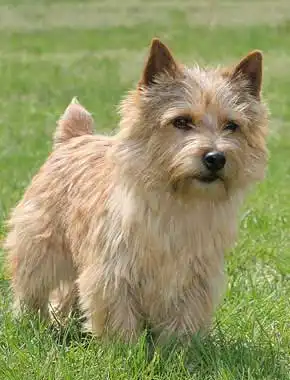
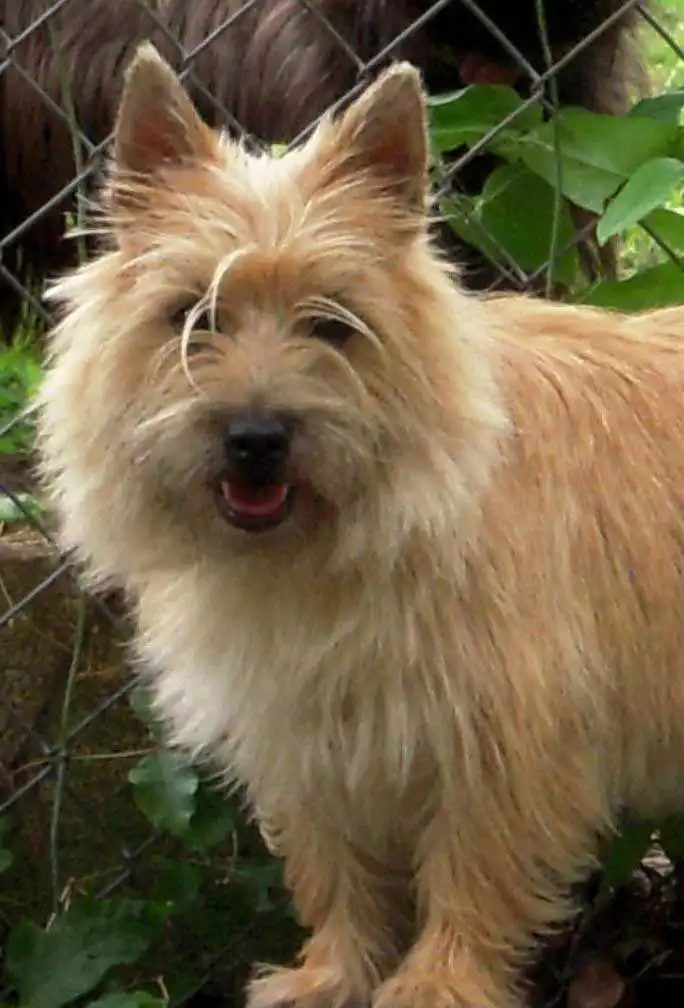
The Norwich Terrier is a small yet muscular dog, reaching about 10 inches in height. With its fox-like face and alert, upright ears, this breed is always ready for action, whether it’s playtime or work. They are adaptable companions, equally at home in hunting scenarios, enjoying playful moments, or simply snuggling in your lap. Notable features include a broad skull, medium-sized perky ears, dark oval eyes, a strong muzzle, and a black nose, with a scissor-like bite and black lips. Their neck is of medium length, complemented by short legs, a sturdy back, a wide chest, and well-sprung ribs. Typically, their tail is medium-length and docked. Renowned for their digging abilities, Norwich Terriers have strong, straight legs and small, round feet with thick pads. Their double coat is nearly impervious to the elements and is available in various colors, such as black and tan, grizzle, wheaten, tan, and red.
Care Routine
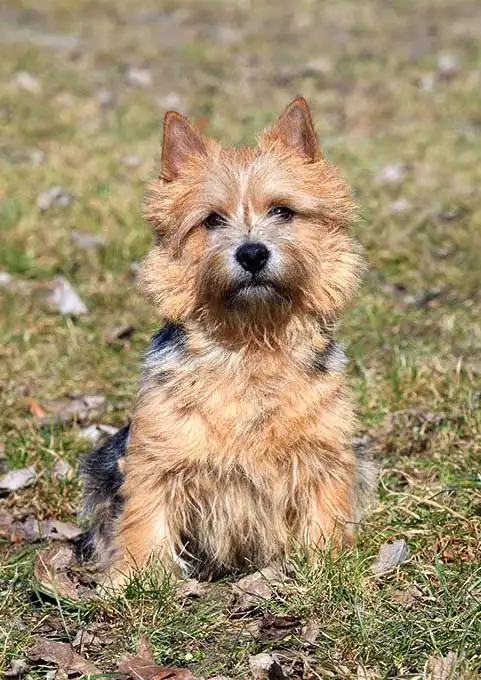
These dogs have low grooming needs, requiring just a weekly brushing to remove loose hair. A soft or slicker brush is adequate, and baths are only necessary if they get especially dirty. However, they do need a grooming method known as stripping, which entails pulling out entire hairs. While this is ideally done by a professional groomer, experienced owners can manage it themselves. Stripping is crucial for keeping the coat at varying lengths and promoting the health of the dog's skin and fur. Additionally, regular nail trimming is essential, and it's wise to check your Norwich Terrier's ears weekly for any wax, dirt, or debris to help prevent ear infections such as otitis media. For show purposes, their tails should be medium docked, but a natural tail is completely acceptable for a pet. In the UK, tail docking is banned for Norwich Terriers unless they are working dogs.
Behavior & Temperament
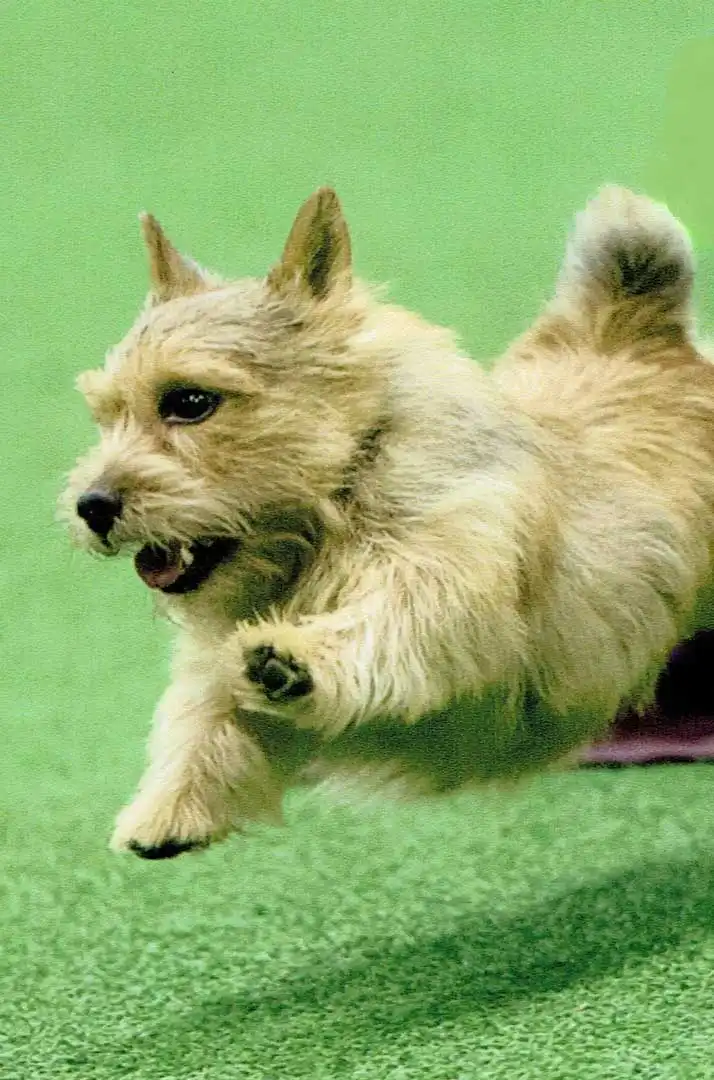
The Norwich Terrier is a lively breed that thrives on regular physical exercise. While many are now primarily kept as pets, they retain strong hunting instincts, which means they should not be allowed to roam freely in unsecured areas. They can get along with other household pets, such as dogs and cats, but caution is necessary around smaller animals that may be seen as prey, including hamsters, rabbits, and ferrets. These dogs tend to bark in response to anxiety, suspicion, or simply when they are bored and have excess energy. Housetraining can present challenges, but with a consistent routine and positive reinforcement for desirable behavior, it is certainly achievable. Additionally, they have a natural tendency to dig, so establishing a specific digging area is often more effective than attempting to curb this behavior entirely. Despite these traits, Norwich Terriers are loving and loyal companions, always ready to play.
Play & Exercise
Things to Know
Cups Per Day
1.0 Cups
Daily Activity
30 Minutes
Average Lifespan
14 Years
Origin
1800s
Type
Pure Breeds
Size
Small
Origin Country
England
Brush Frequency
Weekly
Coat Texture
Wiry
Register
Your kids have been begging for a pet forever, and you've recently decided that it's time for your family to get a new addition -- a dog! While everyone is excited for the new arrival, you're wondering if you need to have a dog license. How much does it cost? Is it required? Where do you get one?
Member Clubs

PETINNATE
Terrier

AKC
Terrier Group

UKC
Terrier
Height & Weight
Weight
12 lbs (5 kg)Male: 12 lbs (5 kg) , Female: 12 lbs (5 kg)
Height
10 inches (25 sm)Male: 10 inches (25 sm) , Female: 10 inches (25 sm)
6 Months
3 lbs ( m 3 lbs, f 3 lbs )
3 inches ( m 3 inches, f 3 inches )
12 Months
6 lbs ( m 6 lbs, f 6 lbs )
5 inches ( m 5 inches, f 5 inches )
18 Months
9 lbs ( m 9 lbs, f 9 lbs )
8 inches ( m 8 inches, f 8 inches )
Eye Colors
Brown
Nose Colors
Blue
Black
Coat Colors
Black
Fawn
Red
Brown