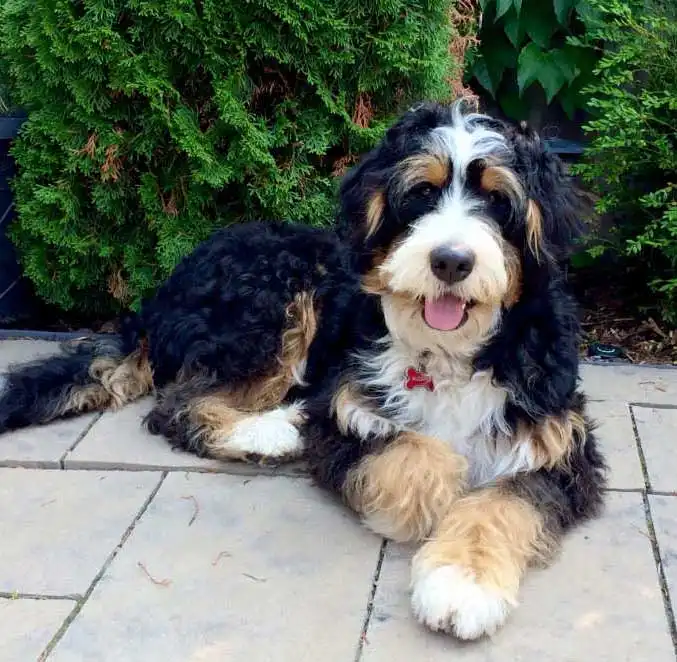
Bernedoodle
Bernese Mountain Poo, Bernesepoo, Bernesedoodle, Bernepoo
The Bernedoodle is a mixed breed resulting from the crossbreeding of Bernese Mountain Dogs and Poodles. The Bernese Mountain Dog originates from Switzerland, while the Poodle has its beginnings in Germany and France. Bernedoodles come in three different sizes, determined by whether the Poodle parent is a toy, miniature, or standard type. The height of Toy Bernedoodles ranges from 12 to 17 inches, Mini Bernedoodles from 18 to 22 inches, and Standard Bernedoodles from 23 to 29 inches, with weights varying from 10 to 90 pounds depending on their size. Although the toy and mini versions may display higher energy levels and a bit of stubbornness, Bernedoodles are generally recognized for their playful and loving demeanor. They thrive on interaction with children and cherish quality time with their families. Due to their strong need for companionship, they struggle when left alone for long periods. Furthermore, they can be wary of strangers, making early socialization essential. Their coats can be long and wavy, curly, or straight; typically, the wavy and curly varieties shed very little, while the straight coats tend to shed more.
Breed Origin
The Bernedoodle is a charming hybrid breed that emerges from the union of two exceptional purebred dogs: the Bernese Mountain Dog and the Poodle. Since the Poodle comes in three different sizes, the Bernedoodle is also available in three variations: the toy Bernedoodle, which measures between 12 to 17 inches in height and weighs 10 to 24 pounds; the mini Bernedoodle, standing 18 to 22 inches tall and weighing 25 to 49 pounds; and the standard Bernedoodle, which reaches heights of 23 to 29 inches and weighs between 70 to 90 pounds. This variety allows you to experience the warmth and companionship of this delightful hybrid in a size that fits your lifestyle! While the initial crossbreeding of the Bernese Mountain Dog and the Poodle likely occurred many years ago, the first deliberate breeding of Bernedoodles is believed to have taken place around 2003 in Canada, when Sherry Rupke produced her inaugural litter in Ontario. She continues to enhance and develop this hybrid to this day. The Bernese Mountain Dog hails from the agricultural regions of Switzerland, specifically from an area known as Bern, which is the source of its name. This breed was originally bred as a working dog, adept at pulling carts, herding livestock, serving as a guardian, and providing companionship. With their large, robust physique, Bernese Mountain Dogs are known for their affectionate, loyal, and friendly nature, making them well-suited for both their original roles and activities like obedience and tracking. Conversely, the Poodle has its origins in Germany and France, tracing back to the 1400s, where it was initially employed as a waterfowl retriever for hunters. This may come as a surprise considering the Poodle's current appearance, often seen in stylish grooming for shows. The breed's name actually stems from the German word “pudel” or “pudelin,” which means to splash, and the French term “chien canard,” translating to duck dog. Historically, the Poodle's coat was designed for practical purposes, such as safeguarding vital organs and reducing the likelihood of fur snagging on underwater debris during hunts. Although the Bernedoodle is not recognized by the American Kennel Club (AKC) due to its hybrid status, it is acknowledged by various organizations, including the American Canine Hybrid Club, the Designer Dogs Kennel Club, the International Designer Canine Registry, and the Designer Breed Registry.
Breed Appearance
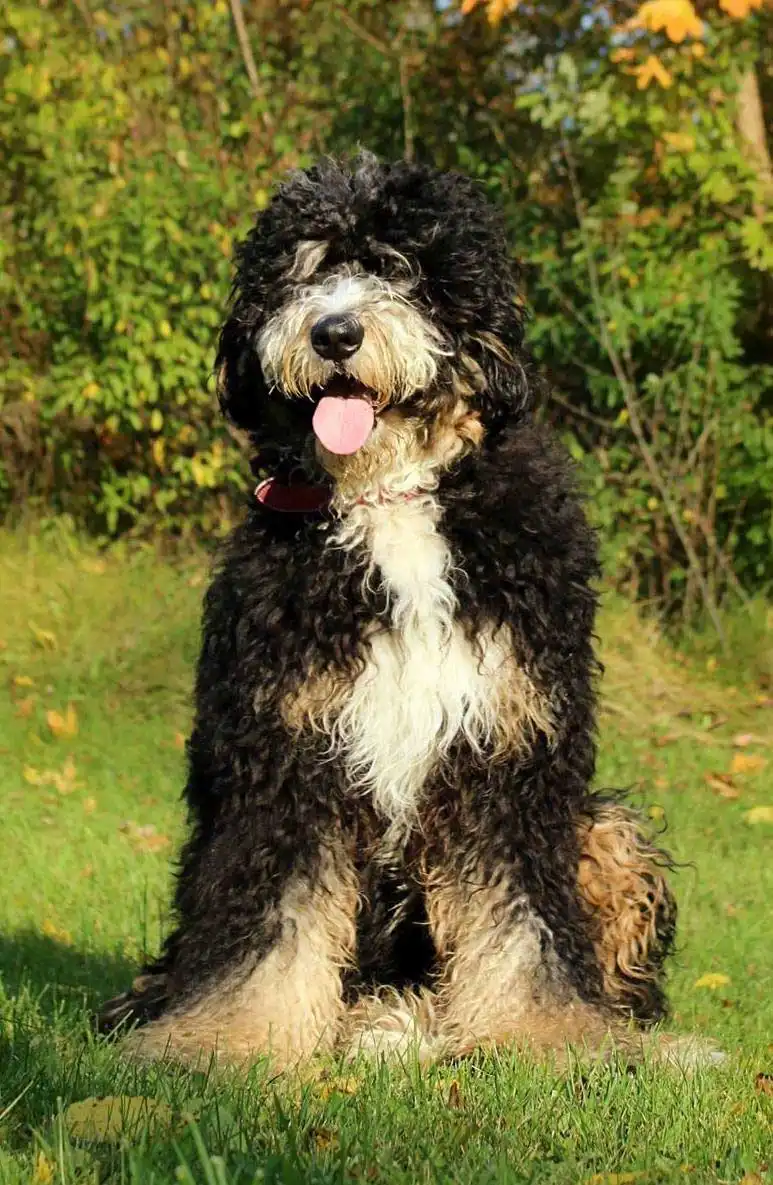
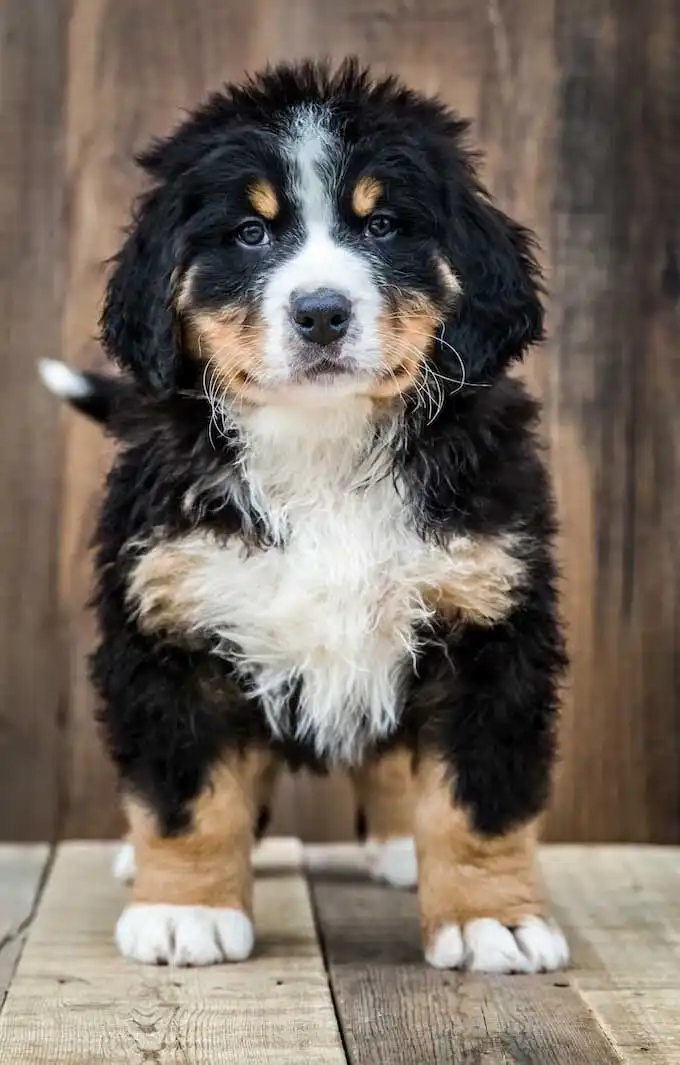
The physical characteristics of a Bernedoodle hybrid are primarily determined by the dominant genetics of its parent breeds. If the Poodle's traits are more pronounced, the Bernedoodle will typically measure between 10 and 21 inches in height and weigh anywhere from 4 to 50 pounds, depending on the size of the Poodle parent. In this case, the build is generally square, featuring oval, dark eyes that are spaced apart to reflect an intelligent demeanor. The ears hang close to the head, positioned at or just below eye level, with long, wide, and thick ear leather. The skull is moderately rounded with a subtle yet noticeable stop, complemented by flat cheekbones and muscles, along with a long, straight muzzle that is not overly loose, and a scissor bite. The coat can vary in texture, being either curly with a naturally coarse and dense feel or corded, forming tight, even strands of varying lengths. It comes in a wide array of colors, including white, brown, black, blue, gray, silver, fawn, apricot, cream, and café-au-lait. The feet are small and oval-shaped, featuring well-arched toes and thick, well-cushioned pads, while the tail, which may vary in length, is typically held high. On the other hand, if the Bernese Mountain Dog's genetics take precedence, the Bernedoodle can grow to heights of 23 to 27 inches and weigh between 90 and 120 pounds. This variant will possess a robust physique with a solid bone structure, appearing somewhat square but slightly longer than tall. A Bernedoodle influenced by the Bernese will display an intelligent expression, characterized by dark brown, slightly oval eyes and triangular ears that are gently rounded at the tips, set high and lying close to the head when at rest. The skull may be broad and flat on top, featuring a well-defined but not exaggerated stop, a strong, straight muzzle with a black nose, clean lips, and a scissor bite. Typically, the coat is tricolored, with black as the dominant hue, accented by rich rust and clear white markings. The tail is bushy, held upright, and may have a slight swirl but generally does not curl over the back. Its compact feet are supported by strong legs, allowing for a natural, slow trot.
Care Routine
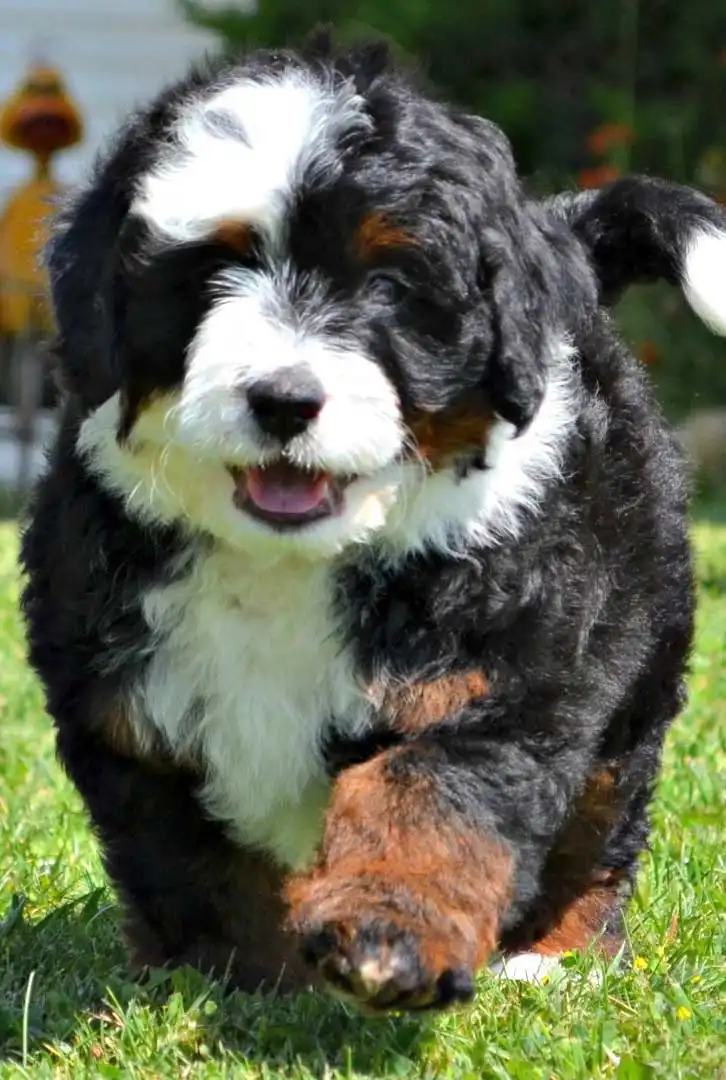
The Bernedoodle has a grooming requirement that is considered moderate. Thanks to the shedding traits passed down from its Bernese Mountain Dog lineage, which includes both regular and seasonal shedding across different coat types, it is recommended to brush your Bernedoodle once or twice a week. Bathing should be reserved for when it is truly necessary. For those with curly or wavy coats, shedding is minimal, whereas the less common straight-coated Bernedoodles tend to shed slightly more—falling into a low to moderate range—especially during seasonal changes. Furthermore, it is crucial to include regular dental care, eye examinations, and ear cleaning in your dog's grooming routine to help prevent potential infections in the ears and mouth.
Behavior & Temperament
The personality of your Bernedoodle is significantly shaped by the genetics it inherits from its primary breed parent. Typically, Bernedoodles are recognized for being affectionate and playful companions. They usually get along well with children and other animals, enjoying activities that keep them close to their human family. However, they may exhibit some wariness around strangers. To address this tendency, early socialization is essential. It's important to understand that Bernedoodles require a considerable amount of human interaction, so leaving them alone for long periods is not advisable. This need for companionship is a characteristic inherited from the Bernese Mountain Dog. Furthermore, the toy and mini versions of Bernedoodles are often more energetic and headstrong than their standard-sized counterparts, which can impact training. Despite their occasional stubbornness, Bernedoodles are generally easy to train, thanks to the high intelligence they inherit from both the Poodle and Bernese breeds.


Play & Exercise
The Bernedoodle is a moderately active mixed breed that flourishes with daily walks and outdoor play. He loves engaging in fetch with toys and values the time he spends with his human friends. His coat, a result of his lineage, provides warmth in cooler temperatures while also allowing him to adapt to milder weather. Ideally, he would thrive in a home with a fenced yard, as he has a natural curiosity and a penchant for exploration. This versatile dog can do well in both rural and urban environments, as long as he has ample opportunities and space for regular exercise. It's crucial to understand that he needs considerable human interaction; leaving him alone in the yard for long stretches will not make him happy. With his naturally slow trot, he is easy for nearly anyone to take on walks.
Things to Know
Cups Per Day
0.0 Cups
Daily Activity
0 Minutes
Average Lifespan
14 Years
Origin
2003
Type
Crossbreeds
Size
Not Set
Origin Country
United States
Brush Frequency
Daily
Coat Texture
Straight
Ancestors
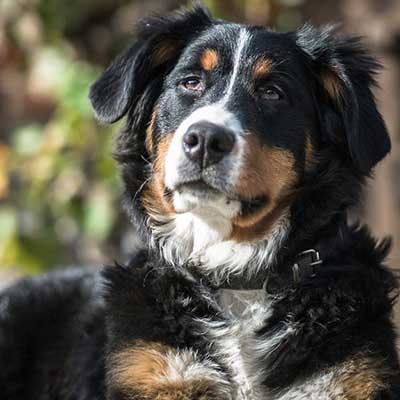
Bernese Mountain Dog
The Bernese Mountain Dog, commonly known as the Berner, is one of the four ancient breeds classified as Swiss Sennenhunds. What sets the Berner apart is its luxurious, flowing coat and exceptional temperament. Its ancestry likely stems from a combination of the farming dogs indigenous to the Swiss Alps and the Molosser, a type of Mastiff brought to the region by the Romans around the first century B.C. This rich heritage is reflected in the Berner's large head, gentle nature, remarkable strength, and strong work ethic. Traditionally, Bernese Mountain Dogs were invaluable farm assistants, responsible for herding livestock, pulling carts, and protecting homesteads. In contemporary times, they are primarily valued as beloved family pets. Known for their friendliness towards children and their ability to be trained, they do have a strong need for family interaction, which can pose challenges if they are left alone for extended periods. In terms of appearance, the Bernese Mountain Dog is a large breed characterized by its striking tri-colored coat. They possess prominent heads and substantial paws, which require regular grooming to control shedding. Bringing a Berner puppy into your home demands a considerable commitment and effort. However, with consistent training, patience, and dedication, you can nurture a loyal and hardworking companion that will greatly enhance your life.
Read more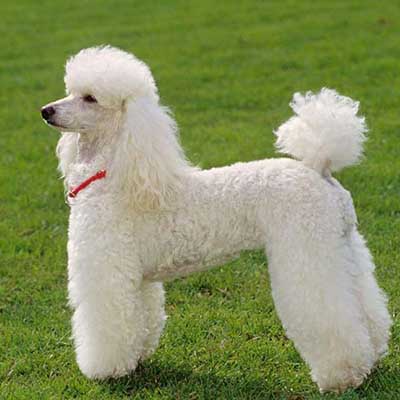
Poodle
Poodles, one of the most ancient dog breeds, are celebrated for their remarkable intelligence and ease of training, which makes them a popular choice among dog enthusiasts. They generally interact well with children and other pets, especially if they are socialized early on. Currently, Poodles are available in several sizes, including Toy, Miniature, and Standard. Each Poodle boasts a dense, curly coat that can range in texture from coarse to wiry and comes in nearly every color imaginable. Although they have charming personalities, they do require significant grooming and are susceptible to various serious health concerns. However, their loving and loyal disposition makes the extra care and attention well worth it!
Read moreRegister
Your kids have been begging for a pet forever, and you've recently decided that it's time for your family to get a new addition -- a dog! While everyone is excited for the new arrival, you're wondering if you need to have a dog license. How much does it cost? Is it required? Where do you get one?
Member Clubs

PETINNATE
Other
Height & Weight
Weight
50 lbs (23 kg)Male: 50 lbs (23 kg) , Female: 50 lbs (23 kg)
Height
21 inches (53 sm)Male: 21 inches (53 sm) , Female: 21 inches (53 sm)