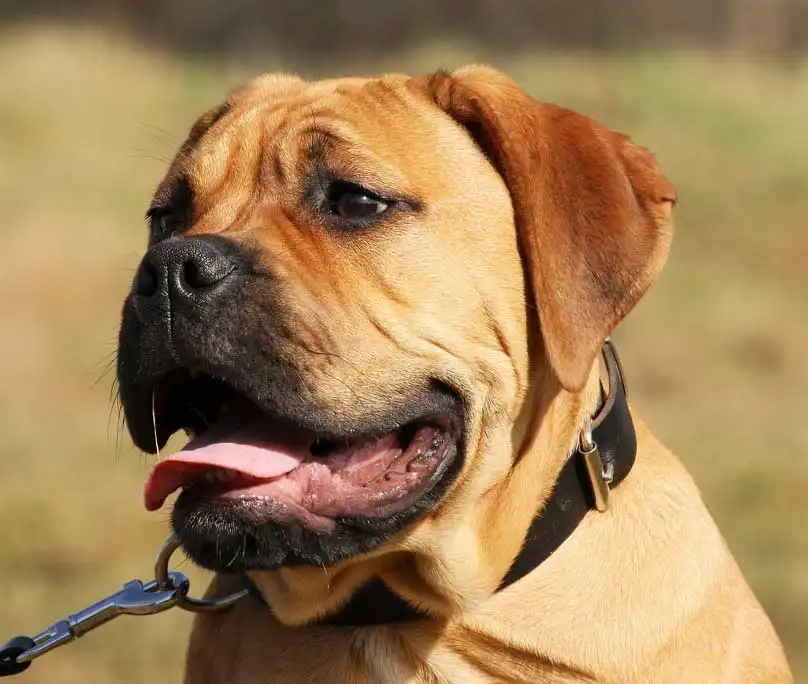
Bullmastiff
In 1795, historical accounts reveal that the Bullmastiff was created by crossing the Mastiff with the Bulldog, resulting in a genetic makeup of approximately 60% Mastiff and 40% Bulldog. To achieve purebred status, these dogs underwent three generations of selective breeding. Originally, their primary function was to track and capture poachers, but their roles later evolved to include service in military and law enforcement, as well as acting as guardians for the Diamond Society of South Africa. Today, the Bullmastiff is celebrated for its loyalty and gentle nature. While they may seem formidable and can show aggression if provoked, their usual temperament is calm and affectionate. They are known for their gentle disposition, patience with children, and a strong desire for human leadership. This breed thrives under the guidance of a strong, fair, and consistent owner who can earn their respect and provide clear direction. Bullmastiffs are receptive to training, but they are also sensitive to the tone of voice, which means that assertive yet gentle communication is essential. They make excellent family pets, offering protection without unnecessary aggression unless they perceive a threat. With appropriate socialization during their early years and consistent guidance, they can develop into devoted and loyal companions.
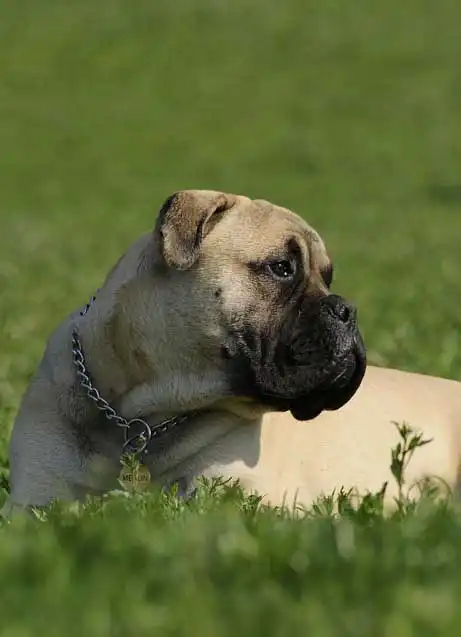
Breed Origin
The Bullmastiff gets its name from the combination of the Mastiff and the Bulldog. This breed was developed in 1795 with the aim of creating a dog that could effectively guard gamekeepers. While the Mastiff was large, it lacked the necessary aggression, and the Bulldog, though brave and tenacious, did not have the size to overpower a person. Nowadays, Bullmastiffs are highly regarded in law enforcement and military settings due to their imposing presence, which acts as a natural deterrent to would-be criminals. Despite their intimidating appearance, these dogs are known for their gentle and loving nature, forming deep connections with their families and serving as devoted companions and protectors. They thrive on human interaction and prefer to be included in family activities, relishing the comforts of indoor life. However, they do possess a strong temperament and protective instincts, especially around strangers. To foster appropriate social behaviors, it is crucial for them to have plenty of opportunities to interact with friendly individuals.
Breed Appearance
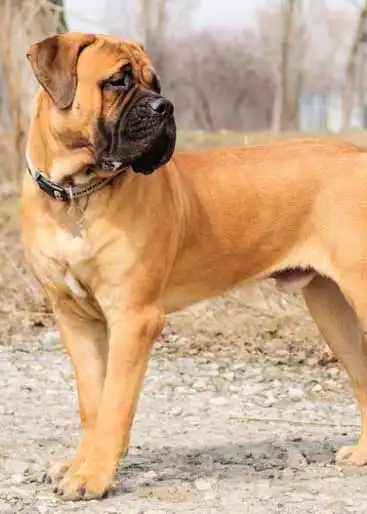
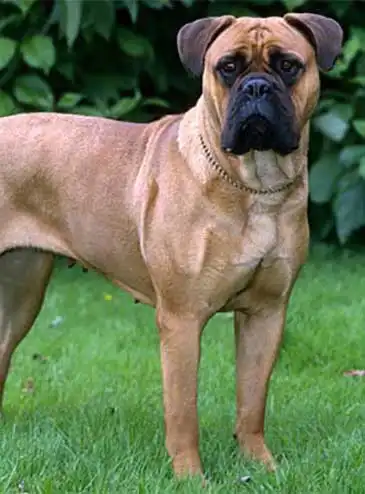
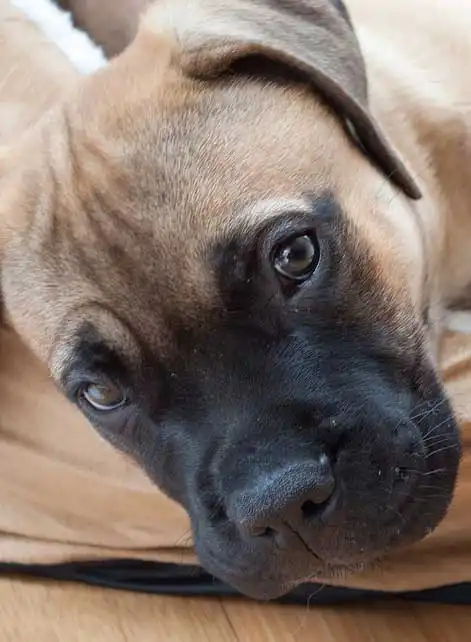
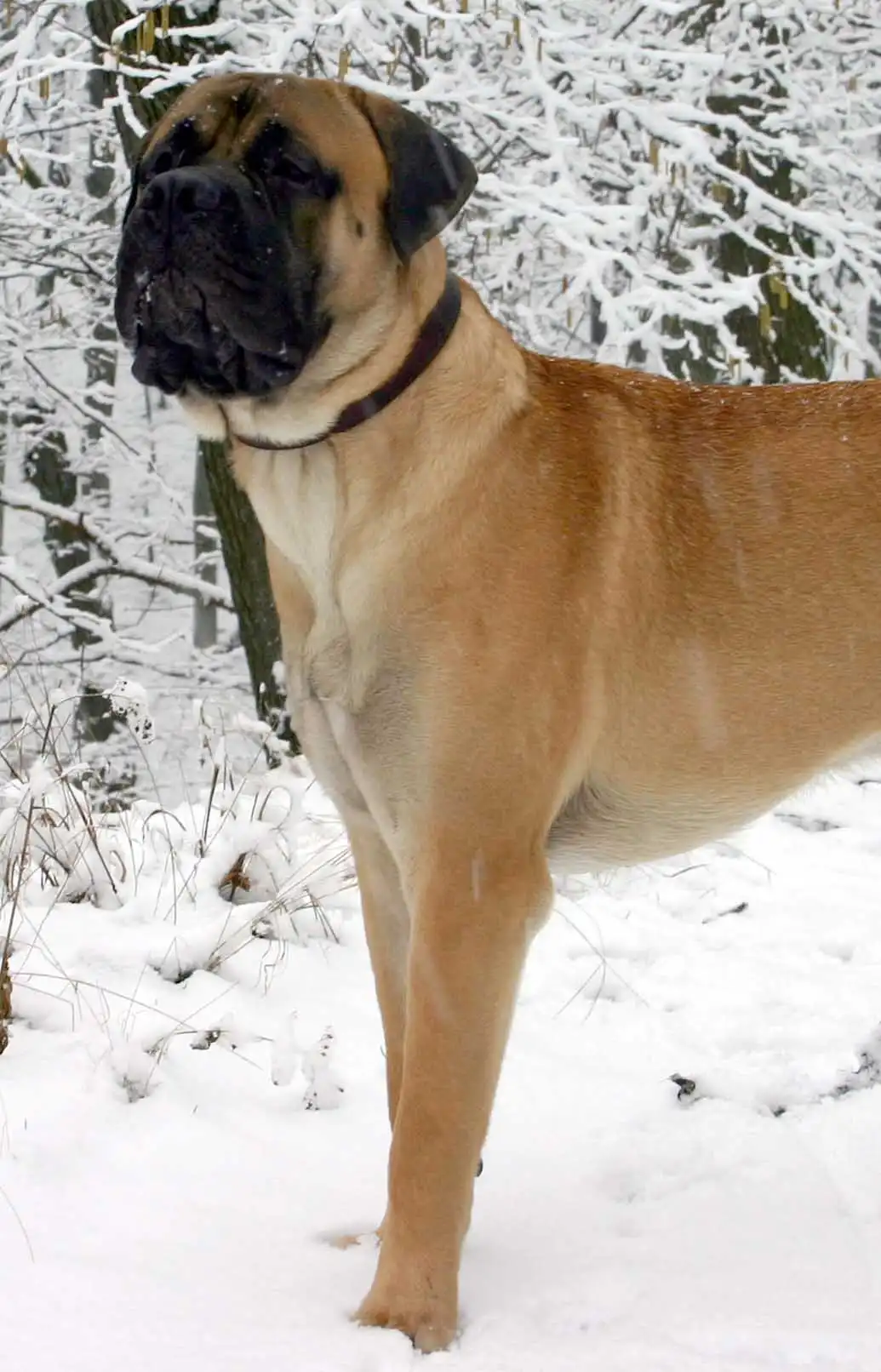
The Bullmastiff is a striking and powerful breed, exuding strength without appearing awkward. Its shoulders are well-defined and gently sloped, harmonizing with its broad and well-proportioned hindquarters. This breed features a large, wide head adorned with wrinkles, and a broad, deep muzzle that is often darker than the rest of its body. The nose is black, wide, and has prominent nostrils. With strong jaws, the Bullmastiff's teeth typically align in a level or undershot bite. Its medium-sized, dark hazel eyes reflect a keen alertness. The ears are set high and wide in a V-shape, lying close to the cheeks, which enhances the breed's square, boxy head appearance. The neck is slightly arched, robust, and muscular. The tail, thicker at the base and tapering towards the tip, is carried high and can be either straight or curved, extending down to the hocks. The breed features a straight back that remains level from the withers to the loin, along with a short, dense coat that has a slightly coarse feel. Finally, its sturdy legs and large paws provide essential support for its substantial build.
Care Routine
The Bullmastiff is characterized by a dense, short coat that offers substantial protection against severe weather. They are not prone to heavy shedding, which simplifies grooming; a daily brushing with a rubber curry comb is usually sufficient. Bathing should only be done when they become dirty or develop unpleasant odors. During grooming sessions, it’s essential to check their ears weekly and clean them as necessary. A foul odor or a waxy substance that resembles coffee grounds in their ears may signal an infection or a mite issue, which would require a veterinarian's attention. Getting your dog accustomed to regular grooming and physical checks for cuts and sores will make future vet visits less stressful, as they will be familiar with having their ears, feet, and mouth examined. Additionally, don’t forget to brush their teeth and trim their nails before they start making noise on the floor. While Bullmastiffs do need exercise, it’s important to avoid overexertion that could jeopardize their developing bones, joints, and ligaments. Adult Bullmastiffs require significantly more physical activity to keep a healthy weight, but be mindful of hot or humid weather, as they can easily overheat.
Behavior & Temperament
The young Bullmastiff is typically quite energetic, often bounding around the house in a somewhat awkward manner. During this phase, they need extra supervision and companionship. As they mature, their energy tends to wane, resulting in a calmer and more composed presence. These large dogs can become destructive if they are bored or left alone for long periods. While they may exhibit some aggression towards strangers and other animals, they generally respond positively to consistent training that incorporates rewards like praise and treats. These resolute dogs have a strong character and require significant socialization during their early years, along with a confident owner who can set clear boundaries. They may display aggression towards same-sex dogs, and while they can live harmoniously with a family cat, they are unlikely to accept unfamiliar animals invading their space. Generally, they are patient and protective around children, but their size means they could accidentally knock over or step on a small child. Therefore, it’s crucial to supervise their interactions with young kids. Teach your children to refrain from pulling the dog's tail and to maintain a safe distance during mealtime, as even the most gentle dog can become possessive over food. Although this breed benefits from a firm training approach, it also flourishes with love and patience. When trained properly, Bullmastiffs can be incredibly loyal and affectionate companions, ready to go to great lengths to safeguard their families.
Play & Exercise
Things to Know
Cups Per Day
3.0 Cups
Daily Activity
40 Minutes
Average Lifespan
9 Years
Origin
1800s
Type
Pure Breeds
Size
Giant
Origin Country
England
Brush Frequency
Daily
Coat Texture
Straight
Register
Your kids have been begging for a pet forever, and you've recently decided that it's time for your family to get a new addition -- a dog! While everyone is excited for the new arrival, you're wondering if you need to have a dog license. How much does it cost? Is it required? Where do you get one?
Member Clubs

PETINNATE
Guardian Dog

AKC
Working Group

UKC
Guardian Dog
Height & Weight
Weight
116 lbs (53 kg)Male: 122 lbs (55 kg) , Female: 110 lbs (50 kg)
Height
26 inches (66 sm)Male: 26 inches (66 sm) , Female: 25 inches (64 sm)
6 Months
65 lbs ( m 65 lbs, f 65 lbs )
19 inches ( m 19 inches, f 19 inches )
12 Months
72 lbs ( m 72 lbs, f 72 lbs )
20 inches ( m 20 inches, f 20 inches )
18 Months
107 lbs ( m 107 lbs, f 107 lbs )
25 inches ( m 25 inches, f 25 inches )
Eye Colors
Hazel

Nose Colors
Black
Coat Colors
Red
Fawn
Brindle
Characteristics
Mixes
Bull Daniff
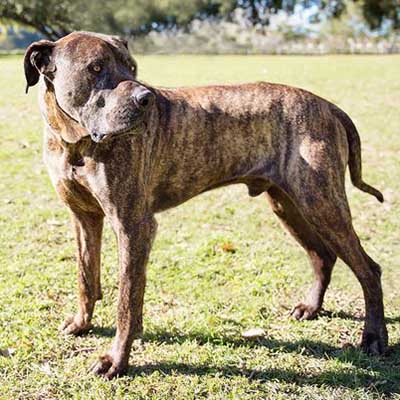
The Bull Daniff is a hybrid breed created by crossing two purebred dogs: the Bullmastiff and the Great Dane. Typically, this breed reaches a large or even giant stature. Its coat is short and sheds moderately, so regular grooming—ideally once a week—is recommended to remove dead hair and keep the coat healthy and shiny. Although the Bull Daniff has a moderate energy level, its substantial size necessitates several daily walks to maintain its activity. Renowned for their affectionate and loyal disposition, Bull Daniffs flourish in spacious homes with secure outdoor spaces where they can move around freely. Owners often describe them as gentle giants, but they stress the need for a firm and consistent handler to help the breed realize its full potential.
Read more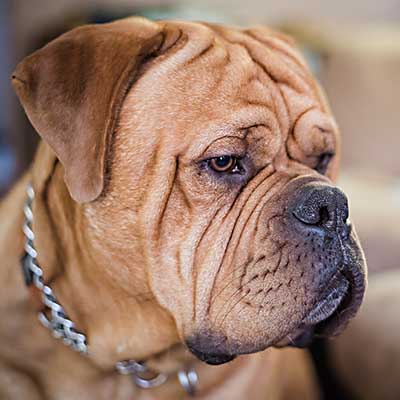
Bully Bordeaux
The Bully Bordeaux is a hybrid breed that emerges from the crossbreeding of the Bull Mastiff and the Dogue de Bordeaux. This breed is categorized as giant-sized and predominantly exhibits traits inherited from its Bull Mastiff ancestry. Renowned for its affectionate nature and compatibility with children, the Bully Bordeaux flourishes in a family environment and prefers to spend time indoors with its human companions. Although regular exercise is necessary, this dog enjoys participating in activities alongside its owner. Its coat is coarse and requires minimal upkeep, simplifying the grooming process. Primarily a companion animal, this large dog often seeks to snuggle in its owner's lap whenever the opportunity arises.
Read more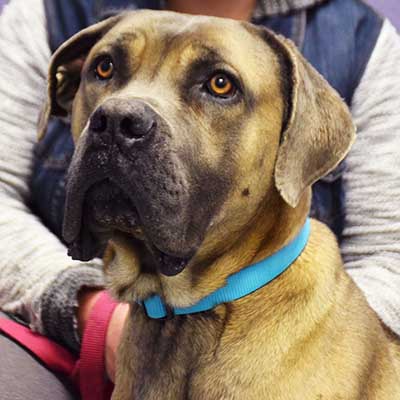
Doubull-Mastiff
The Doubull-Mastiff is a mixed breed resulting from the combination of the Bullmastiff and the Mastiff. This breed is notable for its substantial size and boasts a short, thick coat that sheds very little. To keep its coat looking shiny, a weekly brushing is suggested to remove any loose fur. Renowned for its calm demeanor, the Doubull-Mastiff is a loving and loyal companion, making it a wonderful choice for families. However, because of its large stature, many owners recommend against housing this breed in an apartment.
Read more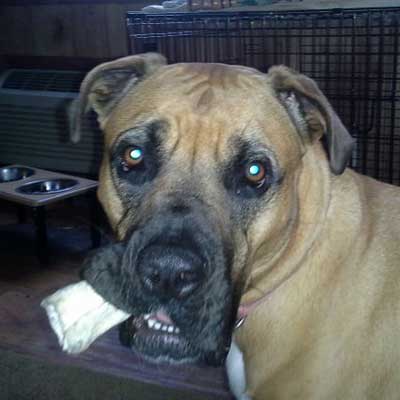
Neo Bullmastiff
The hybrid breed created from the Bullmastiff and Neapolitan Mastiff is known as the Italian Bullmastiff by the Designer Canine Registry, while the American Canine Hybrid Club calls it the Neo Bullmastiff. This breed is quite large, typically exceeding two feet in height at the shoulder and weighing over one hundred pounds. Given their size, it is crucial to provide early socialization and training to foster their generally calm nature. However, their friendly temperament may not always extend to other dogs, particularly those that show aggression or encroach on their space. They may also inherit a tendency to chase smaller animals from their Bullmastiff ancestry. While their grooming and exercise requirements are relatively minimal, these dogs are very social and thrive on interaction with their families, necessitating significant attention to ensure their happiness and emotional well-being.
Read more