Dog Breeds by Easy To Groom
Easy To Groom refers to how a dog typically behaves or responds in everyday situations. Individual dogs may vary based on training, environment, and genetics.
Some breeds are brush-and-go dogs; others require regular bathing, clipping, and other grooming just to stay clean and healthy. Consider whether you have the time and patience for a dog that needs a lot of grooming, or the money to pay someone else to do it.
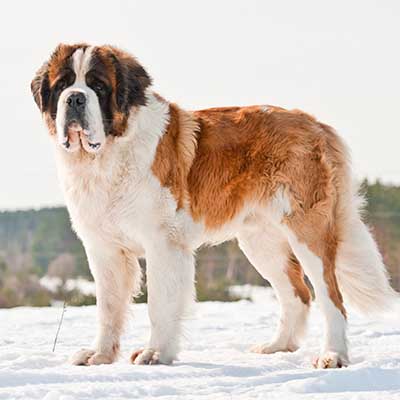
Saint Bernard
The Saint Bernard is a friendly and loving breed, especially known for their gentle nature with children, showcasing impressive patience and tolerance. Due to their large size, they are not well-suited for small living spaces, even though they typically have a calm disposition. Bred to withstand the severe cold of the Alps, they do not cope well in hot weather. These dogs thrive on companionship and prefer to stay indoors with their families. With a stable temperament, Saint Bernards may take longer to mature mentally and often maintain a playful, puppy-like spirit well into adulthood, making them charming companions. However, for those who prioritize cleanliness, their biannual shedding, drooling, and tendency to bring in dirt can pose challenges. They need plenty of room to move around comfortably but are not overly energetic. Training is generally easy, although they can be a bit stubborn at times. A well-adjusted Saint Bernard benefits greatly from early socialization with a variety of people and experiences.
Read more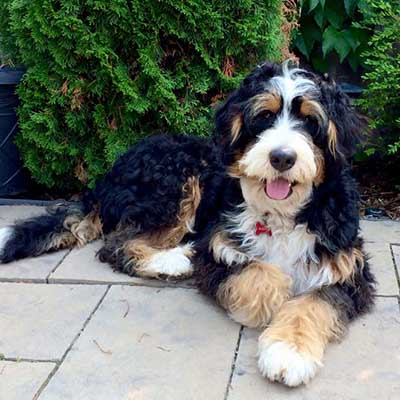
Bernedoodle
The Bernedoodle is a mixed breed resulting from the crossbreeding of Bernese Mountain Dogs and Poodles. The Bernese Mountain Dog originates from Switzerland, while the Poodle has its beginnings in Germany and France. Bernedoodles come in three different sizes, determined by whether the Poodle parent is a toy, miniature, or standard type. The height of Toy Bernedoodles ranges from 12 to 17 inches, Mini Bernedoodles from 18 to 22 inches, and Standard Bernedoodles from 23 to 29 inches, with weights varying from 10 to 90 pounds depending on their size. Although the toy and mini versions may display higher energy levels and a bit of stubbornness, Bernedoodles are generally recognized for their playful and loving demeanor. They thrive on interaction with children and cherish quality time with their families. Due to their strong need for companionship, they struggle when left alone for long periods. Furthermore, they can be wary of strangers, making early socialization essential. Their coats can be long and wavy, curly, or straight; typically, the wavy and curly varieties shed very little, while the straight coats tend to shed more.
Read more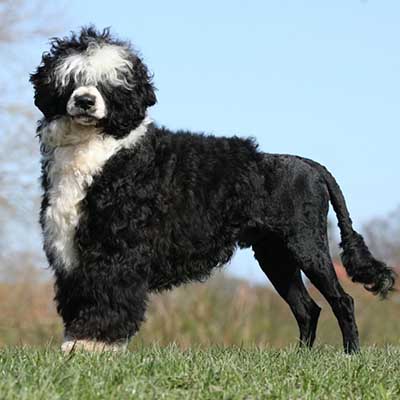
Portuguese Water Dog
The Portuguese Water Dog traces its lineage back to approximately 700 B.C., originally bred to aid fishermen in various tasks related to water. This historical background accounts for their strong affinity for swimming and aquatic activities. Known for their affectionate nature and family-oriented temperament, these dogs are friendly companions for both children and other pets. They are easily recognizable by their unique curly or wavy coats and webbed feet, which make them ideally suited for aquatic life. With their high energy levels and intelligence, Portuguese Water Dogs shine in numerous canine sports, such as tracking, agility, obedience, and trick performance. However, their keen intellect can sometimes lead them to try to outsmart their owners. With proper training and socialization, these dogs can develop good manners and adapt well to various environments.
Read more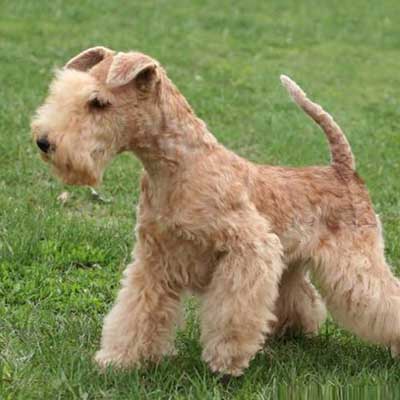
Lakeland Terrier
The Lakeland Terrier is one of the oldest breeds within the Terrier group, initially developed for hunting a range of pests such as otters, badgers, and even foxes. Since some of these animals could be larger than the dog, these Terriers were bred to be remarkably courageous. However, despite their boldness in the field, they are more prone to separation anxiety than many other breeds. Often considered hypoallergenic, Lakeland Terriers have minimal shedding and low odor. Although they don’t need regular baths, keeping their coat healthy requires weekly brushing and occasional clipping or stripping.
Read more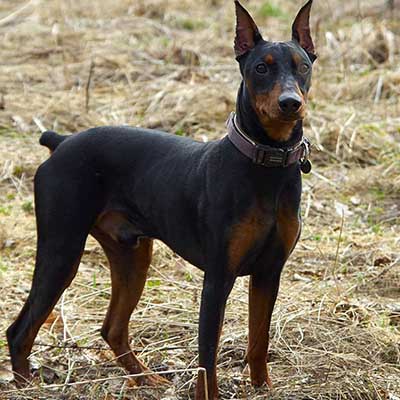
German Pinscher
The German Pinscher is a breed that exudes grace, strength, and a dignified presence. Originating in 17th-century Germany, this medium-sized dog was developed from the Black and Tan Terrier, eventually leading to the formation of the Rattenfanger. Celebrated for its effectiveness as both a watchdog and a rat-catcher, the Rattenfanger was known for its unwavering dedication to its tasks. Typically, the German Pinscher stands at a height comparable to an average adult's knee, showcasing a muscular build beneath its sleek fur. Its head is characterized by a unique wedge shape, and its dark, attentive eyes reflect a keen eagerness. As a companion, the German Pinscher is always eager to embrace new adventures. Initially bred for pest control, this breed has evolved into a recognized guard dog, loyal companion, and versatile working dog. While it tends to be cautious and may take time to warm up to strangers, the German Pinscher thrives in environments that are not overly stimulating, particularly those without boisterous children. This breed is fiercely protective of its family and territory, and with appropriate training, it can develop a well-rounded temperament around others. Caring for a German Pinscher is relatively simple; it sheds moderately and benefits from weekly grooming. This breed flourishes in spacious living conditions where it can roam freely and requires daily exercise to keep its mind active, making it an excellent choice for those with an active lifestyle.
Read more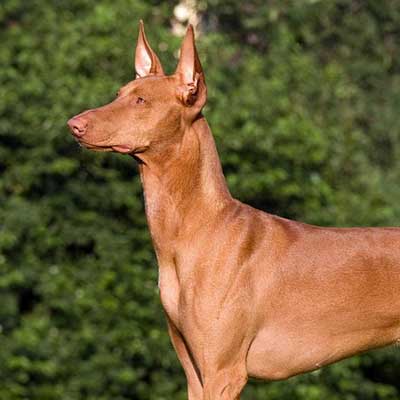
Pharaoh Hound
The Pharaoh Hound, recognized for its reserved yet spirited personality, has origins dating back to around 3000 B.C. While it has traditionally been thought to originate from Ancient Egypt, recent genetic research suggests that its true beginnings are in Malta. Ancient Egyptian hieroglyphics provide evidence of the Pharaoh Hound's long-standing presence, indicating that this breed has existed for millennia. With a strong and athletic physique, the Pharaoh Hound exhibits a graceful and elegant movement. Initially bred for hunting small game, it utilizes its sharp senses of sight, sound, and smell. This breed boasts an exotic and noble appearance, brimming with energy and a love for playful pursuits. The Pharaoh Hound shines in agility and lure coursing, demonstrating its remarkable athletic abilities. Grooming is simple due to its short, glossy coat, which only requires weekly brushing to manage shedding. For optimal well-being, the Pharaoh Hound thrives in an environment that meets its exercise needs.
Read more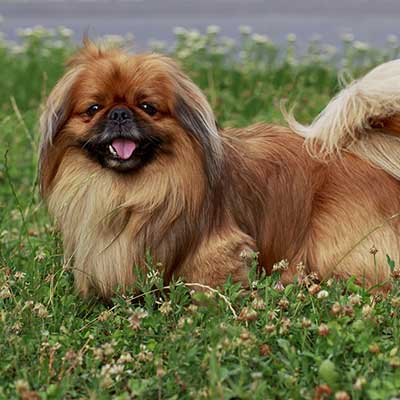
Pekingese
The Pekingese has a rich and esteemed history, having been celebrated as emblems of aristocracy in China. The breed's earliest records trace back to the 8th century during the T’ang Dynasty. Specifically bred to be companions, their name is derived from Peking, the former name of Beijing. These small, toy-sized dogs are known for their distinctive flat faces, lion-like manes, droopy ears, and a confident demeanor. According to Chinese mythology, the Pekingese is believed to be the offspring of a lion that fell in love with a marmoset. They come in a range of colors, including black, cream, fawn, gray, red, sable, and white.
Read more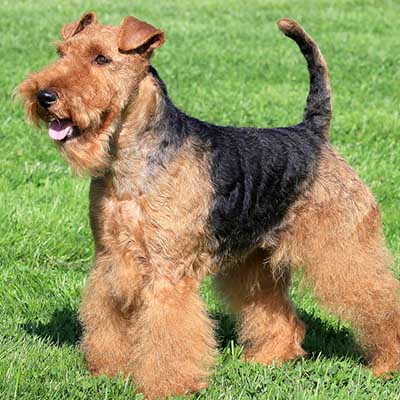
Welsh Terrier
The Welsh Terrier embodies the classic characteristics of a Terrier: courageous, energetic, playful, and spirited. Hailing from Wales in the 1700s, these bearded dogs were initially bred for hunting, adeptly navigating small burrows and caves to flush out game for hunters. While they continue to be employed for hunting and tracking, Welsh Terriers are now more commonly treasured as family pets. They make fantastic companions for children, are excellent running partners, and are always ready to partake in any fun activity you can think of. Historically known as the Black and Tan Wire Haired Terrier due to their striking black and tan coats, these dogs are easily identifiable by their curly beards. The breed was first showcased in England in 1884 and has been a staple in dog shows ever since. When Prescott Lawrence brought them to America that same year, they quickly captured attention at the Westminster Kennel Club, thanks to their distinctive appearance and charming personalities. The American Kennel Club recognized the breed in 1884, which led to the establishment of the Terrier Club of America shortly after. If you’re looking for a dog that will keep you entertained, bring joy to your life, and help manage pesky critters, the Welsh Terrier might be the perfect fit for you. However, it’s crucial to keep in mind that they require ample exercise and can become destructive if they’re not adequately stimulated. By ensuring they remain active and engaged, you can enjoy the delightful companionship of a Terrier that will undoubtedly enhance your life.
Read more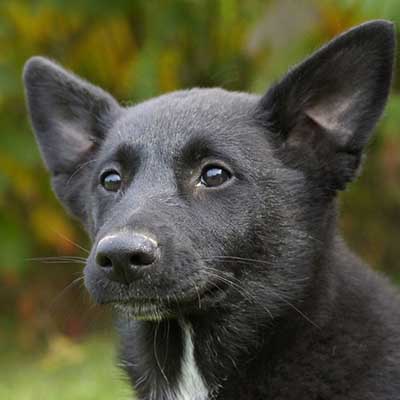
Canaan Dog
The Canaan dog is a medium-sized breed that has evolved over centuries, overcoming various challenges throughout its history. Many enthusiasts believe this breed traces its origins back to biblical times in the Canaan region, where it was known as kalef K’naani, translating to "dog of Canaan." Typically, females weigh about 45 pounds, while males can reach up to 55 pounds. Traditionally, Canaan dogs have fulfilled multiple roles, such as sentinels, messengers, and assistance animals. They are recognized for their alertness, vigilance, and territorial instincts, exhibiting a gentle nature with their families while being more reserved around unfamiliar faces. These dogs are highly active, intelligent, and responsive, thriving in environments that provide ample physical and mental challenges. Overall, the breed is robust and requires very little grooming.
Read more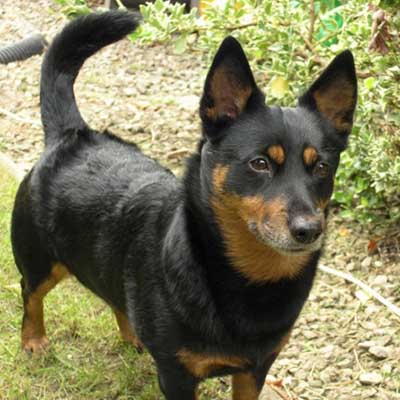
Lancashire Heeler
The Lancashire Heeler is a distinctive and rare small dog breed that hails from Great Britain. Initially bred for herding cattle, these compact dogs are nimble enough to nip at the hooves of cows while skillfully dodging any kicks. Beyond their herding responsibilities, they also served an important function in managing pests on farms, particularly rats. Generally, this breed enjoys good health and demands minimal daily grooming, although they are not hypoallergenic. While they tend to be affectionate and friendly with their families, they may exhibit wariness towards strangers, highlighting the importance of early socialization and training for their proper development.
Read more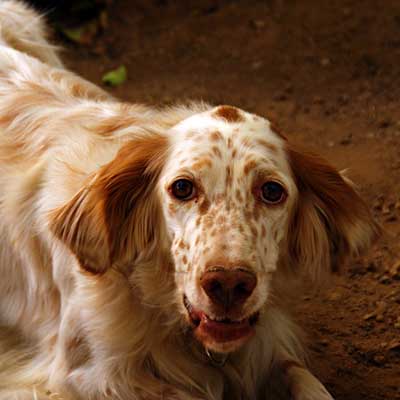
English Setter
The English Setter has its origins in England, dating back to the 1300s, and has been employed in the pursuit of game birds since the 1500s. Typically, these dogs reach a height of about 25 inches and weigh around 60 pounds, categorizing them as small to medium-sized. As part of the Setter family, which also includes the Irish and Gordon Setters, they are celebrated for their athletic build and elegant demeanor, featuring long legs and a slender body that make them excellent runners. Their medium-length coat is adorned with feathering on the tail, legs, abdomen, chest, and ears, and is available in five distinct color variations: blue belton, blue belton with tan, lemon belton, orange belton, and liver belton. Although they were initially bred for hunting, the English Setter has become increasingly popular as a family companion, thanks to its amiable disposition and eagerness to please. The breed received official recognition from the American Kennel Club in 1884 and is currently ranked as the 102nd most popular dog breed.
Read more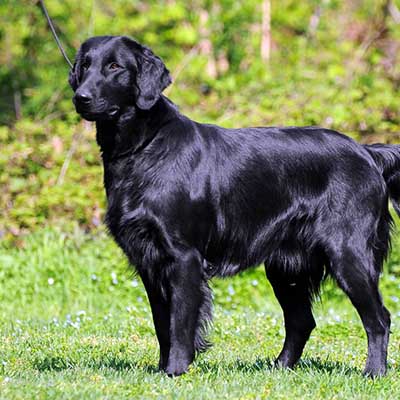
Flat Coated Retriever
The Flat-Coated Retriever is a remarkable breed, celebrated for its shiny black coat, although a deep liver hue can also be seen from time to time. This breed is categorized as large, standing up to 24.5 inches tall and weighing as much as 80 pounds. Hailing from England in the 1800s, these dogs were originally developed for retrieving waterfowl and serving as hunting companions. However, their popularity declined after World War I, especially as the Golden Retriever gained favor. Known for their playful nature, Flat-Coated Retrievers mature at a slower pace despite their considerable size. Nonetheless, this breed is charming and hardworking, sure to fill your life with joy and laughter.
Read more