
Greater Swiss Mountain Dog
Grosser Schweizer Sennenhund, Great Swiss Cattle Dog, Swissy
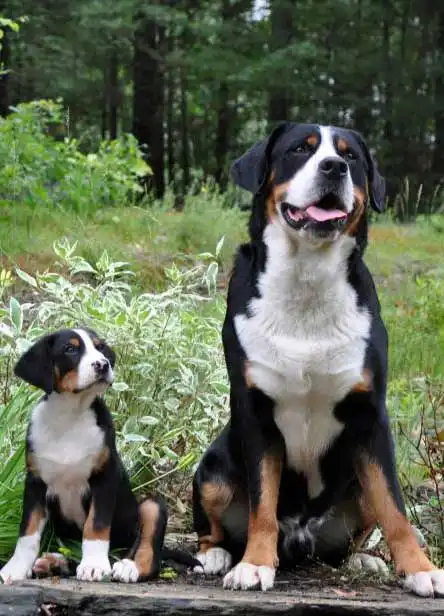
The Greater Swiss Mountain Dog, commonly known as the Swissy, is a gentle and affectionate breed that delights in making its owners happy. Although they are intelligent and can sometimes be a bit headstrong, their steadfast loyalty more than makes up for these tendencies. Generally, they are calm around children, other animals, and friendly guests, but they also make excellent watchdogs thanks to their sharp awareness. Originating from Switzerland, this breed has a rich history that dates back nearly 2,000 years, making it one of the oldest dog breeds in the country. Originally developed for herding, guarding, and draft work, the Greater Swiss Mountain Dog has transformed into a versatile companion, thriving in various activities such as competitive obedience, carting, tracking, and protection.
Breed Origin
These extraordinary dogs are considered some of the oldest breeds in Switzerland, with their roots dating back around 2,000 years. Although the exact history of the Greater Swiss Mountain Dog is somewhat unclear and accompanied by several theories, the most commonly accepted one posits that they descended from large dogs similar to the Mastiff. It is believed that Roman legions brought these canines to the Alpine region. Like their ancestors, they were employed for herding, guarding, and as draft animals. Once a popular choice for agricultural tasks in Switzerland, their numbers began to dwindle in the 1900s as other dog breeds and machinery took over their roles. Canine researcher Albert Heim encountered two of these dogs during a celebration of the Swiss Kennel Club. Initially, he described them as a short-haired version of the Bernese Mountain Dog, but he later championed their recognition as a separate breed. His advocacy led to the Greater Swiss Mountain Dog being officially included in the Swiss Stud Book of the Swiss Kennel Club in 1990. Since that time, their population and popularity have grown consistently. They made their debut in the United States in 1968, which resulted in the formation of the Greater Swiss Mountain Dog Club of America. Today, these dogs thrive in various capacities, including guarding, tracking, serving as watchdogs, competing in obedience trials, and carting.
Breed Appearance
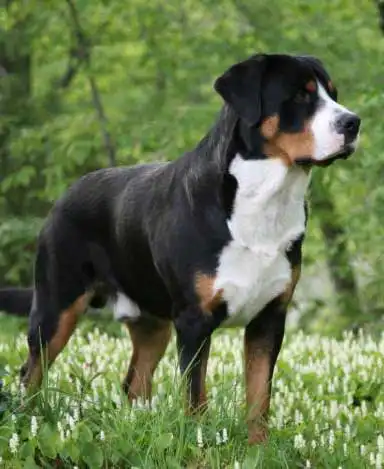
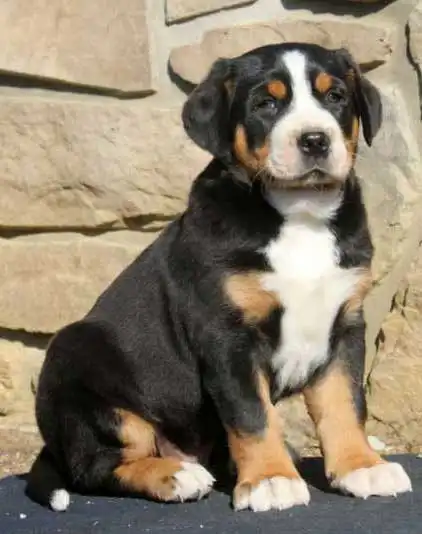
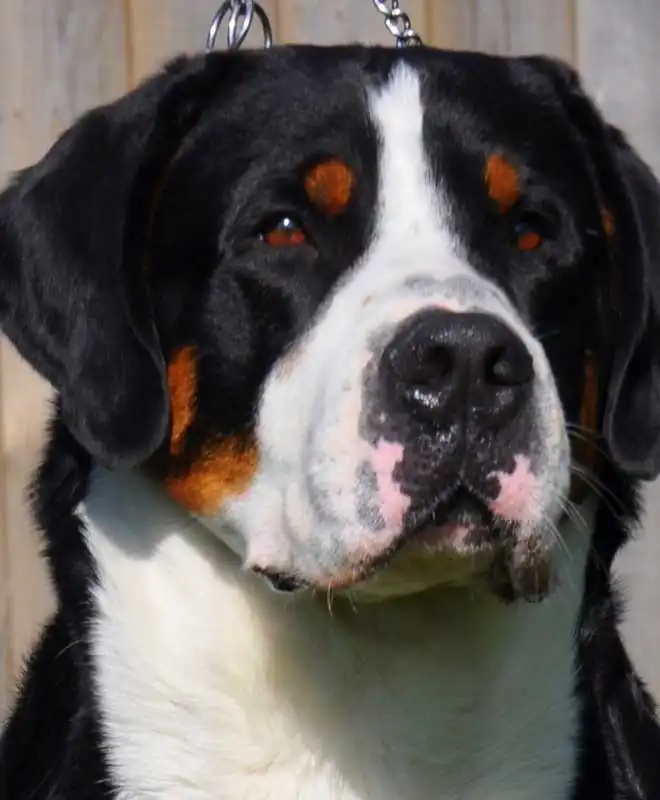
The outer coat of these dogs is about one to two inches thick and is notably dense, paired with a similarly substantial undercoat. Their fur is short and displays a tri-color pattern, featuring a black base with rust markings on the chest, cheeks, and above the eyes, as well as white markings on the chest, muzzle, and possibly the neck. These dogs have a strong, muscular physique, characterized by broad, flat skulls that show a slight stop. The length of their muzzle is approximately equal to that of the back skull. Their teeth come together in a scissor bite, complemented by a black nose and lips. Eye color varies from chestnut to hazel, consistently maintaining an almond shape and medium size. The ears are medium-sized, triangular with slightly rounded tips, and sit close to the head. They have a level topline and straight front legs, along with compact, round paws and broad chests. Their tails are thicker at the base, tapering to a point, and reach down to the hocks.
Care Routine
Given their size and nature, these dogs flourish in homes with ample, fenced yards that provide room for movement, rather than in compact apartments or condos. They thrive in cooler climates and love playing in the snow, but they can struggle in high temperatures and are at risk for heatstroke. Therefore, it’s essential to exercise your Greater Swiss Mountain Dog carefully during the warmer months. Always ensure they have access to water and shade, and try to limit outdoor activities to the cooler parts of the day, like early mornings and evenings. Because of their large size, it’s important to prevent them from jumping or running on hard surfaces until they are about two years old, when their bones have fully matured. While each dog is different, many owners notice that their Greater Swiss Mountain Dogs may take a while to become fully housetrained. However, with consistent training, they will eventually learn. Regarding their diet, these dogs generally need 4 to 5 cups of food each day, divided into two meals. They shed minimally, except for a significant loss of their undercoat twice a year. Grooming is relatively simple and should be done once or twice a week, as they are typically clean animals. Monthly baths are advisable, or more often if needed. Dental care is best performed daily, but brushing their teeth once or twice a week is also acceptable. Nail trimming should be done once or twice a month, or less frequently if they wear down naturally.
Behavior & Temperament
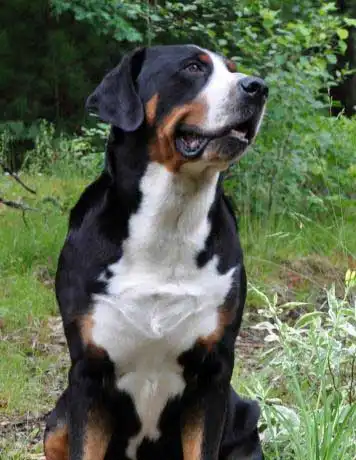
Greater Swiss Mountain Dogs are recognized for their keen alertness paired with a gentle and loving demeanor. They have bold and self-assured personalities, which can sometimes manifest as stubbornness, as they prefer to make their own decisions rather than simply obeying commands. This trait highlights the necessity for compassionate owners who can confidently take on the role of pack leaders. Although these dogs are not aggressive, they make excellent watchdogs thanks to their vigilance and protective instincts, using their deep, resonant bark to signal any potential threats. Generally, they are friendly towards visitors welcomed into their homes. When properly socialized during their puppy years, Greater Swiss Mountain Dogs typically get along well with children and enjoy the company of other pets, often displaying playful behavior with fellow dogs. However, some individuals may have a tendency to chase after cats, squirrels, or other small animals, although this behavior can vary depending on the specific dog and how they are introduced to these creatures.
Play & Exercise
Things to Know
Cups Per Day
4.5 Cups
Daily Activity
60 Minutes
Average Lifespan
9 Years
Origin
ancient times
Type
Pure Breeds
Size
Giant
Origin Country
Switzerland
Brush Frequency
Weekly
Coat Texture
Straight
Register
Your kids have been begging for a pet forever, and you've recently decided that it's time for your family to get a new addition -- a dog! While everyone is excited for the new arrival, you're wondering if you need to have a dog license. How much does it cost? Is it required? Where do you get one?
Member Clubs
PETINNATE
Guardian Dog

AKC
Working Group

UKC
Guardian Dog
Height & Weight
Weight
110 lbs (50 kg)Male: 123 lbs (56 kg) , Female: 98 lbs (44 kg)
Height
26 inches (66 sm)Male: 27 inches (69 sm) , Female: 25 inches (64 sm)
6 Months
50 lbs ( m 50 lbs, f 50 lbs )
20 inches ( m 20 inches, f 20 inches )
12 Months
75 lbs ( m 75 lbs, f 75 lbs )
22 inches ( m 22 inches, f 22 inches )
18 Months
97 lbs ( m 97 lbs, f 97 lbs )
25 inches ( m 25 inches, f 25 inches )
Eye Colors
Hazel
Brown
Amber
Nose Colors
Black
Coat Colors
Black
Brown
White
Brindle
Characteristics
Mixes
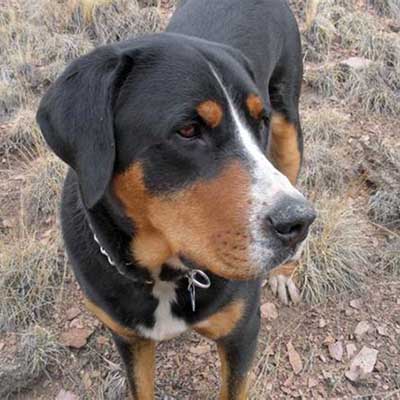
Greater Swiss Rottweiler
The Greater Swiss Rottweiler is recognized for its impressive size and lively disposition, showing a strong affection for its family members. This breed is both gentle and loyal, making it suitable for families with children, as long as clear boundaries are set for both the dog and the kids. Given its Rottweiler heritage, this hybrid may display territorial tendencies and can be somewhat stubborn at times. As an exceptional guard dog and devoted companion, it thrives when led by an owner who values consistent and effective leadership.
Read more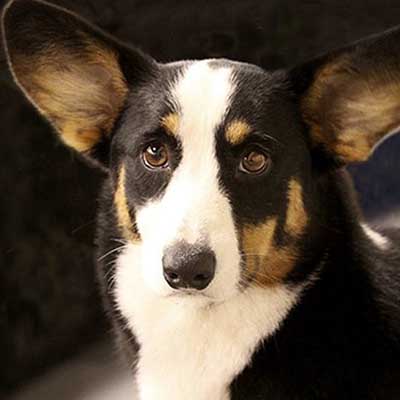
Pembroke Corswiss
The Pembroke Corswiss is a hybrid dog breed that emerges from the combination of the Pembroke Welsh Corgi and the Greater Swiss Mountain Dog. As a relatively recent addition to the canine world, detailed information about this breed is somewhat scarce, prompting us to look at its parent breeds for guidance. While the precise beginnings of the Pembroke Corswiss are not well-documented, we do know that the Corgi originates from the United Kingdom, whereas the Greater Swiss Mountain Dog comes from Switzerland. Both breeds have rich histories and were initially bred for herding and protection tasks. This unique blend of characteristics results in an intriguing mix within the Pembroke Corswiss. Owners report that this breed possesses a strong sense of independence while also being very affectionate and eager for human companionship.
Read more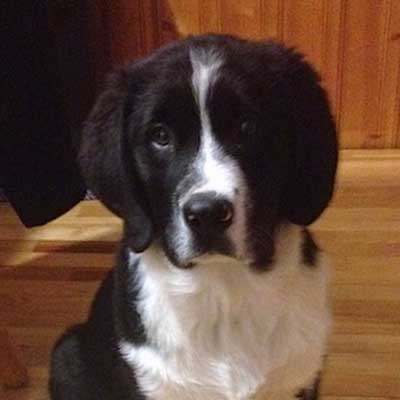
Swiss Newfie
The Swiss Newfie is a large hybrid breed created by intentionally crossing the Greater Swiss Mountain Dog, the oldest and largest of the Sennenhund breeds from the Swiss Alps, with the Newfoundland, a notably large and gentle breed that excels in water. Although they are quite sizable, Swiss Newfies typically require only moderate exercise, averaging about an hour of physical activity each day. Some may need more grooming, particularly those that inherit the Newfoundland's thick, fluffy coat. While these dogs can be quite playful during their lengthy adolescence, they are generally dependable and affectionate companions, showing a strong sensitivity to their family's emotions.
Read more