Pekepoo
Peke-A-Poo, Peka-Poo
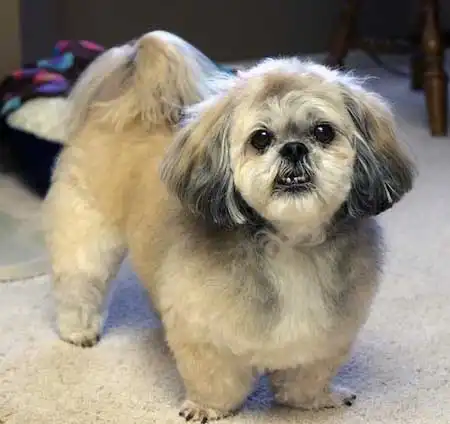
Although Pekepoos are a popular hybrid breed, they lack official recognition from the American Kennel Club. This charming breed is a cross between a Poodle and a Pekingese, celebrated for their loving disposition and calm demeanor. Generally, Pekepoos possess a moderate level of energy for their size, but their keen intelligence encourages them to engage in interactive play and requires consistent mental stimulation. Furthermore, Pekepoos showcase a wide array of colors, sizes, and physical traits, depending on whether their Poodle parent is a standard or miniature type. Typically, these small dogs weigh between 25 and 40 pounds and stand around 10 to 15 inches tall.
Breed Origin
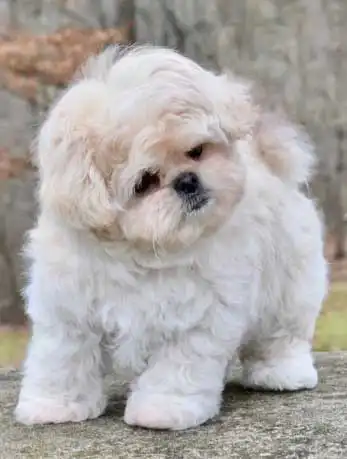
The Pekepoo is not recognized as a purebred dog; however, its parent breeds—the Pekingese and the Poodle—are well-loved pets in Asia, Europe, and North America, and are acknowledged as purebreds by the American Kennel Club. The origins of the Pekepoo may trace back to the early 1900s, paralleling the growing popularity of both the Pekingese and Poodle in the United States. The histories of these breeds extend far beyond the 20th century. The Pekingese has its beginnings in Imperial China, where it remained relatively isolated for centuries. The earliest known reference to the Pekingese dates back to the 8th century, but information about its development and ancestry is limited due to incomplete breeding records. It was not until the 1800s, when China began to engage more with the outside world, that the Pekingese was introduced internationally. These small dogs were often presented as gifts to foreign dignitaries, especially American visitors, as a sign of respect, and some were even smuggled out during the opium wars of the 1860s by European forces. The breed quickly became popular outside of China, admired for its unique appearance and steadfast loyalty. Americans began showcasing the Pekingese in dog shows as early as the late 1800s, with the breed receiving official recognition from the AKC in 1909. Conversely, while the Poodle is commonly linked to France, its roots actually lie in modern-day Germany, where it was originally bred for hunting small to medium-sized waterfowl—hence the name "Poodle," derived from the German word "pfudel," which means "to splash in water." The first mentions of the standard Poodle can be traced back to the 15th century, although various types of Poodles likely existed before that time. The breed's agility and intelligence contributed to its growing popularity across Europe, particularly in France, where the breed standard was refined to create the Poodle we recognize today. The French also played a key role in developing smaller versions of the breed. In the 1800s, Poodles began to be imported into North America, earning AKC recognition in 1887. By the 1950s, they had become one of the most beloved breeds in the United States and continue to be a popular choice for pet owners today.
Breed Appearance
Pekepoos are small dogs that combine the characteristics of Poodles and Pekingese. Generally, they weigh between 25 and 40 pounds and stand 11 to 15 inches tall. When a Pekingese is bred with a miniature Poodle, the resulting puppies tend to be on the smaller end of this spectrum. These dogs have a soft, wavy coat of medium length, showcasing a variety of colors that reflect both parent breeds. Their eyes are round and dark, paired with a relatively short muzzle that ends in a dark nose. Pekepoos also have low-hanging, pendant ears that are often feathered, along with a medium-length tail and feathered feet.

Care Routine
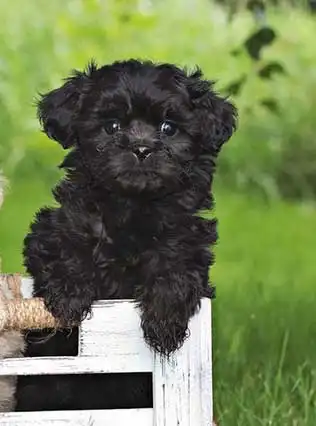
Pekepoos are not completely hypoallergenic, but they tend to produce less dander due to their Poodle heritage, which is recognized for its hypoallergenic fur. Nonetheless, these dogs require considerable grooming. Their dense, medium-length coat should be brushed every day. The choice of brush may vary depending on the coat's texture, which can differ based on which parent breed the Pekepoo takes after; a slicker brush or comb is typically effective for tackling tangles and mats. Additionally, owners might need to use scissors or clippers to maintain the fur around the Pekepoo's eyes, ears, paws, and tail. Because their coats can easily become unmanageable, many owners opt for professional grooming services. Alongside daily dental and ear care, it is recommended to bathe Pekepoos and trim their nails on a monthly basis.
Behavior & Temperament
Since Pekepoos are not a fully recognized breed, they can inherit a wide range of characteristics from their parent breeds. Generally, these dogs are celebrated for their friendly and loving demeanor. They tend to develop strong bonds with their owners and are typically very sociable, easily befriending both humans and other animals. At first, Pekepoos might show some hesitation and express their concerns through barking when encountering strangers, but they usually become friendly quite quickly. Although they enjoy attention, their independent streak enables them to cope with being alone for periods of time. They are not overly needy but do benefit from a consistent routine that helps them understand when they will have some solitude. Pekepoos are playful and thrive on interactive games with both humans and other dogs, which keeps their minds active and entertained. They are also quick learners, often impressing onlookers with their ability to master tricks. Training these dogs is generally easy, as they respond positively to encouragement from their owners. In conclusion, Pekepoos thrive in nurturing, secure, and stimulating home environments.


Play & Exercise
Pekepoos are generally bigger than the typical Pekingese mix. These dogs are quite lively and usually need about 30 minutes of exercise each day, which can be achieved through walks or trips to the dog park. If one of their parents is a miniature poodle, they may require less physical activity. Nonetheless, this hybrid loves to play and is known for starting games like fetch with their owners indoors. Their compact size means they don’t require a large yard, making them perfect companions for apartment dwellers or those in urban areas. Additionally, they adapt well to different climates, further increasing their attractiveness as a versatile breed.
Things to Know
Cups Per Day
1.0 Cups
Daily Activity
30 Minutes
Average Lifespan
14 Years
Origin
Early 1900s
Type
Crossbreeds
Size
Medium
Origin Country
United States
Brush Frequency
Weekly
Coat Texture
Wavy
Ancestors
Pekingese
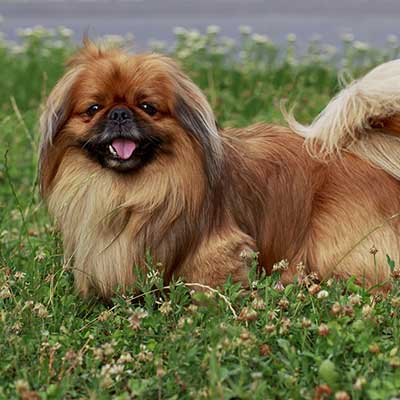
The Pekingese has a rich and esteemed history, having been celebrated as emblems of aristocracy in China. The breed's earliest records trace back to the 8th century during the T’ang Dynasty. Specifically bred to be companions, their name is derived from Peking, the former name of Beijing. These small, toy-sized dogs are known for their distinctive flat faces, lion-like manes, droopy ears, and a confident demeanor. According to Chinese mythology, the Pekingese is believed to be the offspring of a lion that fell in love with a marmoset. They come in a range of colors, including black, cream, fawn, gray, red, sable, and white.
Read more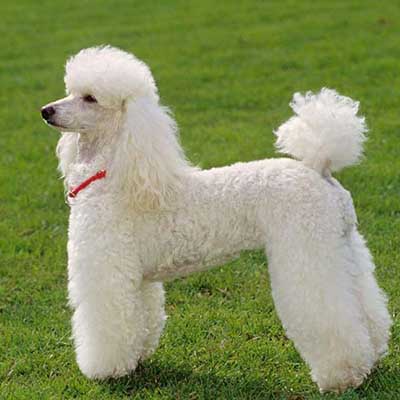
Poodle
Poodles, one of the most ancient dog breeds, are celebrated for their remarkable intelligence and ease of training, which makes them a popular choice among dog enthusiasts. They generally interact well with children and other pets, especially if they are socialized early on. Currently, Poodles are available in several sizes, including Toy, Miniature, and Standard. Each Poodle boasts a dense, curly coat that can range in texture from coarse to wiry and comes in nearly every color imaginable. Although they have charming personalities, they do require significant grooming and are susceptible to various serious health concerns. However, their loving and loyal disposition makes the extra care and attention well worth it!
Read moreRegister
Your kids have been begging for a pet forever, and you've recently decided that it's time for your family to get a new addition -- a dog! While everyone is excited for the new arrival, you're wondering if you need to have a dog license. How much does it cost? Is it required? Where do you get one?
Member Clubs

PETINNATE
Other
Height & Weight
Weight
33 lbs (15 kg)Male: 35 lbs (16 kg) , Female: 30 lbs (14 kg)
Height
13 inches (33 sm)Male: 13 inches (33 sm) , Female: 12 inches (30 sm)
6 Months
15 lbs ( m 15 lbs, f 15 lbs )
8 inches ( m 8 inches, f 8 inches )
12 Months
21 lbs ( m 21 lbs, f 21 lbs )
10 inches ( m 10 inches, f 10 inches )
18 Months
30 lbs ( m 30 lbs, f 30 lbs )
12 inches ( m 12 inches, f 12 inches )
Eye Colors
Brown

Amber
Nose Colors
Black
Brown
Coat Colors
Gray

Brindle

Cream

Fawn

Black

Sable

White

Silver

Blue

Red