Dog Breeds by Energy Level
Energy Level refers to how a dog typically behaves or responds in everyday situations. Individual dogs may vary based on training, environment, and genetics.
High-energy dogs are always ready and waiting for action. Originally bred to perform a canine job of some sort, such as retrieving game for hunters or herding livestock, they have the stamina to put in a full workday. They need a significant amount of exercise and mental stimulation, and they're more likely to spend time jumping, playing, and investigating any new sights and smells. Low-energy dogs are the canine equivalent of a couch potato, content to doze the day away. When picking a breed, consider your own activity level and lifestyle, and think about whether you'll find a frisky, energetic dog invigorating or annoying.
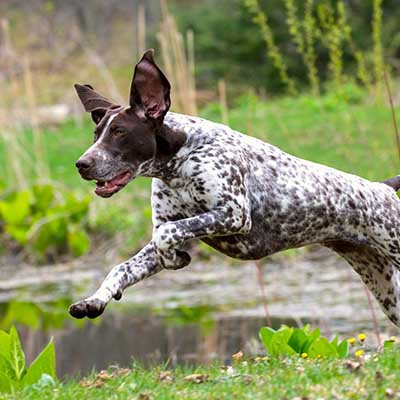
German Shorthaired Pointer
If you've ever seen a cartoon dog abruptly stop and dramatically point at something, you've caught a glimpse of what a Pointer embodies—albeit in a comically exaggerated way! The German Shorthaired Pointer, or GSP for short, is a dynamic hunting breed that hails from Germany and has been a reliable hunting partner for many years. The current version of this breed was developed in the early 1800s and is easily identifiable by its short, spotted coat, distinct head, and elongated body that narrows from the snout to the tail. Its ancestry dates back to the 1600s, with early breeds playing a significant role in the development of the dog we recognize today. This energetic and lively breed is not only exceptionally intelligent but also makes a fantastic family pet, thriving as both a hunter and a sporting dog. With roots that include pointers and bloodhounds, the German Shorthaired Pointer is both vocal and full of energy, necessitating plenty of exercise to keep its high energy in check. While it may bark at strangers, it does so in a friendly way, showcasing the breed's sociable disposition. Although it was initially bred for hunting, the German Shorthaired Pointer is now increasingly appreciated as a family companion and show dog in modern times.
Read more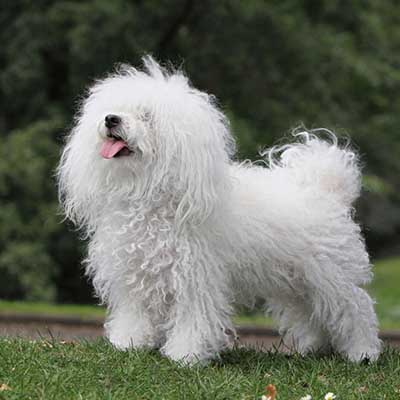
Bolognese
The Bolognese, a breed that hails from northern Italy, is celebrated as a companion dog and is one of the oldest breeds in Europe, with origins dating back to the 12th century. In the United States, however, this breed remains relatively rare. Bolognese dogs are known for their intelligence and ability to learn quickly, making them generally easy to train, although they may show a hint of stubbornness at times. Their unique, thick, curly white coat necessitates daily brushing and occasional professional grooming to keep it in good shape. Affectionately called Bolos, these dogs are low-energy and adapt well to living in apartments. Since they were specifically bred for companionship, they struggle with being left alone, which can lead to separation anxiety and result in unwanted behaviors like barking, chewing on furniture, or urinating indoors. Furthermore, due to their small size and potential delicacy, Bolognese dogs may not be the best fit for families with young children.
Read more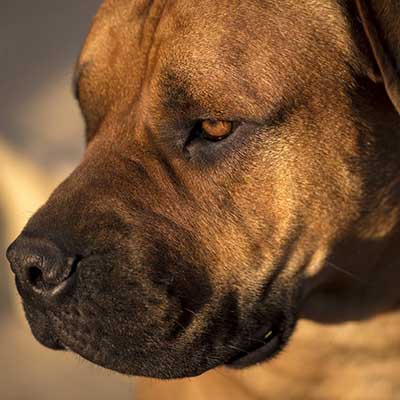
South African Boerboel
The Boerboel is a reliable breed recognized for its robust protective nature. This dog is fiercely loyal, ready to defend its family and home when its owners are away, and will not allow strangers to enter. Energetic and playful, Boerboels enjoy spending time with children, engaging in games of chase and running around for long stretches. They show impressive patience with kids, welcoming their playful antics and relishing the attention they receive. While they are devoted and affectionate towards their owners, it is crucial for them to have a strong, authoritative figure to set boundaries and ensure they obey commands. Due to their strength and powerful jaws, having a capable leader during their developmental stages is vital to prevent any potential risks to others. When it comes to guests, Boerboels require a proper introduction before they will accept them.
Read more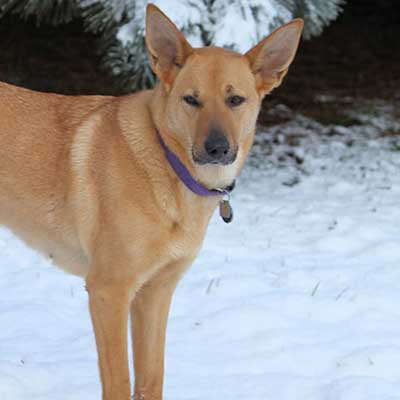
Chinook
The Chinook is a breed that is uniquely American in its heritage. Its beginnings can be traced to a female Northern Husky and a dog from the Arctic region. The father was of mixed lineage, and the resulting puppy, which was eventually named Chinook, did not closely resemble either of its parents; over time, this name became synonymous with the breed itself. Interestingly, the Chinook is believed to have been part of Admiral Byrd’s 1927 expedition to the South Pole, where it reportedly achieved remarkable records in terms of time, distance, and load capacity during the early 20th century. Today, thanks to the commitment of a small group of passionate breeders, the Chinook remains a rare breed.
Read more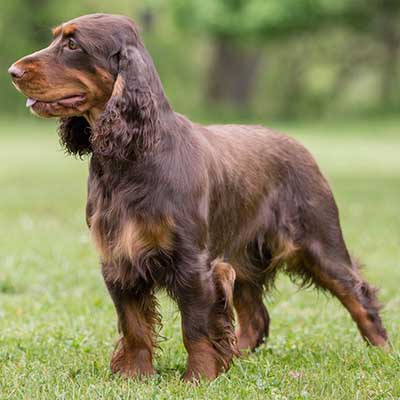
Field Spaniel
The Field Spaniel is a medium-sized dog recognized for its gentle nature and energetic spirit. Initially bred as a hunting companion, this breed gained traction in competitive dog shows during the 19th century. It descended from land Spaniels, diverging from breeds such as the Cocker Spaniel, English Water Spaniel, and Sussex Spaniel. Regrettably, early breeding efforts focused on specific traits nearly pushed the breed to the brink of extinction in the 20th century. Although Field Spaniels do not need specialized grooming, they thrive with weekly brushing to remove dead and loose fur. Additionally, like many Spaniels, they may experience issues with bad breath, which can be alleviated through regular brushing with dental products designed for dogs.
Read more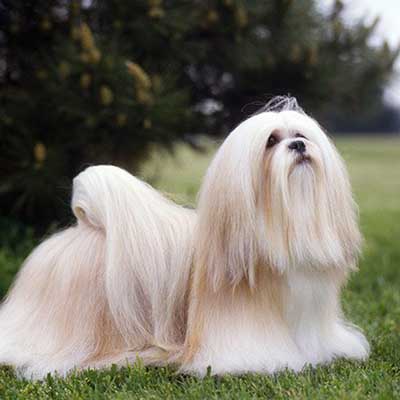
Lhasa Apso
These small but impressive dogs were initially bred to act as guardians in the temples and monasteries located in the Tibetan mountains thousands of years ago. Their popularity in the United States, however, only began in 1933 when the Dalai Lama presented several of these dogs to Mr. and Mrs. Suydam Cutting from New Jersey. Renowned for their joyful nature, these dogs are often playful and even a bit goofy at home, although they tend to be more reserved with unfamiliar faces and may display protective behaviors over their food and toys. Their beautiful, flowing coats require considerable maintenance, necessitating daily brushing and combing, even if kept relatively short.
Read more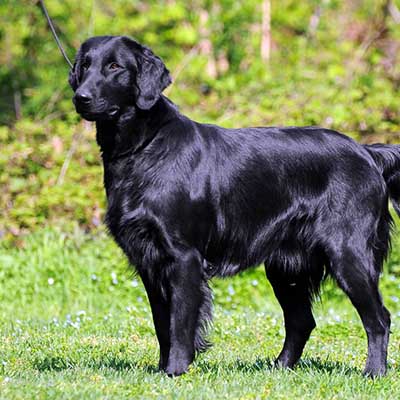
Flat Coated Retriever
The Flat-Coated Retriever is a remarkable breed, celebrated for its shiny black coat, although a deep liver hue can also be seen from time to time. This breed is categorized as large, standing up to 24.5 inches tall and weighing as much as 80 pounds. Hailing from England in the 1800s, these dogs were originally developed for retrieving waterfowl and serving as hunting companions. However, their popularity declined after World War I, especially as the Golden Retriever gained favor. Known for their playful nature, Flat-Coated Retrievers mature at a slower pace despite their considerable size. Nonetheless, this breed is charming and hardworking, sure to fill your life with joy and laughter.
Read more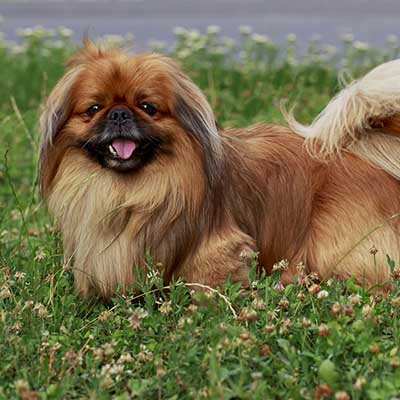
Pekingese
The Pekingese has a rich and esteemed history, having been celebrated as emblems of aristocracy in China. The breed's earliest records trace back to the 8th century during the T’ang Dynasty. Specifically bred to be companions, their name is derived from Peking, the former name of Beijing. These small, toy-sized dogs are known for their distinctive flat faces, lion-like manes, droopy ears, and a confident demeanor. According to Chinese mythology, the Pekingese is believed to be the offspring of a lion that fell in love with a marmoset. They come in a range of colors, including black, cream, fawn, gray, red, sable, and white.
Read more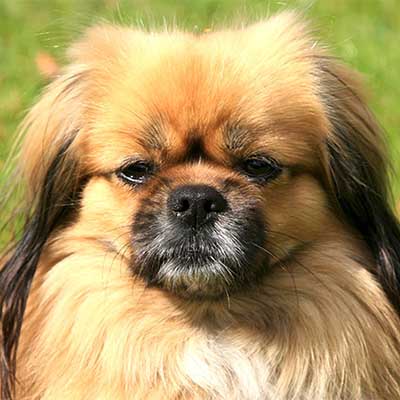
Tibetan Spaniel
The Tibetan Spaniel, celebrated for its independent spirit and gentle demeanor, was originally bred by Buddhist monks in Tibet. This breed is reminiscent of a lion, which holds significant meaning in Buddhism. While it shares some characteristics with the Pekingese, the Tibetan Spaniel features a slightly elongated face and does not possess the excessive skin commonly found in that breed. Its body is longer than it is tall, complemented by a small, rounded head that is well-proportioned to its frame. The muzzle is of medium length and smooth, free from wrinkles, while its dark, widely spaced eyes add to its charm. This delightful dog is adorned with a silky, flat double coat and a feathery tail that arches gracefully over its back, along with a longer mane around its neck. Historically, this loyal breed functioned as both a watchdog and a companion, alerting its owners to potential dangers with its distinctive bark. To maintain the health of its coat, regular grooming is vital, requiring daily brushing and combing to avoid matting. The Tibetan Spaniel has moderate energy levels, so it is important to provide adequate mental and physical stimulation to keep it engaged and stave off boredom.
Read more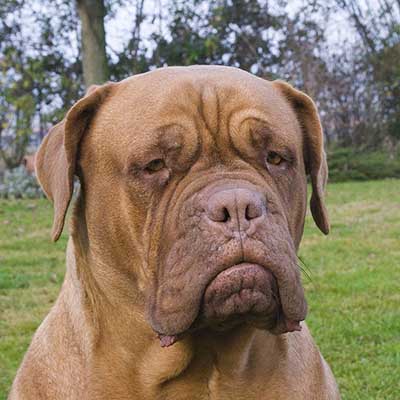
Dogue De Bordeaux
The Dogue de Bordeaux, commonly referred to as the French Mastiff, is a sizable breed with a lineage that remains somewhat ambiguous. Typically, these dogs stand around two feet tall at the shoulder and can weigh more than 99 pounds, distinguished by their prominent heads and short snouts. Unfortunately, they are susceptible to a range of health problems, including heart disease, various cancers, and hip and elbow dysplasia, which contribute to a relatively brief lifespan of five to eight years, though some may live longer. A notable case is Beasley, a nine-year-old Dogue de Bordeaux who appeared alongside Tom Hanks in the 1989 film "Turner and Hooch" and lived for three years beyond the film's release. If not properly socialized, these dogs can display stubborn and strong-willed tendencies, reminiscent of Hooch's character in the movie. However, with the right care and attention, they can develop into loyal, tolerant, and affectionate family companions.
Read more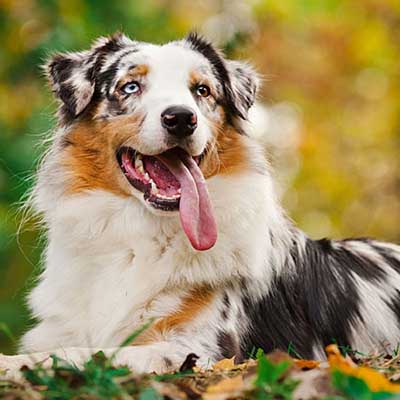
Australian Shepherd
The Australian Shepherd is a remarkably intelligent and loyal companion, yet it is also a breed brimming with energy that flourishes with active involvement. Renowned for its prowess in a variety of canine sports such as herding trials, tracking, agility, flyball, tricks, and obedience, the Aussie—its affectionate nickname—demands a household that can provide consistent training, structure, and plenty of physical exercise. This breed possesses a strong herding instinct, often leading it to nip at or bark at animals, people, and objects. If not given a specific task to engage with, the Australian Shepherd may exhibit disruptive and destructive behaviors. Interestingly, despite its name, the breed was actually developed in the United States for herding purposes.
Read more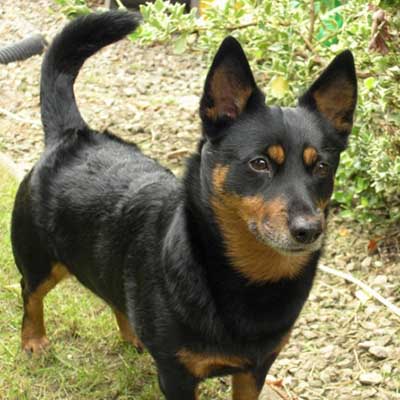
Lancashire Heeler
The Lancashire Heeler is a distinctive and rare small dog breed that hails from Great Britain. Initially bred for herding cattle, these compact dogs are nimble enough to nip at the hooves of cows while skillfully dodging any kicks. Beyond their herding responsibilities, they also served an important function in managing pests on farms, particularly rats. Generally, this breed enjoys good health and demands minimal daily grooming, although they are not hypoallergenic. While they tend to be affectionate and friendly with their families, they may exhibit wariness towards strangers, highlighting the importance of early socialization and training for their proper development.
Read more