Mastiff
English Mastiff, Old English Mastiff
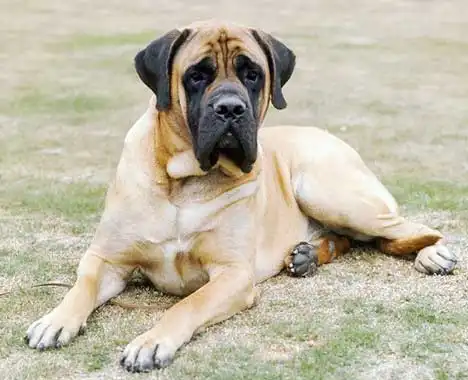
The Mastiff is acknowledged as the largest dog breed. Although breeds such as Wolfhounds and Great Danes may surpass it in height, the Mastiff is distinguished by its remarkable musculature, sturdy physique, and significant bone structure. This breed has its origins in the ancient Molosser lineage, which eventually migrated to the British Isles. Over time, the Mastiff thrived in England, initially serving as a guardian and later becoming involved in the cruel practices of bull and bear baiting. The 19th century marked the decline of these inhumane activities, prompting a selective breeding program that transformed this once fierce breed into a gentle giant. Today, the Mastiff retains its status as one of the largest breeds, continuing its tradition as a loyal protector of its family.
Breed Origin
The English Mastiff, commonly known as the Mastiff, is a true titan among dog breeds. As the largest dog breed, this remarkable animal descends from the Molosser family and is thought to have reached the British Isles through Phoenician traders between 2000 and 1500 BC. Over time, the ancestors of the modern Mastiff were selectively bred in isolation on the island to become formidable protectors for local tribes. By the time the Romans invaded in 55 BC, these dogs were already being employed as war canines against Roman troops. Julius Caesar, impressed by their size and courage, brought several Mastiffs back to Rome to fight lions and gladiators. As history unfolded, the Mastiff maintained its role as a guardian but also became involved in the cruel practices of bull and bear baiting, as well as pit fighting. Although these inhumane activities were banned in England in 1835, they continued clandestinely for some time. Today's Mastiffs are descendants of these fighting dogs, along with a prestigious lineage known as the Lyme Hall Mastiffs. A significant figure in this narrative is Sir Peers Legh, who suffered severe injuries during the Battle of Agincourt on October 23, 1415, in northern France. While he lay wounded, his Mastiff bravely defended him for several hours. Although Legh ultimately died from his injuries, his loyal dog returned home, bringing with it a litter of puppies that would lay the groundwork for the Lyme Hall Mastiffs and, eventually, the contemporary English Mastiff. The Lyme Hall Mastiffs were carefully bred and documented over the centuries, cementing their importance in the breed's history. Once a fierce warrior and later a participant in blood sports, the Mastiff underwent selective breeding to soften some of its more aggressive traits. By 1885, this once fearsome giant had evolved into a gentle yet powerful guardian, earning recognition from the American Kennel Club.
Breed Appearance
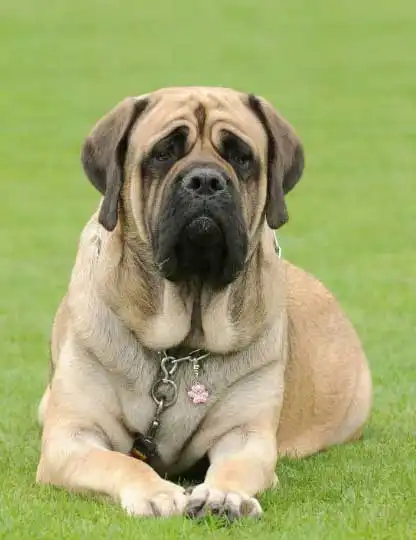
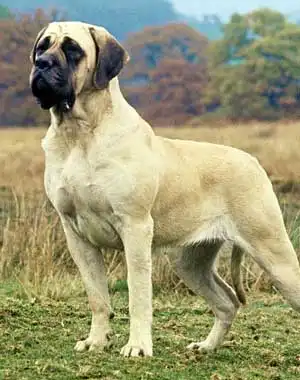
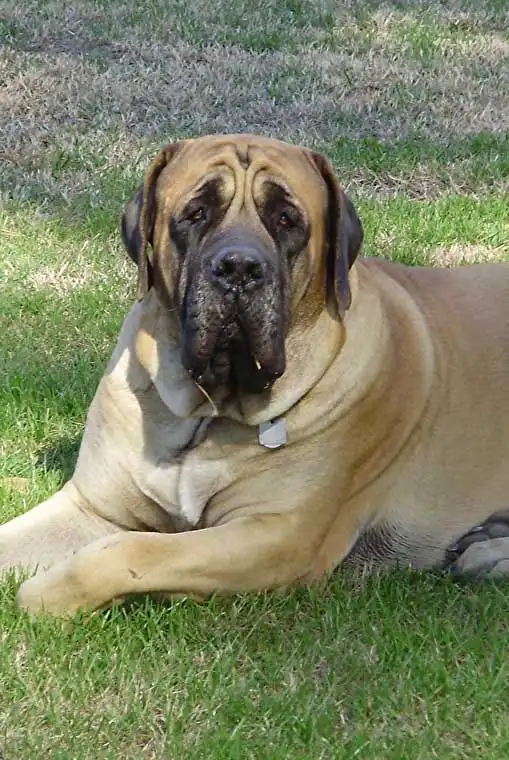
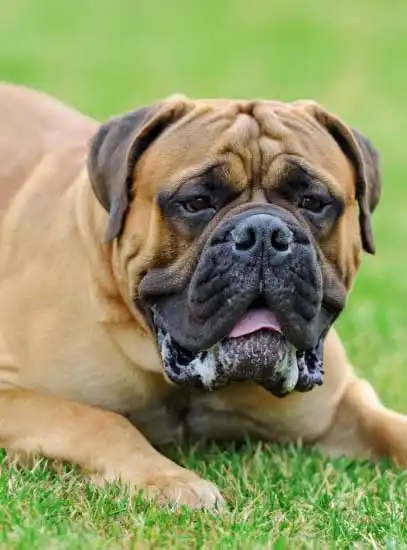
The Mastiff is known for its solid and substantial build, earning it the title of the heaviest dog breed, although it may not be the tallest. The largest recorded Mastiff reached an astonishing length of 8 feet 3 inches and weighed 343 pounds. This breed is characterized by a powerful physique, featuring a large head with widely spaced dark eyes. Its ears, which are relatively small compared to the head, are V-shaped and set apart at a moderate distance. The top of the head is broad and flat between the ears, gently rounding at the forehead, which is marked by distinctive wrinkles. The muzzle is short and darker than the rest of the head, complemented by a wide nose with well-defined, flat nostrils. The lips hang loosely from the jaw, contributing to the Mastiff's notably square appearance. Typically, the bite is scissor, although undershot jaws are also common. The chest is broad and rounded, with well-defined ribs, while the shoulders are sloped and heavily muscled. The forelegs are straight, strong, and set wide apart, ending in large, round feet. Similarly, the hind legs are muscular and broad, positioned wide apart with moderate angulation that aligns with the forelegs. The Mastiff's tail is set at a moderate height, wide at the base, and tapers towards the tip.
Care Routine
Despite having a short coat, the Mastiff still needs weekly grooming with a rubber hound glove to remove dead and loose hair. This breed goes through two shedding seasons, so daily brushing during these periods can help manage the additional fur. Although their hair is short, Mastiffs can develop a distinct odor due to increased oil production. Regular brushing is recommended to help distribute these oils, and you may find that your Mastiff requires bathing more frequently than other breeds. However, be careful not to over-bathe, as this can strip away essential oils and potentially lead to skin problems like dermatosis. Consulting with your veterinarian or a grooming professional can provide valuable advice on the right bathing schedule and suitable products for your Mastiff. Given their large stature, Mastiffs do not need much exercise and tend to be quite inactive indoors. They can adapt well to apartment living or urban settings, as long as they receive a brief daily walk or have access to a small yard for some movement. Although they were originally bred in temperate climates, this breed is more comfortable in cooler weather than in heat, despite its Mediterranean origins. For cleanup, a pooper-scooper must be suitable for the Mastiff's size. This breed is also known for its drooling and has a hearty appetite, typically requiring between 8 to 8.5 cups of food each day, divided into two meals. The precise amount of food should be tailored to the dog's size, age, and metabolism. However, be mindful of overfeeding to prevent weight gain, as Mastiffs are prone to bloat, which can occur from overeating or drinking too much at once. It’s advisable to serve smaller portions rather than large meals whenever possible.
Behavior & Temperament
The Mastiff is a sizable and loyal breed recognized for its gentle nature. Over the centuries, breeders have primarily focused on enhancing traits like loyalty and protectiveness, but in the last 300 years, there has been a shift towards fostering a friendlier disposition as well. This breed is an outstanding companion for families, showing both affection and a protective instinct towards its family members, including children. However, due to their large stature, it is wise to supervise any interactions between Mastiffs and young children. While they are generally loving, Mastiffs can be wary of strangers. Socialization plays a vital role for this breed, particularly when it comes to living harmoniously with other dogs and animals. If they are not properly socialized from a young age, Mastiffs may display aggression towards other pets, and their size can lead to potential risks if they are not taught how to interact appropriately. Regarding training, Mastiffs are not typically recognized for their intelligence, which can make the training process more difficult. They tend to learn at a relaxed pace, and their slow, heavy movements mean they require less exercise than many other breeds. A simple daily walk is usually enough to keep your Mastiff healthy.
Play & Exercise
Things to Know
Cups Per Day
8.5 Cups
Daily Activity
60 Minutes
Average Lifespan
9 Years
Origin
1800s
Type
Pure Breeds
Size
Giant
Origin Country
England
Brush Frequency
Weekly
Coat Texture
Straight
Register
Your kids have been begging for a pet forever, and you've recently decided that it's time for your family to get a new addition -- a dog! While everyone is excited for the new arrival, you're wondering if you need to have a dog license. How much does it cost? Is it required? Where do you get one?
Member Clubs

PETINNATE
Guardian Dog

AKC
Working Group

UKC
Guardian Dog
Height & Weight
Weight
173 lbs (78 kg)Male: 200 lbs (91 kg) , Female: 145 lbs (66 kg)
Height
33 inches (84 sm)Male: 33 inches (84 sm) , Female: 32 inches (81 sm)
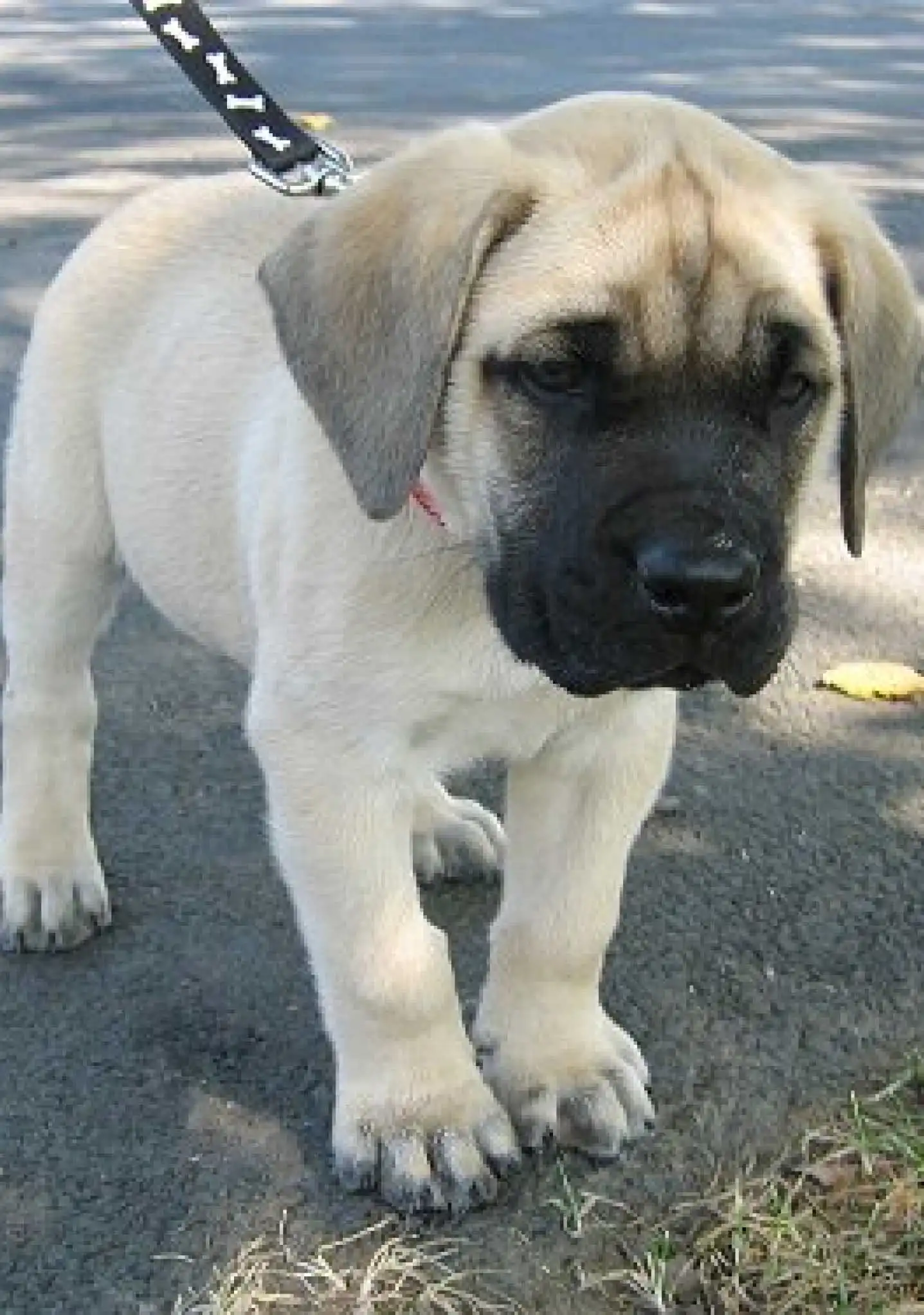
6 Months
90 lbs ( m 90 lbs, f 90 lbs )
27 inches ( m 27 inches, f 27 inches )
12 Months
110 lbs ( m 110 lbs, f 110 lbs )
29 inches ( m 29 inches, f 29 inches )
18 Months
145 lbs ( m 145 lbs, f 145 lbs )
32 inches ( m 32 inches, f 32 inches )
Eye Colors
Brown

Nose Colors
Black
Coat Colors
Cream
Fawn
Brindle
Characteristics
Mixes

Boxmas
The Boxmas, a hybrid breed resulting from the combination of a Boxer and a Mastiff, is known for its affectionate nature, loyalty, and strong devotion to its family. If not trained properly from a young age, this breed can develop a strong attachment to one particular owner. Typically calm and not prone to excessive barking, the Boxmas is a well-mannered companion. Although its origins are not thoroughly documented, this breed has gained recognition in Europe in recent years. With a sharp awareness of its surroundings, the Boxmas is skilled at monitoring its environment and effectively guarding against potential threats. While it may seem intimidating at first, its endearing personality is likely to win you over. The breed boasts a short, dense coat that is water-resistant, making grooming easy, provided it receives regular exercise and energetic playtime.
Read more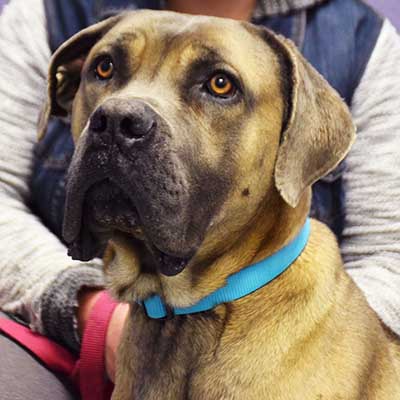
Doubull-Mastiff
The Doubull-Mastiff is a mixed breed resulting from the combination of the Bullmastiff and the Mastiff. This breed is notable for its substantial size and boasts a short, thick coat that sheds very little. To keep its coat looking shiny, a weekly brushing is suggested to remove any loose fur. Renowned for its calm demeanor, the Doubull-Mastiff is a loving and loyal companion, making it a wonderful choice for families. However, because of its large stature, many owners recommend against housing this breed in an apartment.
Read more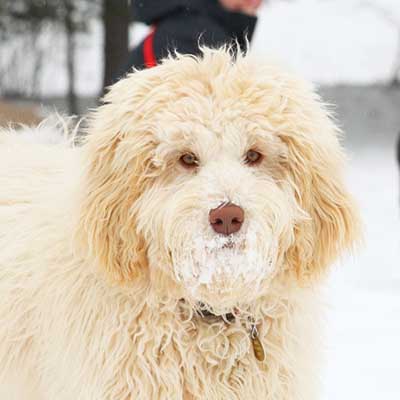
Mastidoodle
The Mastidoodle is a large hybrid breed created by crossing a Mastiff with a Standard Poodle. These dogs usually stand as tall as 30 inches and are characterized by their sturdy build and dense, wavy coats. Their fur can easily become matted if not groomed regularly, which means they need a good deal of upkeep. Often dubbed the "teddy bear" of dogs, Mastidoodles are known for their gentle and calm demeanor, making them wonderful companions for families of all shapes and sizes.
Read more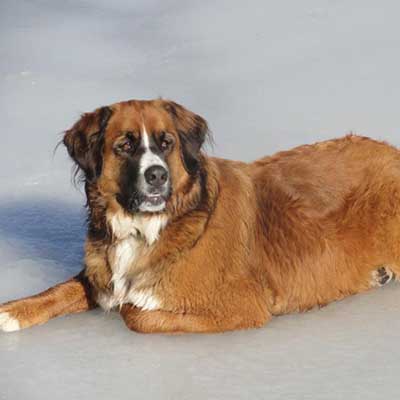
Mountain Mastiff
The Mountain Mastiff is a hybrid breed resulting from the combination of a Bernese Mountain Dog and a Mastiff. Weighing in at an impressive 150 to 200 pounds, these dogs are notable for their large stature. However, what truly sets them apart is their affectionate, gentle, and loyal nature towards their families. As guardians, their size and inherent caution around strangers equip them well for protection duties. They also demonstrate skills in tracking and weight pulling. Although they are intelligent, their sensitivity necessitates a gentle training approach. These devoted companions flourish in a family setting, making them exceptional pets.
Read more