
Rat Terrier
Teddy’s Terrier, Rattie
During the 19th century, American farmers were in search of an adept rodent hunter, which prompted them to crossbreed several Terrier varieties with Whippets, Greyhounds, and Beagles. This endeavor led to the creation of the delightful Rat Terrier. Known for its agility, this breed excelled at locating rodents and other pests, whether they were hiding above or below ground. In addition to its hunting skills, the Rat Terrier became a dependable watchdog and a beloved companion, establishing itself as a familiar sight on farms throughout the nation. Today, this small to miniature breed is often seen happily engaging with families in both rural and urban environments. With low grooming needs and a high energy level, the Rat Terrier thrives in canine sports, remains vigilant over its loved ones, and adds a lively spirit to any household.

Breed Origin
The Rat Terrier is a distinctly American breed that emerged in the 1800s through the crossbreeding of various fox and European Terriers, such as Bull Terriers, English White Terriers, and Manchester Terriers. This breed was further enhanced by mixing in Whippets, Beagles, Greyhounds, and other Terriers, resulting in a small dog celebrated for its speed, adaptability, sharp sense of smell, and friendly disposition. Initially, Rat Terriers were versatile farm dogs, skilled at hunting rodents and other pests both above and below ground, as well as chasing small game. By the early 20th century, they had gained immense popularity as working dogs on farms, thanks to their intelligence and sociable nature. President Theodore Roosevelt was a notable admirer of the breed, bringing them to the White House during his presidency, which earned them the affectionate nickname “Teddy’s Terriers.” However, as urbanization progressed and the demand for farm ratters decreased, the breed's popularity started to wane. Nevertheless, the Rat Terrier was not forgotten; it received official recognition as a distinct breed from the United Kennel Club in 1999. The breed also captured public interest when actress Shirley MacLaine featured her Rat Terrier, “Terry,” in her book, “Out on a Leash.” In 2013, the American Kennel Club also formally recognized the Rat Terrier.
Breed Appearance
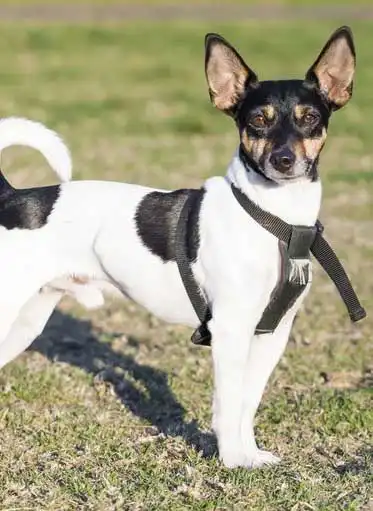
The Rat Terrier comes in two distinct sizes: a miniature variant that stands between 10 and 13 inches tall, and a standard version measuring from 13 to 18 inches. Both types are sturdy, compact dogs known for their muscular and athletic physiques. Slightly longer than they are tall, these well-balanced terriers possess a strong, arched neck that flows into flat shoulder blades. Their broad chest and level back are supported by powerful legs, allowing for a quick and efficient gait. The paws are oval, compact, and moderately arched, featuring robust nails and thick pads. In some instances, dewclaws on the front paws may be removed. Tails can be naturally bobbed or long, and they may also be docked. The head of the Rat Terrier resembles a smooth, blunt wedge, with a moderately broad skull that is flat on top. The muzzle is shorter and tapers towards a pigmented nose, while the strong jaws display a scissors bite. The dog’s face conveys an intelligent and alert demeanor. Its oval eyes, set wide apart, come in various colors, including brown, hazel, gray, and blue. The ears are V-shaped, either folding at the tips or standing upright. The coat is short, smooth, and shiny, showcasing a range of pied patterns characterized by large patches of one or more colors mixed with white. Other possible colors outside the pied pattern include black, various shades of brown and tan, red, white, sable, brindle, lemon, or fawn.

Care Routine
The Rat Terrier is a low-maintenance breed when it comes to grooming. A weekly brushing with a brush or curry mitt is generally adequate, though you may need to brush more often during the spring and fall due to shedding. An occasional bath can help keep your Rat Terrier looking its best, but be cautious not to bathe them too frequently to avoid skin irritation. This breed is susceptible to dental issues, so regular teeth brushing—ideally one to three times a week—is essential. Their nails grow rapidly and should be trimmed regularly to prevent splitting or cracking. Additionally, it's important to check and clean their ears routinely. As a lively and athletic breed, Rat Terriers require daily exercise. They are happy whether they are on a farm or in a city, as long as they get their daily walks and playtime. Participating in obedience training, agility competitions, and other dog sports can also offer valuable mental engagement. While crate training can be effective, it’s crucial not to confine them to a kennel, tie them up, or leave them outside for long periods, as they thrive on human interaction.
Behavior & Temperament
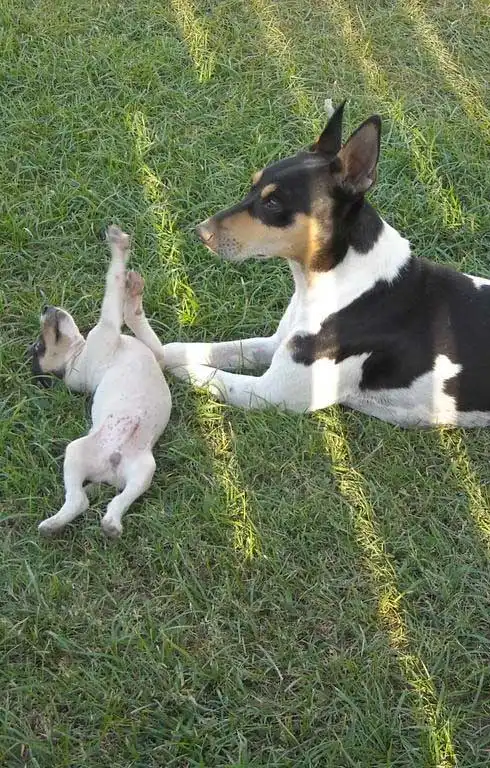
These loving, confident, and lively dogs make wonderful family companions, thriving on plenty of attention. Their inquisitive and adventurous spirit means they need a lot of activities; if not, they might entertain themselves by digging. When they are with their families, they act as alert watchdogs, often displaying caution around strangers. When raised with children, they become playful and engaging playmates. Rat Terriers typically get along well with other dogs and can live peacefully alongside livestock on a farm. However, in any environment, they may chase after small, quick-moving animals like squirrels or rodents. This breed is not only gentle and calm but also eager to please, making them relatively easy to train with consistent, positive reinforcement. They can excel in various dog sports, such as agility, coursing, and flyball. Their high energy levels require regular exercise, which can include long walks, running, and playtime with their families. At the end of the day, these affectionate and loyal dogs are always ready to cuddle up with their loved ones.

Play & Exercise
Things to Know
Cups Per Day
0.0 Cups
Daily Activity
0 Minutes
Average Lifespan
14 Years
Origin
1800s
Type
Pure Breeds
Size
Not Set
Origin Country
United States
Brush Frequency
Daily
Coat Texture
Straight
Register
Your kids have been begging for a pet forever, and you've recently decided that it's time for your family to get a new addition -- a dog! While everyone is excited for the new arrival, you're wondering if you need to have a dog license. How much does it cost? Is it required? Where do you get one?
Member Clubs

PETINNATE
Terrier

AKC
Terrier Group

UKC
Terrier
Height & Weight
Weight
21 lbs (10 kg)Male: 21 lbs (10 kg) , Female: 21 lbs (10 kg)
Height
14 inches (36 sm)Male: 14 inches (36 sm) , Female: 14 inches (36 sm)
Characteristics
Mixes

Brat
The Brat is a hybrid breed resulting from the combination of the Boston Terrier and the Rat Terrier. Information about this mix is somewhat scarce, largely relying on what is understood about its parent breeds. The Rat Terrier was officially recognized as a separate breed only in 2013. Both parent breeds are known for their athletic build, compact size, and small stature, with the Rat Terrier coming in both miniature and standard variations. Consequently, the Brat often displays physical characteristics that reflect both of its ancestors. As part of the Terrier family, these breeds were initially bred for pest control and as companions. Today, the Brat is primarily seen as a designer dog, cherished mainly for its companionship.
Read more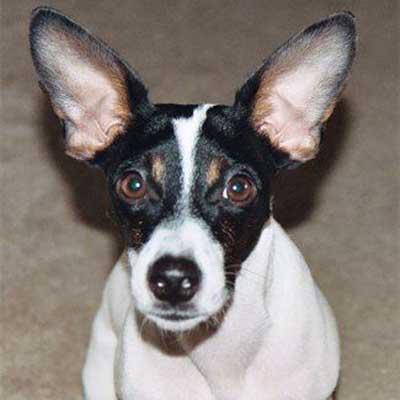
Jack-Rat Terrier
The Jack-Rat Terrier, often known as the Jersey Terrier, is a hybrid breed that emerges from the union of the Rat Terrier and the Jack Russell Terrier. This lively dog is marked by its boundless energy, bravery, and sharp awareness, always ready for action. Although it has a compact build, the Jack-Rat Terrier is fiercely protective of its family and tends to bark at anything it deems suspicious, even the television. In terms of appearance, this medium-sized breed exhibits traits from both of its parent breeds, featuring upright ears, expressive eyes, and a docked tail. Its coat consists of a short, smooth double layer that sheds regularly. If you’re looking for a small companion with a vibrant personality, the Jack-Rat Terrier might be the perfect fit. However, it’s crucial to remember that while this breed typically interacts well with children, it has a strong instinct to chase smaller animals. Thus, early socialization and training are vital for this breed, as they are for any terrier.
Read more
Mini Ratzer
The Mini Ratzer is a charming blend of the Miniature Schnauzer and the Rat Terrier, both of which are compact breeds. The size of this hybrid can differ, given that the Rat Terrier comes in both miniature and standard varieties. Generally, Mini Ratzers reach a height of 11 to 15 inches and weigh approximately 20 pounds. They have a short, dense, and wiry coat that can showcase a range of colors paired with white. Renowned for their loving disposition, Mini Ratzers are wonderful companions for families, as they enjoy the company of children and other pets. Nonetheless, it is crucial to supervise them when they are around young children and small animals, like hamsters or guinea pigs, to ensure everyone's well-being.
Read more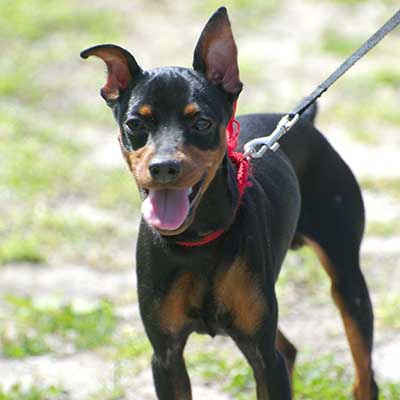
Rat Pinscher
The Rat Pinscher is a meticulously developed hybrid that merges the purebred American Rat Terrier with the Miniature Pinscher. This compact dog features a graceful stance and slender limbs. Renowned for their energetic and vigilant demeanor, Rat Pinschers have a sharp awareness of their surroundings. They typically bark at a moderate level and are usually gentle with children. However, they are well-known for their tendency to escape, making a secure yard a necessity. Their natural instincts as hunters can result in a singular focus when chasing after squirrels or other small animals. In summary, the Rat Pinscher is an exceptionally sturdy breed that flourishes in a nurturing environment, often enjoying a lifespan that exceeds 15 years.
Read more
American Rat Pinscher
The American Rat Pinscher is a mixed breed created by crossing the American Rat Terrier with the Miniature Pinscher. Originally, the American Rat Terrier was bred for agricultural tasks and hunting, but it gradually became a cherished pet. On the other hand, the history of the Miniature Pinscher is not as thoroughly documented, though it is recognized that this breed originated in Germany. It is believed that the Mini Pin has connections to Italian Greyhounds and Dachshunds, with the German Pinscher possibly also playing a role in its development. Given that Pinschers were traditionally used for catching rats, it’s likely that the American Rat Pinscher will have a natural instinct to chase small animals and objects. These dogs are small enough to thrive in apartment settings, even without a yard, but they possess a high energy level, making regular exercise crucial for their well-being and happiness.
Read more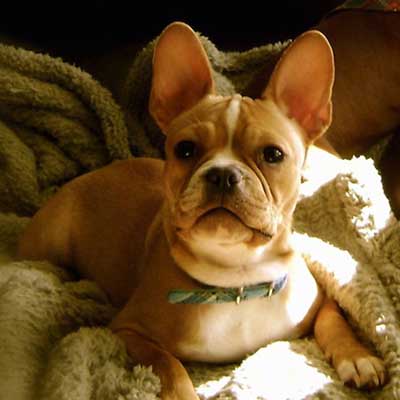
French Bull Rat Terrier
The French Bull Rat Terrier is a delightful and devoted companion. This energetic mix arises from the union of the affectionate French Bulldog and the spirited American Rat Terrier. The fusion of these two breeds results in a dependable friend who spreads happiness to all in his presence. Although he can be somewhat headstrong at times, his eagerness to please is sincere. Many owners of a French Bull Rat Terrier often share that the investment in training and direction pays off significantly.
Read more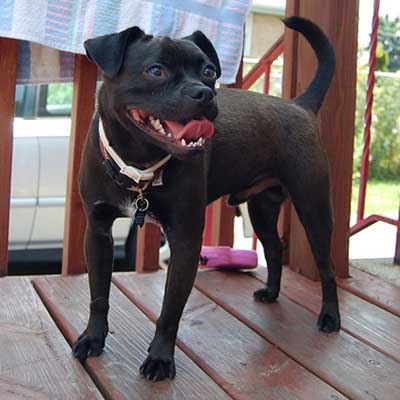
Puggat
The Puggat is a carefully crafted designer breed that results from the combination of the ancient Chinese Pug and the energetic Rat Terrier, renowned for its skills in pest control. These small dogs are full of life and playfulness, often showcasing a comical flair in their behavior. Generally, they are friendly and sociable, but their instinctual prey drive can make them less trustworthy around smaller animals. Although the Puggat is a compact breed that requires less grooming and exercise than many others, it craves attention and affection. If left alone for too long, they may resort to mischievous or destructive behaviors.
Read more
Ratshi Terrier
The Ratshi Terrier is a mixed breed that results from crossing the American Rat Terrier with the Shih Tzu, both of which are classified as toy breeds. These dogs generally weigh between 10 and 20 pounds and stand around 8 to 12 inches tall at the shoulder when fully matured. Their small stature makes them excellent companions for those residing in compact living spaces like apartments. While they can be delightful family pets, they often do better in homes without young children, as they may become irritable if teased or provoked. Although they possess intelligence, Ratshi Terriers can exhibit a degree of stubbornness, which may lead to a more extended training period.
Read more