Large Dog Breeds
Large dog breeds are generally classified based on average adult height and weight ranges.
Large breed dogs weigh 59–99 lbs. Their growth phase is longer, reaching maturity around 15 months. Their larger build makes them more susceptible to joint issues such as hip dysplasia.
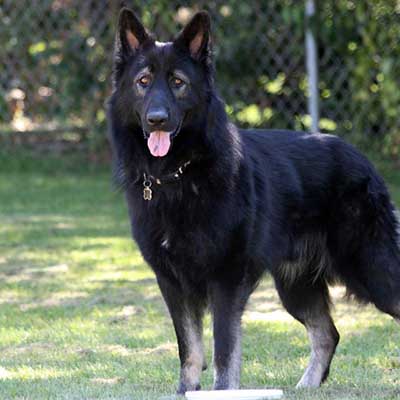
New Shep
The New Shep is a thoughtfully designed hybrid that merges the reliable German Shepherd, celebrated for its contributions to law enforcement and military service, with the affectionate Newfoundland, a breed famous for its love of water. This combination typically produces a dog that is both confident and intelligent, known for its friendly demeanor and tolerance, particularly around children and smaller animals. However, poor breeding practices can result in behavioral issues such as aggression or anxiety, as well as various health concerns. While the New Shep is recognized by both the Designer Breed Registry and the International Designer Canine Registry, it has yet to achieve widespread popularity. As a result, finding a reputable breeder may take some time, but it is essential to ensure that the dog is free from any inherited behavioral or genetic problems related to aggression or nervousness.
Read more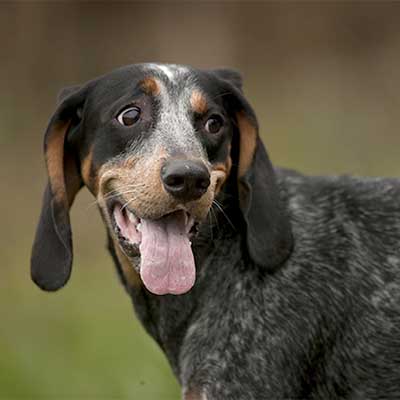
Bluetick Coonhound
The Bluetick Coonhound is a loyal and intelligent breed, renowned for its strong attachment to family members. While they can adapt to living indoors, it is crucial for their health to engage in regular physical activity. Ideally, they should have access to a securely fenced yard, as they are prone to wandering off in search of interesting scents. These dogs typically get along well with children, but they may be better suited for families with older kids due to their energetic and sometimes boisterous play style. When socialized properly from an early age, Bluetick Coonhounds exhibit a friendly and outgoing demeanor. In terms of their physical characteristics, they are both impressive and athletic, featuring a muscular yet streamlined physique that avoids any awkwardness. As skilled nocturnal hunters, they have keen eyesight and a strong dedication to tracking. However, they can be challenging for owners who are not committed to training; a lack of exercise may result in anxiety and destructive behaviors. This breed flourishes in spacious environments, such as large yards. It’s important to remember that, despite their friendly disposition towards people, they should not be trusted around cats or other small animals due to their inherent hunting instincts. Once fully trained, Bluetick Coonhounds are obedient and attentive to their owners.
Read more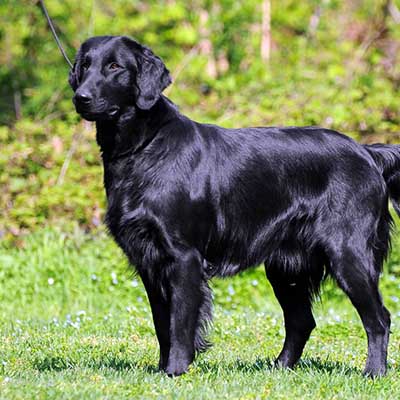
Flat Coated Retriever
The Flat-Coated Retriever is a remarkable breed, celebrated for its shiny black coat, although a deep liver hue can also be seen from time to time. This breed is categorized as large, standing up to 24.5 inches tall and weighing as much as 80 pounds. Hailing from England in the 1800s, these dogs were originally developed for retrieving waterfowl and serving as hunting companions. However, their popularity declined after World War I, especially as the Golden Retriever gained favor. Known for their playful nature, Flat-Coated Retrievers mature at a slower pace despite their considerable size. Nonetheless, this breed is charming and hardworking, sure to fill your life with joy and laughter.
Read more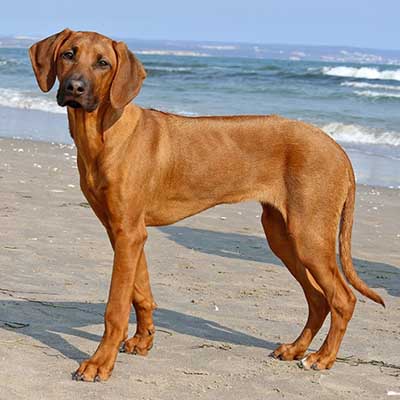
Rhodesian Ridgeback
In their quest for a hunting dog better suited to Africa's challenging climates, Dutch settlers crossbred their imported European breeds with a native tribal dog. This breeding produced a reddish-brown dog characterized by a unique ridge of fur along its back, adept at hunting large game and protecting families and homes. Originally employed for lion hunting, the Rhodesian Ridgeback's loyal and affectionate disposition soon endeared it to families, contributing to its rising popularity in other countries. Today, while it is still appreciated for its keen eyesight and scent-tracking skills, the Rhodesian Ridgeback is also celebrated as a low-maintenance, well-mannered, and energetic companion, thriving in dog shows, protection roles, and playful interactions with its human family.
Read more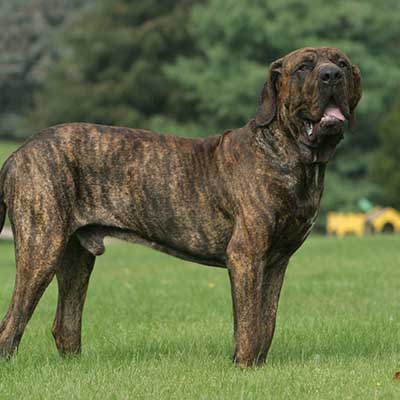
Fila Brasileiro
The Fila Brasileiro is a sturdy working breed celebrated for its remarkable tracking skills and assertive demeanor. Known for their vigilance and intelligence, they make excellent guardians. However, their strong-willed disposition demands a confident and experienced owner to effectively guide their behavior. Historically, these dogs were used in Brazil to track down escaped slaves during the slavery period, where they would hold individuals until their owners arrived. Despite their formidable appearance, Fila Brasileiros are surprisingly quick and agile. They are fiercely loyal companions but can be wary of strangers, which may lead to aggressive behavior. Due to their unpredictable tendencies, this breed is banned in several countries, while others allow their importation on the condition that male dogs are neutered. Highly intelligent and affectionate with their families, Fila Brasileiros require proper socialization to help them recognize that not all unfamiliar faces are threats. They can be gentle and tolerant with children, but their strong prey drive may render them unsuitable for homes with smaller pets. This breed is both elegant and powerful, necessitating an owner who is well-versed in dog handling. Given the Fila Brasileiro's strength, it is crucial to establish clear boundaries; otherwise, they may take it upon themselves to set the rules.
Read more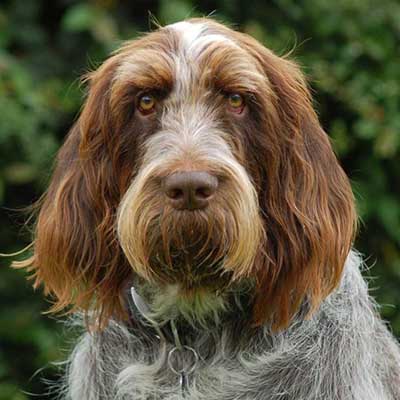
Spinone Italiano
The Spinone Italiano was initially developed as a multi-talented hunting dog, celebrated for its abilities in pointing, setting, and retrieving game. With an exceptional sense of smell and a sturdy coat, this breed excels in outdoor environments. Although its hunting instincts are prominent, the Spinone Italiano also serves as a wonderful companion for active families. This breed is not only intelligent and energetic but also affectionate, thriving on strong family connections and active participation in daily activities. Proper care for a Spinone involves diligent attention to ear and dental hygiene, along with regular grooming. To promote their overall health, it is crucial to fulfill their exercise needs; a combination of consistent training and patient nurturing will enable this breed to achieve its full potential.
Read more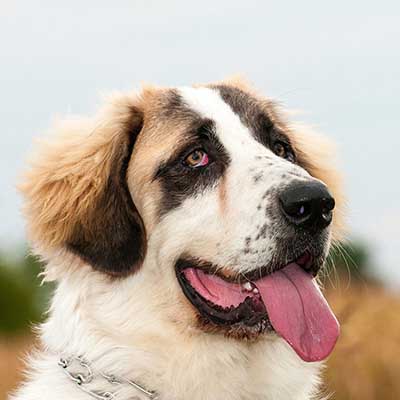
Bucovina Shepherd
The Bucovina Shepherd is an impressive breed, notable for its large to giant stature. Hailing from the Carpathian Mountains in Romania, this breed has evolved over centuries as a livestock guardian, resulting in a robust and courageous dog that also serves as a loving companion, exhibiting remarkable gentleness and loyalty to its owners. Among the three Romanian shepherd breeds—alongside the Mioritic and the Carpathian—the Bucovina Shepherd holds the distinction of being the oldest. This breed has a strong protective instinct; while it is not naturally aggressive, it displays courage and boldness when faced with threats, making it an effective guardian. Its deep, resonant bark acts as a warning signal, audible from great distances—an important consideration for those living near neighbors, particularly in rural areas. Bucovina Shepherds are independent thinkers, which can pose challenges during training; however, they respond positively to consistent commands and direction. They are particularly adept at protecting the home and family, often taking on the role of nighttime sentinels. Known as gentle giants, they are affectionate and kind with children, though they may exhibit caution around strangers. These dogs are energetic and playful, requiring plenty of physical exercise and mental stimulation, along with proper socialization. Their thick coat, while not overly long, necessitates regular grooming, and they are prone to drooling. In return for the care you provide, the Bucovina Shepherd will be a devoted companion, offering both friendship and protection to you and your family.
Read more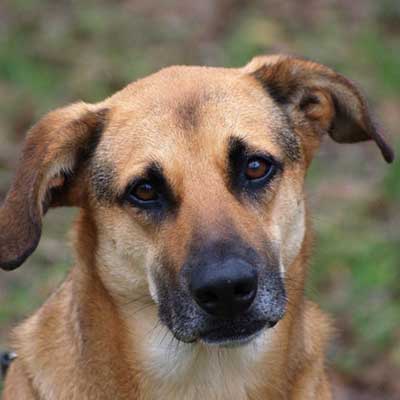
Black Mouth Cur
The Black Mouth Cur stands out as one of the most well-known breeds within the Cur group, which has its roots in the southern United States. This breed was created by blending characteristics from hounds, terriers, and feist breeds, resulting in adaptable dogs that excel in hunting, herding, and guarding tasks. Such versatility was crucial for farmers and settlers who often had limited means and could only keep a single dog, prioritizing practicality over aesthetics in their breeding choices. As a result, there is significant variation in size and color among these dogs. Regardless of their dimensions, Black Mouth Curs are highly active and possess a strong instinct to chase, requiring consistent physical and mental engagement to prevent behavioral problems.
Read more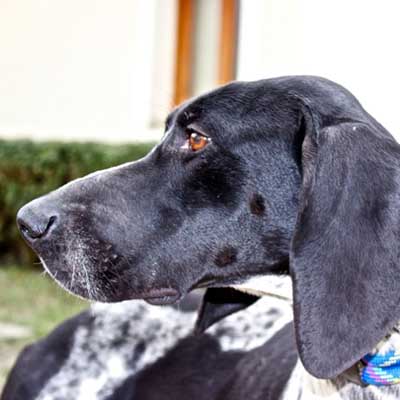
Chien Francais Blanc et Noir
The Chien Français Blanc et Noir is one of three breeds classified as French scent hounds, alongside the Chien Français Tricolore and the Chien Français Blanc et Orange. Although these breeds share certain physical characteristics, they differ significantly in their temperaments. True to its name, the Blanc et Noir originates from France and was developed in the early 19th century by a breeder focused on creating a dog with an outstanding sense of smell, remarkable endurance, and a well-rounded temperament. Originally intended for hunting small game, these dogs later evolved to work effectively in larger packs, allowing them to pursue bigger prey such as deer. Their instinctive pack mentality has fostered a sociable nature, resulting in a friendly and easy-going disposition that enables them to get along well with people, including strangers and children, as well as with other dogs. This blend of characteristics, combined with their moderate trainability and adaptability, makes them excellent family pets, even as they retain their hunting instincts. While they can thrive in various family settings, they do have a considerable amount of energy and a propensity to bark, making them particularly well-suited for active families—ideally those with a yard—who are prepared to dedicate time to their training and socialization.
Read more
Rottmatian
The Rottmatian, an impressive mix of Dalmatian and Rottweiler, excels as both a devoted family pet and a reliable guard dog. Generally classified as medium to large, these dogs typically weigh about 80 pounds and stand around 23 inches tall. Renowned for their loyalty and courage, Rottmatians are instinctive protectors, but they also have a gentle nature that makes them wonderful companions for children. With a short, flat coat that demands little maintenance, their intelligence and eagerness to please simplify the training process.
Read more
Double Doodle
The Double Doodle is a mixed breed that results from crossing a Goldendoodle with a Labradoodle. Both parent breeds are typically medium to large and are known for their low-shedding coats, so it’s likely that your Double Doodle will inherit these characteristics. This breed may also possess a range of appealing traits from its ancestry, such as high energy, a friendly personality, and intelligence. The coat of a Double Doodle can come in various textures, including straight, wavy, or curly. To keep their coat healthy, regular grooming through combing and brushing is important. While Double Doodles are wonderful companions for families, their medium to large size means they should be supervised around young children. They are loving and gentle but can be quite energetic, which might lead to them accidentally knocking over a small child during play. A Double Doodle flourishes in a home with a fenced yard, where it has plenty of room to run, play, and explore. This breed is officially recognized by the Dog Registry of America.
Read more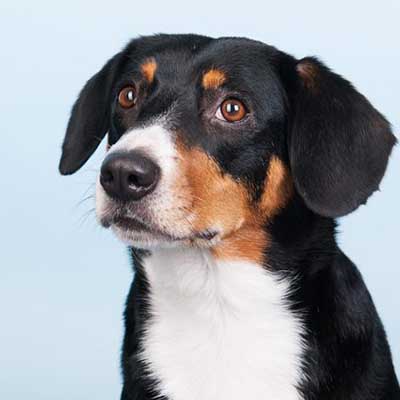
Entlebucher
The Entlebucher Mountain Dog is a sturdy, medium-sized breed known for its distinctive small brown eyes, short coat with multiple colors, and small triangular ears. Its sleek fur typically showcases a blend of white, tan, and black, highlighted by a soft, fluffy blaze and chest area. Among the various Swiss Mountain Dog breeds, the Entlebucher is the smallest, and some suggest it has lineage tracing back to the Mastiffs that accompanied the Romans for protection and warfare. Although the American Kennel Club officially recognized this breed only in 2011, it remains relatively rare in the United States, while it enjoys a strong following in Switzerland. Nowadays, the Entlebucher is primarily appreciated as a family pet rather than a livestock guardian.
Read more