Large Dog Breeds
Large dog breeds are generally classified based on average adult height and weight ranges.
Large breed dogs weigh 59–99 lbs. Their growth phase is longer, reaching maturity around 15 months. Their larger build makes them more susceptible to joint issues such as hip dysplasia.
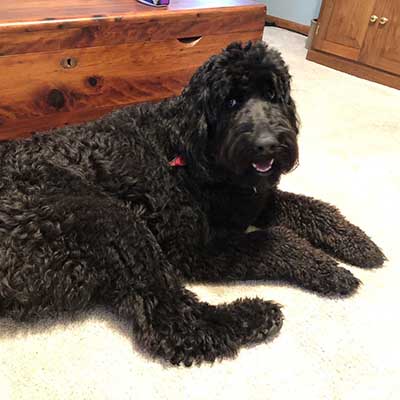
Flandoodle
The Flandoodle is a large designer dog breed that emerges from the combination of the Bouvier des Flandres and the Standard Poodle. These dogs are well-regarded as family pets, but they also excel as watchdogs thanks to their loyal, protective, and alert disposition. Typically, Flandoodles weigh about 70 pounds and stand around 25 inches tall. Their coats are medium to long, thick, and curly, coming in a range of colors. Common hues include brown, black, white, gray, tan, red, and blue. While they usually interact well with other animals and children when socialized early, it’s wise to supervise them around young children, particularly those under five years old.
Read more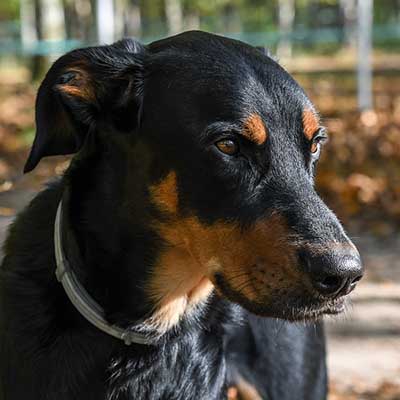
Beauceron
The Beauceron is a breed known for its intelligence, confidence, and independence, often accompanied by a touch of stubbornness. These dogs are not only sizable but also possess the ability to safeguard their home and family when necessary. To ensure a well-rounded temperament, proper training and socialization are essential, as Beaucerons tend to develop slowly, retaining a playful, puppy-like attitude until they are around three years old. If they are raised alongside cats, they may learn to live harmoniously with them; however, their strong instinct to chase can sometimes lead to problematic behavior. It is nearly impossible to tire out a Beauceron, so potential owners should be active and dedicated to providing daily exercise that allows their dog to thrive. Without sufficient stimulation, a Beauceron can become quite destructive.
Read more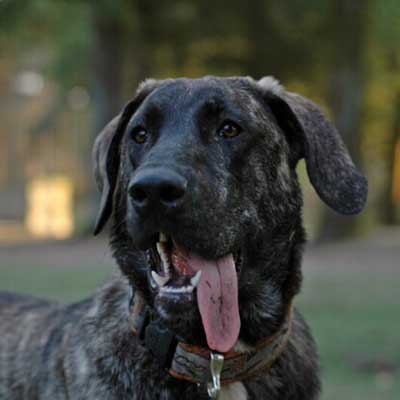
Cao de Castro Laboreiro
The Cão de Castro Laboreiro is considered one of the rarest dog breeds in the world, with a population estimated to be between 200 and 500 individuals. Historical records about this breed are limited, and even the Portuguese Kennel Club admits that many stories regarding its origins are largely conjectural. Although several theories have been proposed, there is a general agreement that this breed is indeed ancient. It is believed to have existed for thousands of years and is likely part of the Lupomolossoid group, which eventually led to the development of breeds like the Great Pyrenees, positioning it as one of the earliest descendants of the original herding and guarding dogs. Despite its mysterious past, the Cão de Castro Laboreiro has been a protector in Portugal for centuries. Its physical traits, including its facial structure and coat, bear a resemblance to that of a wolf, and its cautious attitude towards strangers enhances this likeness. This breed is known for its assertive and protective instincts, yet it is also sensitive, responding more favorably to positive reinforcement rather than harsh training methods. Within their family, they are affectionate and form strong bonds with familiar individuals, but they can be wary of strangers and other dogs, making them better suited as solo pets unless they undergo thorough socialization. Their high intelligence and strong-willed nature mean they flourish under the care of a knowledgeable and assertive owner who can provide effective training. Once properly trained, they tend to be obedient and exhibit deep loyalty to their families.
Read more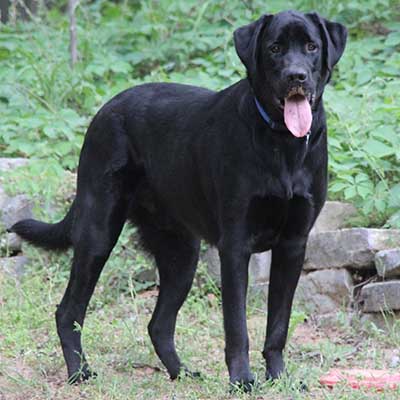
New Labralound
The New Labralound is a hybrid breed resulting from the combination of the Labrador Retriever and the Newfoundland. Both of these parent breeds are large, usually weighing around 100 pounds. Typically, these dogs reach a height of about 26 inches and possess a medium to long coat that is often dense, with textures that can be wavy or straight. Renowned for their friendly disposition, New Labralounds are wonderful family companions, displaying deep affection for children of all ages. They are also known for their patience and gentleness with other animals, including cats and small pets like rabbits, although they may have a natural instinct to retrieve them in certain situations.
Read more
Labernese
The Labernese is a mixed breed that results from the combination of a Labrador Retriever and a Bernese Mountain Dog. These large, friendly dogs flourish in family settings and struggle when left alone for long periods, often leading to separation anxiety and potentially destructive behavior. Renowned for their gentle temperament, calm disposition, and intelligence, Labernese dogs were initially bred to support individuals who are blind or disabled, making them wonderful family companions. They typically get along well with children and need regular physical activity to stay healthy and content. However, a notable downside of this breed is its relatively brief lifespan. Their coats come in common colors such as black, yellow, chocolate, and white, with patterns that can be solid, bi-colored, or tri-colored. The fur is thick, soft, long, and wavy.
Read more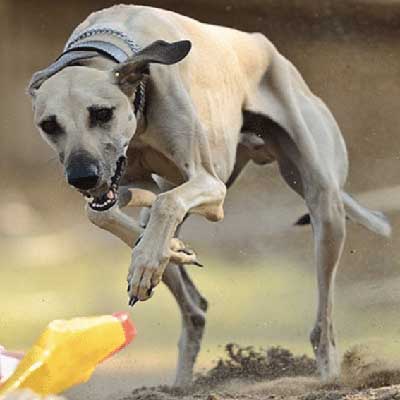
Rampur Greyhound
The Rampur Greyhound is a medium to large sighthound breed that traces its origins back to the 18th or 19th century, developed by Ahmad Ali Khan, the Nawab of Rampur. This breed was intentionally bred for the pursuit of challenging game such as boars, jackals, and even lions. While the population of Rampur Greyhounds has been slowly rising, they are still considered critically endangered and are quite uncommon outside of India. Most of the remaining dogs of this breed are utilized for hunting and guarding purposes within the country, and currently, none of the major kennel clubs have granted them official recognition.
Read more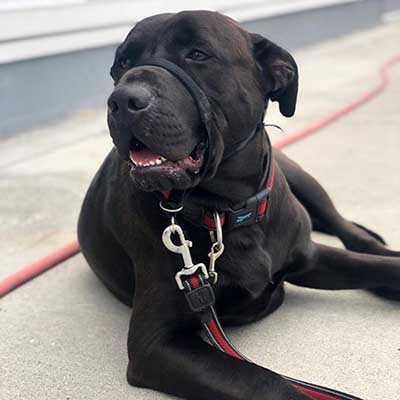
Rotticorso
The Rotticorso is a hybrid breed that emerges from the crossbreeding of a Rottweiler and a Cane Corso Italiano, both known for their impressive size and strength. This breed showcases the striking and robust characteristics inherited from its parent breeds. Rotticorsos thrive when engaged in activities; they are not content to simply relax. They excel in various roles, including herding, guarding, and participating in rigorous training exercises. While they have a strong-willed disposition, they are also fiercely loyal and devoted companions. Training a Rotticorso can be a challenge, as they often have a tendency to assert themselves. However, with a patient and balanced training approach that combines firmness with kindness, they will learn to respect you as their leader and be more willing to obey commands. Utilizing positive reinforcement, such as ample praise and affection for good behavior, proves to be much more effective than harsh training techniques, which should be completely avoided. These dogs are generally family-oriented, showing affection and protectiveness towards all members of the household. However, they may exhibit some reserve around friends or extended family. Rotticorsos typically get along well with children, but supervision during their interactions is crucial. Early socialization is vital; exposing them to a variety of people and animals during their puppy stage will help them develop a well-rounded temperament. This breed is not ideal for inexperienced dog owners; they require strong leadership and proper training to reach their full potential. If neglected, Rotticorsos can become aggressive and challenging to manage.
Read more