Pure Breeds
Browse a collection of Pure Breeds, including breed names, key traits, and origins. Whether you're interested in officially recognized purebreds or hybrid crossbreeds, this page helps you explore them all in one place.
A breed with a pure lineage, recognized by official breed standards.
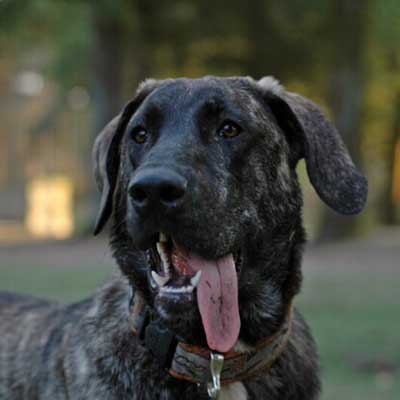
Cao de Castro Laboreiro
The Cão de Castro Laboreiro is considered one of the rarest dog breeds in the world, with a population estimated to be between 200 and 500 individuals. Historical records about this breed are limited, and even the Portuguese Kennel Club admits that many stories regarding its origins are largely conjectural. Although several theories have been proposed, there is a general agreement that this breed is indeed ancient. It is believed to have existed for thousands of years and is likely part of the Lupomolossoid group, which eventually led to the development of breeds like the Great Pyrenees, positioning it as one of the earliest descendants of the original herding and guarding dogs. Despite its mysterious past, the Cão de Castro Laboreiro has been a protector in Portugal for centuries. Its physical traits, including its facial structure and coat, bear a resemblance to that of a wolf, and its cautious attitude towards strangers enhances this likeness. This breed is known for its assertive and protective instincts, yet it is also sensitive, responding more favorably to positive reinforcement rather than harsh training methods. Within their family, they are affectionate and form strong bonds with familiar individuals, but they can be wary of strangers and other dogs, making them better suited as solo pets unless they undergo thorough socialization. Their high intelligence and strong-willed nature mean they flourish under the care of a knowledgeable and assertive owner who can provide effective training. Once properly trained, they tend to be obedient and exhibit deep loyalty to their families.
Read more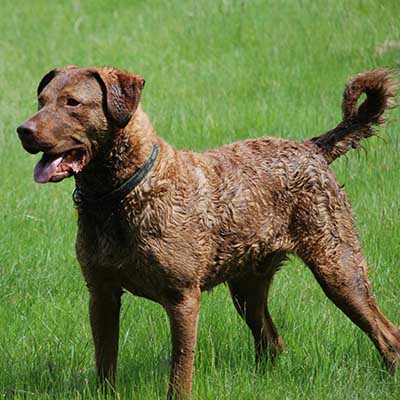
Chesapeake Bay Retriever
The Chesapeake Bay Retriever is a distinctive breed that sets itself apart from other Retrievers. This breed traces its roots back to two Lesser Newfoundland puppies, also referred to as St. John’s Water Dogs, which were saved by an American ship following a shipwreck near Maryland in 1807. These dogs were subsequently crossbred with local breeds, including Water Spaniels, Setters, and Hounds, in a somewhat haphazard manner. Although they share similar roles with other Retrievers, their genetic background is quite unique. Chesapeake Bay Retrievers are known for their striking looks, featuring a slightly oily, musky, waterproof wavy brown coat, captivating amber eyes, and a sturdy, muscular physique. While they are now mainly cherished as family pets and hunting companions, their initial role was to retrieve waterfowl. Renowned for their cheerful disposition, intelligence, and eagerness to please, these dogs excel in work, especially in water-related tasks. Their grooming requirements are relatively low, needing only a weekly brushing and a bath every three to four months. Due to their energetic and robust nature, they benefit from regular, vigorous exercise, whether through walking, running, or hunting geese. To ensure their proper development, consistent training combined with firm yet affectionate discipline is crucial.
Read more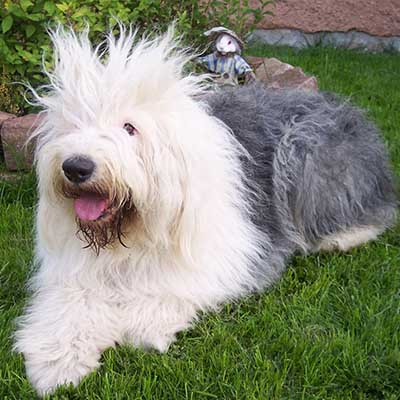
Old English Sheepdog
The Old English Sheepdog, one of the most ancient dog breeds, gained recognition from the American Kennel Club merely four years after the organization was founded in 1888. Currently, it holds the position of the 75th most popular breed in the United States. This breed is notable for its substantial size and unique shaggy fur, having featured prominently in various television shows and movies, as well as being a popular contender in dog competitions. Old English Sheepdogs are not only robust but also gentle and exceptionally intelligent, adept at mastering a wide array of commands and tasks. Their dense double coat often partially covers their eyes and comes in several color variations, with the most common being grizzle and white, gray and white, blue merle and white, blue gray and white, and blue and white.
Read more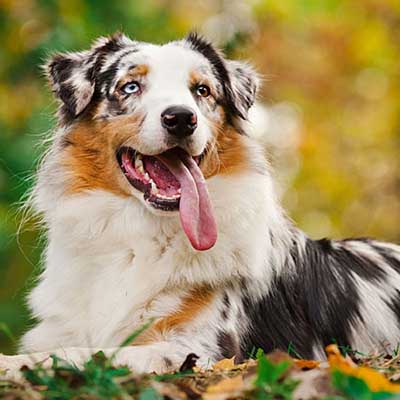
Australian Shepherd
The Australian Shepherd is a remarkably intelligent and loyal companion, yet it is also a breed brimming with energy that flourishes with active involvement. Renowned for its prowess in a variety of canine sports such as herding trials, tracking, agility, flyball, tricks, and obedience, the Aussie—its affectionate nickname—demands a household that can provide consistent training, structure, and plenty of physical exercise. This breed possesses a strong herding instinct, often leading it to nip at or bark at animals, people, and objects. If not given a specific task to engage with, the Australian Shepherd may exhibit disruptive and destructive behaviors. Interestingly, despite its name, the breed was actually developed in the United States for herding purposes.
Read more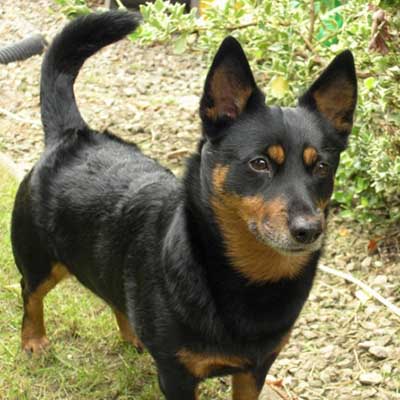
Lancashire Heeler
The Lancashire Heeler is a distinctive and rare small dog breed that hails from Great Britain. Initially bred for herding cattle, these compact dogs are nimble enough to nip at the hooves of cows while skillfully dodging any kicks. Beyond their herding responsibilities, they also served an important function in managing pests on farms, particularly rats. Generally, this breed enjoys good health and demands minimal daily grooming, although they are not hypoallergenic. While they tend to be affectionate and friendly with their families, they may exhibit wariness towards strangers, highlighting the importance of early socialization and training for their proper development.
Read more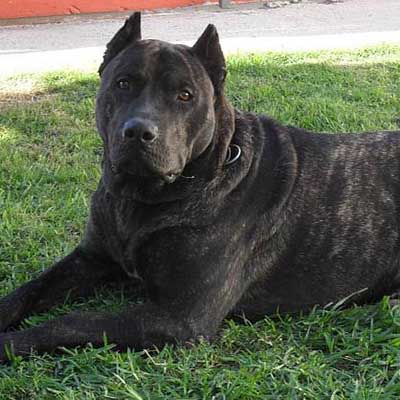
Gran Mastin de Borinquen
The Gran Mastin de Borinquen, a breed native to Puerto Rico, has traditionally been used as a guard dog and has participated in blood sports. Believed to have originated in the 16th century, this ancient breed is a descendant of the Spanish Mastiff and various local canines. While their primary role has been protection, they have also been involved in dog fighting and hunting wild boar. Their tenacious character has made them a favored choice in Puerto Rico, but their sometimes unpredictable behavior may not be ideal for families with young children. Known for their loyalty, the Gran Mastin de Borinquen requires a strong and assertive owner to ensure they are properly managed.
Read more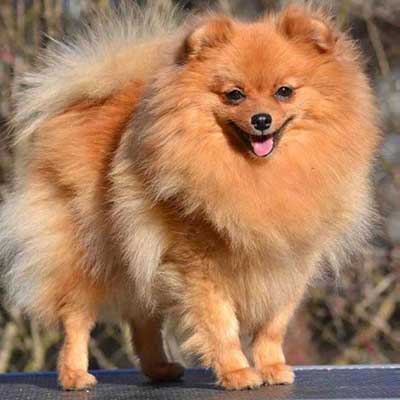
German Spitz
The German Spitz, while reminiscent of a larger Pomeranian, is a distinct breed with its own identity. It is available in two sizes: klein (small) and mittel (medium). These dogs are characterized by their playful, loyal, and sometimes mischievous demeanor, and they can become quite vocal if they do not receive enough mental and physical stimulation. To keep them entertained, it is important to provide a variety of toys and engage them in activities. Furthermore, due to their strong instinct to chase, they may not be suitable companions for smaller dogs or pets like cats, birds, ferrets, and hamsters. The breed's history is thought to date back to the early Stone Age, where they were valued as both hunters and companions.
Read more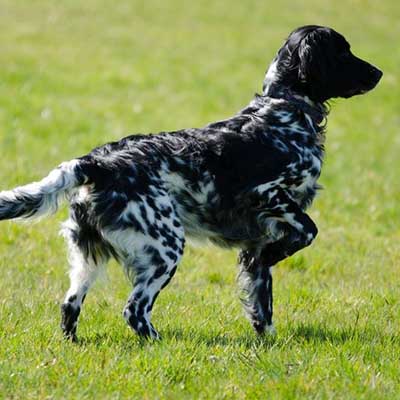
Large Munsterlander
The Munsterlander is a dynamic sporting breed that comes in two sizes: small and large. Although it is relatively new to the United States, it has long been favored for hunting in Europe. Both size variations require considerable attention and training to develop into well-adjusted family companions. With a strong hunting drive, the Munsterlander thrives when involved in meaningful activities. It is crucial for this breed to reside indoors, allowing for plenty of interaction with family members. If left unsupervised in the backyard, a Munsterlander may engage in mischief and potentially cause damage to your landscaping, as they are adept at finding ways to entertain themselves.
Read more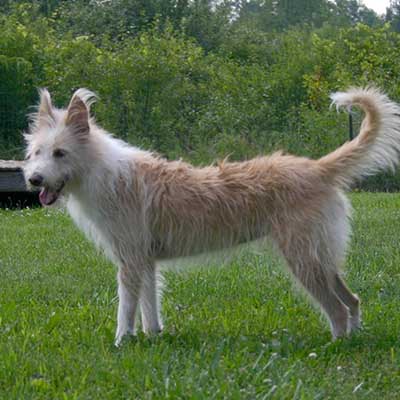
Podengo Portugueso
The Portuguese Podengo is a rare breed that closely resembles its relatives, such as the Pharaoh Hound, Cirneco dell'Etna, and Ibizan Hound. This energetic and joyful dog flourishes in social settings, ideally in a group or with at least one other dog. Renowned for its friendly nature, the Portuguese Podengo is also great with children. However, it's essential to have a high fence, as this breed is known for its remarkable jumping ability. The breed comes in three distinct sizes, with the Grande and Medio being quite similar; many registries do not differentiate between the two. In contrast, most organizations clearly distinguish the Portuguese Podengo from the smaller Portuguese Podengo Pequeno.
Read more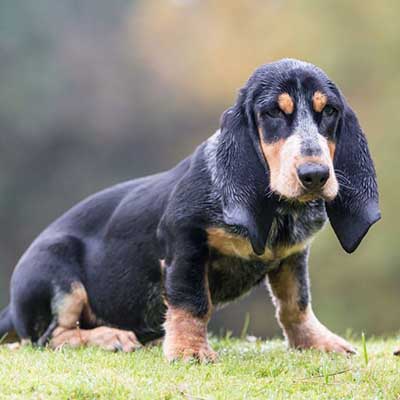
Basset Bleu De Gascogne
The Basset Bleu de Gascogne is one of six unique breeds of Basset Hounds originating from France. This lively hound excels in hunting, relying on his remarkable sense of smell as he often keeps his nose close to the ground. Renowned for his desire to please, he is typically easy to train. He flourishes best in an active home where he can partake in outdoor pursuits such as playing and hiking with his family. When raised with children, the Basset Bleu de Gascogne can make a delightful family companion, though he may initially be cautious around unfamiliar kids. To help him become a happy and well-adjusted family member, proper socialization is crucial.
Read more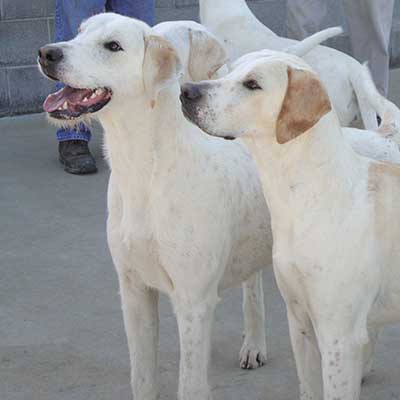
July Hound
The July Hound is a unique variety of American Foxhound, developed by integrating Irish Foxhounds recognized for their exceptional hunting skills, particularly in tracking the Red Fox, a robust and common species. Previous foxhound breeds in the United States were mainly designed for hunting the Grey Fox, which escapes danger by climbing trees. Colonel Miles G. Harris, a Georgian hunter, established the July Hound lineage to create a dog better suited for tracking the ground-dwelling Red Fox, in contrast to the tree-climbing Grey Fox that his earlier dogs had been trained to chase.
Read more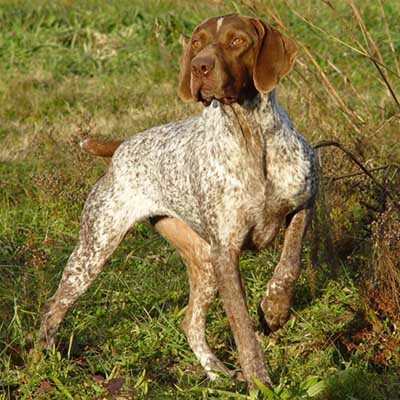
Braque Francais, de Petite Taille
The Braque Francais Pyrenean was originally developed exclusively for hunting purposes, but it has gradually transformed into a loyal companion for families. This breed is characterized by its eagerness to please rather than a dominant nature. With appropriate training, the Braque Francais Pyrenean can be an outstanding pet for households with children. However, it is not the ideal choice for a guard dog, as it is generally friendly and sociable, lacking a pronounced territorial instinct. As an active sporting dog, it needs plenty of exercise and becomes distressed if left alone in the yard without family interaction.
Read more